Breast Changes in Perimenopause: What to Watch For
Breast pain can occur during perimenopause, but a new lump, nipple discharge, or persistent visible change deserves assessment.
Breast tenderness can vary during perimenopause, and breast pain may be cyclical or unrelated to the menstrual cycle. Soreness that comes and goes with periods and affects both breasts is different from a new lump, nipple discharge, or persistent change in one area. Don’t assume a focal or lasting change is hormonal: arrange an assessment. Seek prompt care for new shape, skin, or nipple changes, or for any red, hot, or swollen area of the breast. 2 1 3
What can shift as cycles change
Breast pain can occur during perimenopause. It can be cyclical and linked to hormonal changes, or noncyclical. Possible noncyclical causes include musculoskeletal problems, infection, pregnancy, and other causes; the timing of pain alone cannot identify its cause. 4 5
Pain linked to periods often affects both breasts, may spread toward the armpit, and tends to ease when the period ends. Note whether tenderness follows a monthly pattern. Pain by itself is unlikely to be a sign of cancer, but pain that persists or does not improve should be assessed. 2
A change in breast shape, dimpling, a new nipple rash, or a nipple that has sunk inward should not be explained away as hormones. Seek prompt assessment. 2
The pattern helps, but it doesn’t diagnose
A brief note can make a changing pattern easier to describe. Record where the discomfort or change is, whether it affects one or both breasts, when it began, whether it comes and goes, and how it relates to bleeding. Also note any lump, discharge, skin change, or nipple change. This is a conversation aid, not a test or a substitute for getting a new change assessed.
A broad, recurring tenderness that eases and returns with periods is different from a persistent, localized symptom. A review of breast pain describes cyclical pain as generally not requiring imaging, while focal pain that is not tied to the cycle may need evaluation. The right assessment depends on the symptom and your situation; a clinician can decide whether imaging or another step is appropriate. 5
When to get a change checked
Arrange an assessment for a breast lump, even if it is not painful. Get nipple discharge checked as well. A change in breast shape, dimpling or other visible skin change, a new nipple rash, or a nipple that has sunk inward calls for prompt clinical assessment. These signs can have causes other than cancer, but they should not be written off as perimenopause or left until a routine visit. 3 1 2
Seek urgent medical advice if any part of a breast is red, hot, or swollen, even without a fever. Breast pain with a very high temperature or chills also warrants urgent assessment. For breast pain without those signs, arrange care if it persists or does not improve, especially when it is focused in one area rather than following a recurring cycle. 2
When you contact a clinic, describe the change and when it started, rather than only saying that your breasts feel different. Mention whether it is one-sided or in one specific spot, and whether there is a lump, discharge, or skin or nipple change. If you are unsure whether a change counts as new or persistent, it is reasonable to ask for an assessment rather than wait for the next cycle.
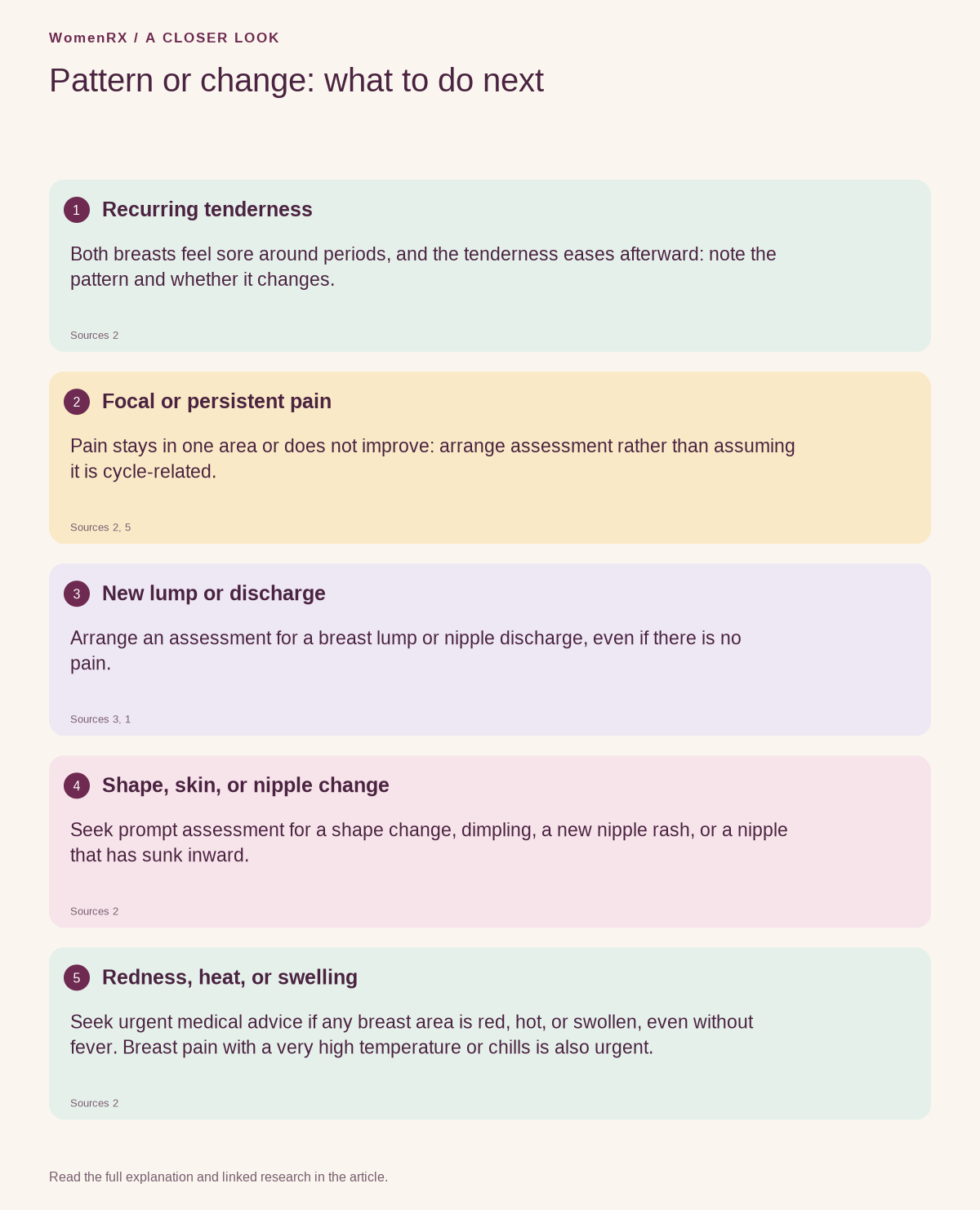
Pattern or change: what to do next
Recurring tenderness: Both breasts feel sore around periods, and the tenderness eases afterward: note the pattern and whether it changes.2
Focal or persistent pain: Pain stays in one area or does not improve: arrange assessment rather than assuming it is cycle-related.25
New lump or discharge: Arrange an assessment for a breast lump or nipple discharge, even if there is no pain.31
Shape, skin, or nipple change: Seek prompt assessment for a shape change, dimpling, a new nipple rash, or a nipple that has sunk inward.2
Redness, heat, or swelling: Seek urgent medical advice if any breast area is red, hot, or swollen, even without fever. Breast pain with a very high temperature or chills is also urgent.2
Read the figure as text
These distinctions can help you describe what you noticed and decide whether to arrange assessment. They are not a self-diagnosis tool.- Recurring tenderness: Both breasts feel sore around periods, and the tenderness eases afterward: note the pattern and whether it changes.2
- Focal or persistent pain: Pain stays in one area or does not improve: arrange assessment rather than assuming it is cycle-related.25
- New lump or discharge: Arrange an assessment for a breast lump or nipple discharge, even if there is no pain.31
- Shape, skin, or nipple change: Seek prompt assessment for a shape change, dimpling, a new nipple rash, or a nipple that has sunk inward.2
- Redness, heat, or swelling: Seek urgent medical advice if any breast area is red, hot, or swollen, even without fever. Breast pain with a very high temperature or chills is also urgent.2
More questions, answered
Does breast pain alone mean cancer?
Breast pain by itself is unlikely to be a sign of cancer, and many causes of breast pain are not cancer. Still, persistent pain or pain with a lump, discharge, or visible change should be assessed. 2 5
Should I wait for my next period to see if a change goes away?
A recurring, both-breast tenderness that eases with a period can fit a cyclical pattern. Don’t wait for another cycle to get a new lump or nipple discharge checked. Seek prompt assessment for a new shape, skin, or nipple change. 2 1 3
Sources you can check
- Nipple discharge - NHSAccessed 2026-09-25Return to first citation
- Breast pain - NHSAccessed 2026-09-25Return to first citation
- Lumps - NHSAccessed 2026-09-25Return to first citation
- [The perimenopause. Problems and therapeutic changes].Tinelli A, Torresin L, Menis T. · Minerva ginecologica · 2002Return to first citation
- A Review of Breast Pain: Causes, Imaging Recommendations, and Treatment.Sivarajah R, Welkie J, Mack J, Casas RS, Paulishak M, Chetlen AL. · Journal of breast imaging · 2020Return to first citation