After Weight Loss: A Practical Plan for Maintenance
Maintenance works better as an adjustable routine than as a promise that the scale will never move.
After weight loss, keep a few health-supporting routines that fit your life, and review how they’re working rather than expecting the scale to stay perfectly still. Weight includes water and muscle as well as fat, so one reading can’t tell the whole story. If you gain or lose weight without trying, discuss it with your care team. 1 Medication or life-stage changes can be useful context to bring into that review.
Think of maintenance as ongoing care
Finishing an active weight-loss effort doesn’t mean you have to keep doing everything exactly as before. It does mean that some routines may need continuing attention. In a systematic review of 65 behavioral-intervention studies involving about 10,000 adults with overweight or obesity, interventions produced modest additional weight loss overall, but the analysis found no significant difference between intervention and comparison groups in weight change during the maintenance period. The review also describes appetite and energy-use changes after weight loss that can make regain more likely, even when someone continues health-supporting behaviors. Regain isn’t proof that you lacked discipline. 2
That’s a reason to plan for adjustment, not to expect a perfect, permanent number. Choose routines you can return to after a disrupted week, and decide how you’ll notice when they need updating.
Build a short, repeatable review
1. Choose a few routines to keep. Pick actions that are realistic in your daily life, such as regular movement or a way of eating that feels sustainable. You don’t need to turn every detail into a rule. A large review of behavioral programs found that goal-setting, feedback, and self-monitoring were among the behavior-change techniques associated with better long-term weight outcomes in subgroup analyses. Those techniques can help you see what’s working; they don’t guarantee that weight will remain unchanged. 2
2. Decide what you’ll monitor. If weighing is useful and doesn’t make you feel worse, look at the pattern rather than treating one reading as a verdict. Weight includes water, muscle, bone, and fat, and the number alone can’t describe overall health. Depending on your health history and goals, a review might also include waist circumference or measures your care team already follows, such as cholesterol. BMI has limits too: it doesn’t distinguish muscle, bone, and fat. 1
3. Check whether your routines still fit. Ask yourself: Am I getting enough support to keep these habits going? Has my schedule changed? Is hunger making the plan hard to follow? If weight has shifted, has anything else changed around the same time, such as a medication or a major life transition? These are useful details to bring into a review, not reasons to blame yourself.
If the scale starts climbing again
First, zoom out. A single reading can reflect more than a change in body fat, because body weight includes water and other tissues. If the change continues or is unexpected, consider whether a routine has become harder to maintain, then look at the broader picture: how you feel, what health measures matter for you, and what has changed in your life. MedlinePlus advises discussing weight gain or loss that happens without trying; a sudden, unexpected change can sometimes signal a health problem. 1
If a review suggests you’d benefit from more structure, support can include clearer goals, feedback, or help tracking the behaviors you want to sustain. Those techniques have shown promise in long-term behavioral research, although the review did not find a significant overall maintenance effect across interventions. 2 One small movement study offers a more specific but limited finding: in a secondary analysis of 153 adults after weight loss, more time in moderate-to-vigorous activity relative to sedentary or light activity was associated with less regain over 12 months. Because this was an association, it doesn’t prove that changing movement by itself caused the difference or establish a required activity target. 3
Revisit the plan at different life stages
A routine that worked in one season may not fit another. These stages call for different review questions, not automatic changes to your goal. If you become pregnant, ask whether the purpose of your plan should change rather than assuming a weight-loss maintenance target still applies. After childbirth, focus the review on which routines can realistically fit your current schedule and what support would help. During the menopause transition, check whether the goal and health measures you’re using still reflect what matters to you now. These are prompts to reconsider fit, not stage-specific prescriptions or weight targets.
Maintenance is not a test you pass once. It’s a continuing process of noticing, adjusting, and getting support when the old plan stops fitting. A changing number does not erase the habits you’ve built or tell the whole story of your health. 1
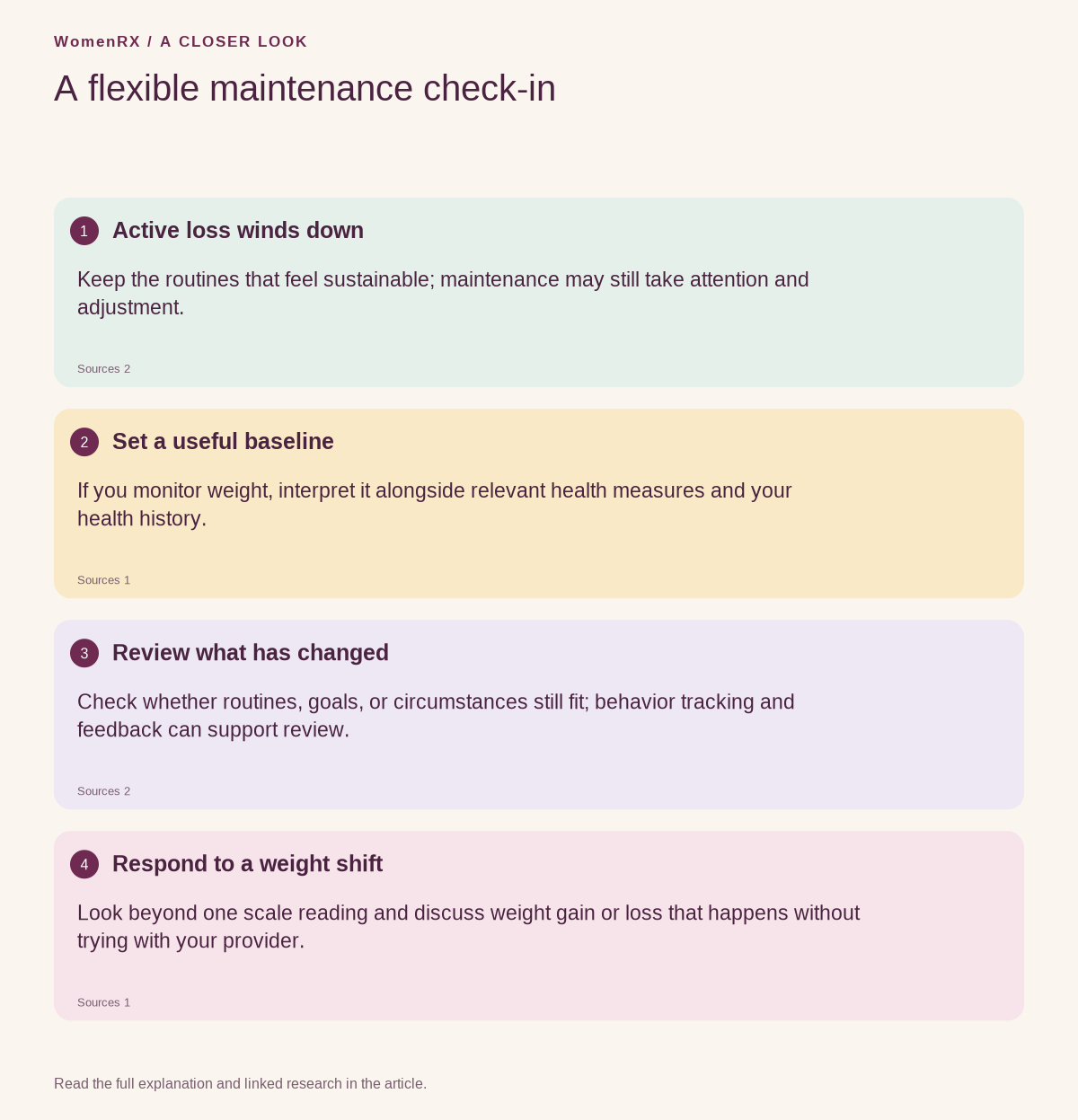
A flexible maintenance check-in
Active loss winds down: Keep the routines that feel sustainable; maintenance may still take attention and adjustment.2
Set a useful baseline: If you monitor weight, interpret it alongside relevant health measures and your health history.1
Review what has changed: Check whether routines, goals, or circumstances still fit; behavior tracking and feedback can support review.2
Respond to a weight shift: Look beyond one scale reading and discuss weight gain or loss that happens without trying with your provider.1
Read the figure as text
Use these stages as a reminder to review what fits now, not as a deadline or a promise that weight will stay fixed.- Active loss winds down: Keep the routines that feel sustainable; maintenance may still take attention and adjustment.2
- Set a useful baseline: If you monitor weight, interpret it alongside relevant health measures and your health history.1
- Review what has changed: Check whether routines, goals, or circumstances still fit; behavior tracking and feedback can support review.2
- Respond to a weight shift: Look beyond one scale reading and discuss weight gain or loss that happens without trying with your provider.1
More questions, answered
Should I weigh myself during maintenance?
Only if it’s useful for you. A weight reading is one piece of information, not a complete health measure: it includes water and muscle as well as fat. If you track weight, focus on the pattern and consider other measures relevant to your health history. 1
Does weight regain mean I did something wrong?
No. Regain is common, and biological changes after weight loss can increase hunger and make maintaining a lower weight harder. Continued effort doesn’t always prevent regain, so it’s reasonable to adjust routines or seek additional support rather than treat a change as a personal failure. 2
Sources you can check
- Body Weight: MedlinePlusAccessed 2026-09-25Return to first citation
- Effective Behavior Change Techniques for Successful Weight Loss and Weight Loss Maintenance Among Adults With Overweight and Obesity: A Systematic Review and Meta-Analysis.Preuhs K, Eekhout I, Andree R, van Keulen H, van Empelen P. · Obesity reviews : an official journal of the International Association for the Study of Obesity · 2026Return to first citation
- Association Between Wake-Time Movement Behaviors and Weight Loss Maintenance.Kracht CL, Brown DMY, Gorczyca AM, Jakicic JM, Szabo-Reed A, Washburn R, Donnelly JE. · Obesity (Silver Spring, Md.) · 2026Return to first citation