Adenomyosis and Perimenopause: When Symptoms Change
A change in bleeding or pain may be worth checking, even when you already know you have adenomyosis.
Adenomyosis can cause heavy or painful periods, pelvic fullness, and pain during sex, but a change in symptoms doesn’t reveal its cause. If bleeding becomes heavier or irregular, occurs between periods, or happens after menopause, have it assessed rather than assuming adenomyosis or perimenopause explains it. Worsening pain also deserves attention. 1 2 3
A change doesn’t identify the cause
Adenomyosis affects the muscle wall of the uterus. It can cause heavy or painful periods. You might also notice bloating, pelvic heaviness or fullness, or pain during sex. Some people with adenomyosis have no symptoms. 1
As you approach menopause, it can be tempting to explain every change in bleeding as part of the transition, especially if you already have a diagnosis that affects your periods. But the pattern alone can’t tell you what’s happening. Abnormal uterine bleeding can have other causes, including polyps, fibroids, and changes in the uterine lining that need assessment. 1 3
A lighter or less painful month doesn’t tell you what will happen next. Likewise, you don’t need to wait for your periods to stop before seeking help for symptoms that affect your life. Treatments for adenomyosis are available while you’re still having periods. 1
Periods often become less regular near menopause, but timing changes alone cannot tell you whether adenomyosis is responsible. 5
Notice what’s different from your usual pattern
The most useful comparison is with your usual bleeding and pain. For example, if your periods have long been heavy, note whether the bleeding now seems heavier, lasts longer than it typically does for you, or appears between periods. For pain, note whether it happens around your period or at other times, whether it’s getting worse, and whether it keeps you from ordinary activities. Pain during sex is worth mentioning too. These are the kinds of symptoms considered when assessing adenomyosis and period pain. 1 2
You don’t need a perfect diary. A few notes about when symptoms occurred, what changed, and how much they disrupted your day can help make a new pattern easier to describe. If you’re already using treatment for adenomyosis, include whether it still seems to help.
A useful note takes less than a minute
The following entries are fictional examples of how to describe a change, not thresholds for deciding whether bleeding is normal.
| Instead of | Write something specific |
|---|---|
| “My periods are bad” | “This period lasted eight days; my usual pattern is five.” |
| “The pain is worse” | “Pain kept me from my usual walk on Tuesday and woke me that night.” |
| “I have spotting” | “I noticed bleeding after sex on Sunday, outside my period.” |
| “Treatment stopped working” | “The same treatment helped last month, but this time the pain continued.” |
Use your own dates and experiences. You do not need several months of notes before getting a change assessed.
When to get bleeding or pain checked
Arrange an assessment if your periods become heavier, more painful, or irregular; you bleed between periods; or heavy bleeding is affecting your life. Worsening pelvic pain, pain during sex or bleeding after sex also merits attention. Adenomyosis may be involved, but an existing diagnosis shouldn’t rule out looking for another cause. 1 2 3
Bleeding after menopause is a different situation: have it evaluated rather than attributing it to adenomyosis, even if it happens only once. Postmenopausal bleeding calls for assessment to check for potentially significant changes inside the uterus. 3
Get urgent assessment for severe or worsening period pain that has not improved with pain relief. Pelvic pain with heavy bleeding, faintness or dizziness calls for emergency care. Pelvic pain when pregnancy is possible needs urgent assessment. 1 4
An assessment may involve questions about your symptoms, an examination, or an ultrasound. If bleeding needs further investigation, the approach depends on what’s suspected and what earlier tests show. When tissue assessment is indicated, a joint society guideline favors hysteroscopy with visually directed biopsy over blind sampling, particularly when a localized problem is suspected or earlier findings are inconclusive. 1 3
Relief is an option before periods end
If familiar adenomyosis symptoms are still troublesome, there are options to discuss now. These include a hormonal intrauterine system or other hormonal treatments, medicines such as anti-inflammatory drugs or tranexamic acid, and heat for pelvic or period pain. Surgery may be considered when other treatments haven’t helped. The right discussion depends on which symptom is bothering you most, what you’ve tried, and whether the bleeding pattern itself needs a fresh look. 1
The distinction is simple: treatment can help with symptoms you know, while new or changing bleeding still deserves a chance to be understood.
If pregnancy is a goal, say so before comparing treatments. A plan for controlling bleeding and a plan that fits pregnancy goals need to be considered together.
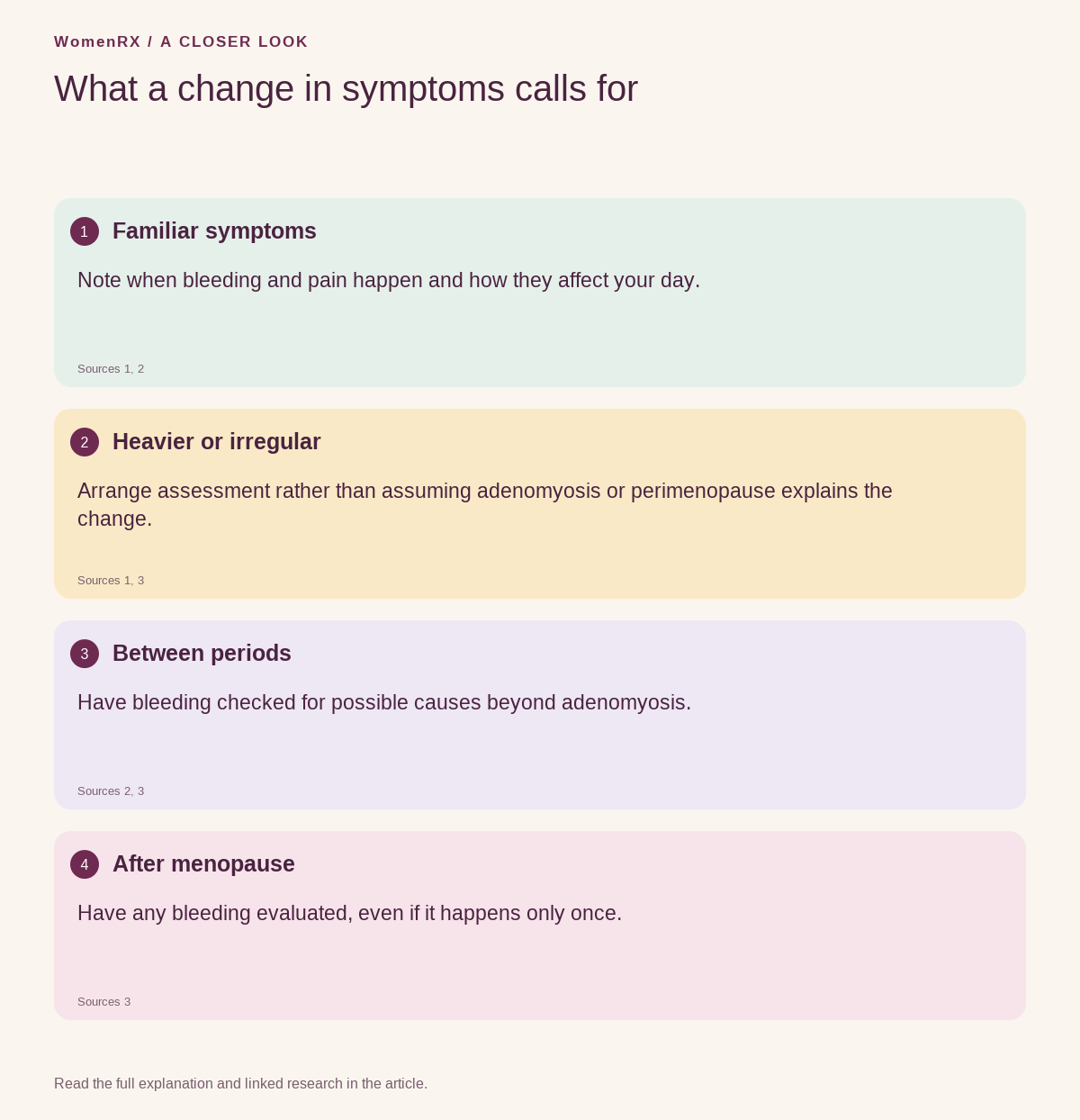
What a change in symptoms calls for
Familiar symptoms: Note when bleeding and pain happen and how they affect your day.12
Heavier or irregular: Arrange assessment rather than assuming adenomyosis or perimenopause explains the change.13
Between periods: Have bleeding checked for possible causes beyond adenomyosis.23
After menopause: Have any bleeding evaluated, even if it happens only once.3
Read the figure as text
Compare symptoms with your usual pattern, then use the change to guide whether to seek assessment. The pattern cannot diagnose the cause.- Familiar symptoms: Note when bleeding and pain happen and how they affect your day.12
- Heavier or irregular: Arrange assessment rather than assuming adenomyosis or perimenopause explains the change.13
- Between periods: Have bleeding checked for possible causes beyond adenomyosis.23
- After menopause: Have any bleeding evaluated, even if it happens only once.3
More questions, answered
Does a less painful period mean adenomyosis is going away?
Not necessarily. One period can’t establish what’s happening to adenomyosis. Pay attention to the pattern over time, and seek assessment if pain worsens or bleeding changes in a concerning way. 1 2
Sources you can check
- Adenomyosis - NHSAccessed 2026-09-25Return to first citation
- Period pain - NHSAccessed 2026-09-25Return to first citation
- Visually directed hysteroscopic biopsy in the evaluation of abnormal uterine bleeding and postmenopausal bleeding: a Joint Society Practice Guideline. Joint Society Practice Guideline from AAGL-ESGE-GCH. · Facts, views & vision in ObGyn · 2026Return to first citation
- Pelvic pain, NHSAccessed 2026-09-29Return to first citation
- Irregular periods, NHSAccessed 2026-09-29Return to first citation