A Midlife Check-In for Heart and Metabolic Health
Your menopause stage is useful context, but your health history and current risk factors help make a check-in personal.
At a routine visit, ask how your blood pressure, cholesterol, blood sugar, medical and family history, and medicines fit together. Some metabolic risk factors can occur in a cluster, and many have no obvious symptoms. Rather than treating age 50 or postmenopause as an automatic answer about testing, ask what makes sense for you and when to revisit it. 1
Start with the whole picture
A useful midlife check-in isn’t a pass-or-fail test, and it isn’t just about weight. You can bring up measurements and results you already have, including blood pressure, cholesterol, blood sugar, and waist measurement. Metabolic syndrome describes a cluster of risk factors; having more of them is associated with greater risk. Age, family history, and some medicines can also matter. 1
Many metabolic risk factors don’t cause noticeable symptoms. A normal-feeling day, or a number on the scale that hasn’t changed, can’t answer every question about cardiovascular and metabolic health. 1
Menopause is relevant context, not a personal risk score. A review describes cardiovascular and metabolic changes around menopause, alongside traditional risk factors such as hypertension, diabetes, smoking, physical inactivity, and obesity. Your personal history and current measurements still matter when you discuss your own risk. 4
Rather than treating turning 50 as an automatic answer about testing, use the visit to ask what measurements or lab tests make sense for you, given your history and prior results.
What to bring into the conversation
You don’t need to decide in advance which tests are due. Bring any results you have and ask which ones are relevant to your situation and when they should be revisited. A clinician may use an examination and blood tests when assessing a cluster of metabolic risk factors, but that doesn’t mean every person needs the same tests at every visit. 1
Before the appointment, it may help to gather:
- Your recent measurements and results: If you have them, bring or note blood pressure readings and prior cholesterol or blood sugar results, including roughly when they were taken.
- Your personal and family history: Include diagnoses you have and close relatives’ history of heart disease, diabetes, or related health concerns. Family history and age are among the factors associated with metabolic risk. 1
- A full medication list: Include medicines you take regularly and mention any recent changes. Some medicines can affect weight, blood pressure, cholesterol, or blood sugar. Ask whether any of yours could be relevant. 1
- Your menopause context: Note whether you’re in the menopause transition or postmenopause, and mention symptoms that affect your daily life. If you have bothersome vasomotor or genitourinary symptoms, include those in the conversation. 2 3
Questions that make the visit more specific
Rather than asking whether you need “all the tests,” try questions that connect a result to your situation:
- “How do my blood pressure, cholesterol, and blood sugar results fit together with my history?”
- “Are any measurements or lab tests appropriate for me now? When would you want to revisit them?”
- “Do my medicines affect any of these numbers, or how we interpret them?”
- “Does my menopause stage change how you interpret my health history, or is another factor more relevant?”
- “What prevention priority would make the biggest difference for my health right now?”
These questions leave room for individual decisions. A clinician may consider an exam and blood tests when assessing a cluster of metabolic risk factors, but that doesn’t mean every person needs the same tests at every visit. 1
Keep symptom care and prevention distinct
If vasomotor or genitourinary symptoms are bothering you, raise them as their own concern, even if the appointment is focused on heart health. Menopause hormone therapy is an individualized discussion: its benefits and risks vary with factors including age, time since menopause, treatment type, and medical history. A symptom-treatment conversation is not automatically a cardiovascular-prevention plan. 2 3
For prevention, ask which change or follow-up fits your actual risk factors. Metabolic risk isn’t defined by weight alone: waist measurement, age, family history, and medication effects can contribute to the overall picture, and blood tests are used in assessing metabolic syndrome. 1 A helpful outcome is a clear next step, such as understanding a result, reviewing a medicine, or agreeing on what to revisit and when.
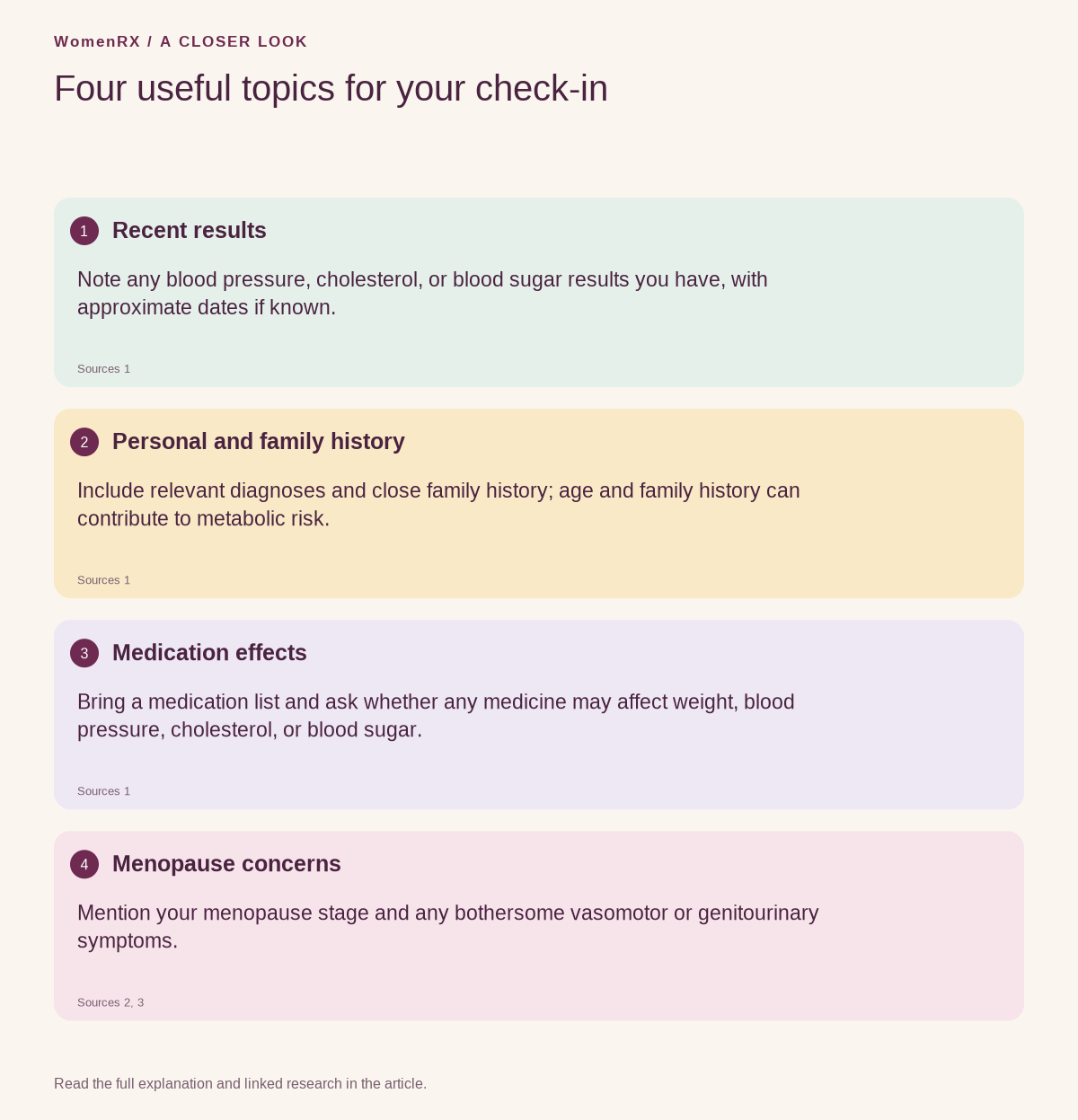
Four useful topics for your check-in
Recent results: Note any blood pressure, cholesterol, or blood sugar results you have, with approximate dates if known.1
Personal and family history: Include relevant diagnoses and close family history; age and family history can contribute to metabolic risk.1
Medication effects: Bring a medication list and ask whether any medicine may affect weight, blood pressure, cholesterol, or blood sugar.1
Menopause concerns: Mention your menopause stage and any bothersome vasomotor or genitourinary symptoms.23
Read the figure as text
Organize results and questions you already have, then discuss what fits your history rather than assuming every test is due.- Recent results: Note any blood pressure, cholesterol, or blood sugar results you have, with approximate dates if known.1
- Personal and family history: Include relevant diagnoses and close family history; age and family history can contribute to metabolic risk.1
- Medication effects: Bring a medication list and ask whether any medicine may affect weight, blood pressure, cholesterol, or blood sugar.1
- Menopause concerns: Mention your menopause stage and any bothersome vasomotor or genitourinary symptoms.23
More questions, answered
Does postmenopause mean I have metabolic syndrome?
No. Postmenopause is context for a health discussion, not a diagnosis. Metabolic syndrome refers to a cluster of risk factors and is assessed using an examination and blood tests, rather than menopause status alone. 1
Should I ask about menopause hormone therapy for heart prevention?
If you’re considering hormone therapy, discuss your symptoms and personal benefits and risks with your clinician. The menopause position statement discusses individualized treatment for vasomotor symptoms and prevention of bone loss; it doesn’t make hormone therapy a substitute for assessing cardiovascular risk factors. 2
Sources you can check
- Metabolic Syndrome | MedlinePlusAccessed 2026-09-25Return to first citation
- The 2022 hormone therapy position statement of The North American Menopause Society.“The 2022 Hormone Therapy Position Statement of The North American Menopause Society” Advisory Panel. · Menopause (New York, N.Y.) · 2022Return to first citation
- The 2023 nonhormone therapy position statement of The North American Menopause Society.Menopause (New York, N.Y.) · 2023Return to first citation
- The Silent Vascular Shift: Endothelial Dysfunction and Cardiovascular Risk in Menopausal Women.Saini A, Verma I, Bhatia R. · Cardiovascular & hematological disorders drug targets · 2026Return to first citation