Who Should Pause Before Using Tretinoin Cream?
Pregnancy, breastfeeding, eczema, and irritated skin can change the decision to start tretinoin cream, while oral tretinoin has separate warnings.
If you’re pregnant, think you might be pregnant, or are breastfeeding, speak with your prescriber before using tretinoin cream. Bring up pregnancy plans before starting, too. Wait until sunburn has fully healed, and use particular caution if you have eczema or irritated skin. Oral tretinoin capsules have different uses and pregnancy warnings. 1 2
First, check which tretinoin you mean
Tretinoin cream is applied to the skin and can cause local irritation. Tretinoin capsules are taken by mouth to treat a specific type of leukemia. Their serious pregnancy warning belongs to that oral treatment; it shouldn’t be used as a direct measure of the risk from cream. The cream has its own pregnancy precautions. 1 2
Pregnancy or pregnancy plans
If you’re pregnant or think you might be, speak with your prescriber before using tretinoin cream. Human studies haven’t established its safety during pregnancy. That uncertainty calls for caution, but it isn’t evidence that the cream has been shown to cause harm in pregnancy. 2
If you’re trying to conceive, raise that before starting treatment. Your prescriber can weigh what you’re treating against the pregnancy uncertainty and discuss other options. Don’t borrow a waiting period or contraception instruction from oral tretinoin capsules: those instructions are for a different treatment. 1 2
Oral tretinoin capsules carry a warning that they can cause embryo-fetal loss and malformations. They’re used for acute promyelocytic leukemia, so their prescribing information addresses a very different situation from using cream on the skin. 1
Breastfeeding needs its own discussion
It isn’t known whether tretinoin from the cream passes into human milk. The cream information advises caution while nursing, rather than establishing whether use affects a nursing infant. Before starting, tell your prescriber you’re breastfeeding and where you’d apply the cream. 2
When the skin itself says wait
Sunburned skin: Wait until it has fully recovered before using tretinoin on that area. The cream can make skin more susceptible to sunlight during treatment. Its product information recommends minimizing sun exposure and using sunscreen and protective clothing when exposure can’t be avoided. 2
Eczema or an irritated treatment area: Tretinoin can cause severe irritation on eczematous skin. If the area you want to treat is actively flaring or already irritated, discuss the timing rather than applying cream over it. 2
A worsening reaction after you start: Some redness and peeling can occur, but excessive redness, swelling, blistering, or crusting calls for a change. The cream information says a significant reaction may require pausing or stopping treatment until the skin recovers. Don’t push through it. 2
Check what else touches the same skin
Tell your prescriber or pharmacist about the topical medicines and skin-care products you use on the treatment area. The cream information calls for caution with medicated or abrasive cleansers, strongly drying products, and preparations containing sulfur, resorcinol, or salicylic acid. This is a concern about possible interaction or added irritation, not a claim that every combination is unsafe. 2
One medicine warning is easy to misplace: oral tretinoin capsules have a warning about use with other products that can cause intracranial hypertension, including tetracyclines. That warning is for capsules. It doesn’t establish the same interaction for topical cream. 1
Before you begin, the useful details are straightforward: whether you’re pregnant, planning pregnancy, or breastfeeding; whether the area has eczema, irritation, or sunburn; what else you apply there; and whether your prescription is for cream or capsules. Those details help identify which caution actually applies to you. 1 2
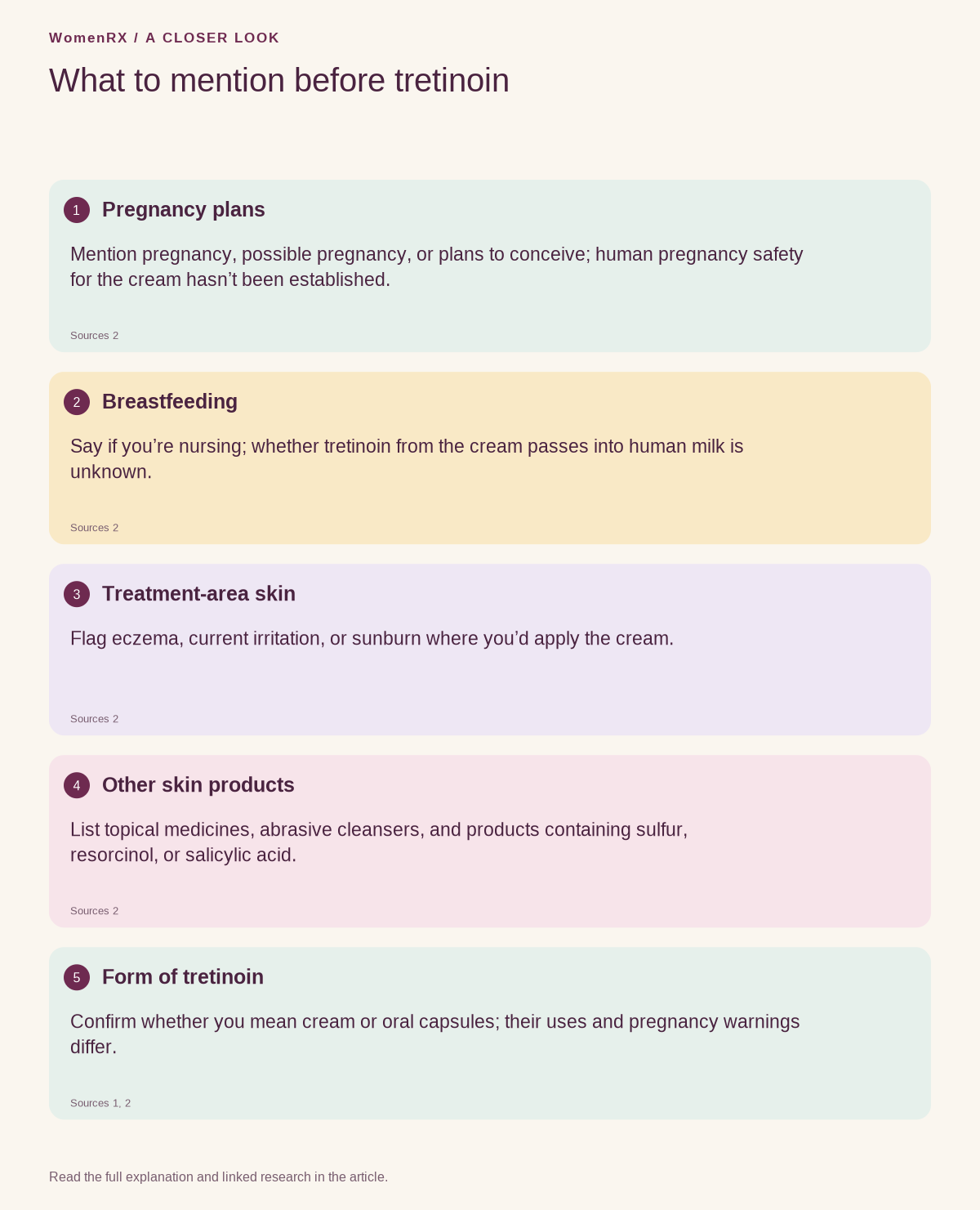
What to mention before tretinoin
Pregnancy plans: Mention pregnancy, possible pregnancy, or plans to conceive; human pregnancy safety for the cream hasn’t been established.2
Breastfeeding: Say if you’re nursing; whether tretinoin from the cream passes into human milk is unknown.2
Treatment-area skin: Flag eczema, current irritation, or sunburn where you’d apply the cream.2
Other skin products: List topical medicines, abrasive cleansers, and products containing sulfur, resorcinol, or salicylic acid.2
Form of tretinoin: Confirm whether you mean cream or oral capsules; their uses and pregnancy warnings differ.12
Read the figure as text
These details help separate reproductive questions, skin irritation, and warnings tied to a different form of tretinoin.- Pregnancy plans: Mention pregnancy, possible pregnancy, or plans to conceive; human pregnancy safety for the cream hasn’t been established.2
- Breastfeeding: Say if you’re nursing; whether tretinoin from the cream passes into human milk is unknown.2
- Treatment-area skin: Flag eczema, current irritation, or sunburn where you’d apply the cream.2
- Other skin products: List topical medicines, abrasive cleansers, and products containing sulfur, resorcinol, or salicylic acid.2
- Form of tretinoin: Confirm whether you mean cream or oral capsules; their uses and pregnancy warnings differ.12