When to Take Vitamin C: Morning, Night, or With Food?
Choose a time you’ll remember; the amount of vitamin C you take matters more to absorption than any schedule identified in this research.
Morning or evening can fit a vitamin C routine. The absorption findings don’t identify a preferred hour or show that a supplement needs to be taken with food. Follow your product’s directions and choose a time you’ll remember. If it upsets your stomach, look at the amount you’re taking, since higher intakes can cause digestive symptoms. 12
Pick a time that fits your day
If breakfast helps you remember a vitamin C supplement, take it then. If evenings are easier, use that routine instead. A study that measured vitamin C levels over a day compared a supplement with fruits, vegetables, and juice; it did not compare morning and evening dosing. 2
You can pair a supplement with a meal because it’s convenient. There isn’t a meal-timing advantage for vitamin C absorption to draw from those findings, so start with the directions on your product rather than building a schedule around breakfast or dinner.
A meal can matter for a different reason: vitamin C helps the body absorb nonheme iron, the form found in plant-based foods. That is an effect on iron absorption, not evidence that food improves absorption of the vitamin C supplement or that breakfast is better than dinner. 1
The amount changes how much is absorbed
Vitamin C absorption depends on how much you take in. The NIH Office of Dietary Supplements reports that about 70% to 90% is absorbed at intakes of 30 to 180 milligrams per day. At doses above 1 gram per day, absorption falls below 50%. Some absorbed vitamin C that the body doesn’t use is excreted in urine. These figures describe absorption, not a reason to take a particular dose. 1
In a small crossover study, vitamin C levels rose after each of three forms of intake: a supplement, raw fruits and vegetables, and juice. The 12 healthy adults, both men and women, received the same amount of vitamin C in each trial. Researchers measured blood and urine levels over 24 hours and provided standardized meals without vitamin C. The study compared intake forms, not morning with evening dosing or taking the supplement with versus without a meal. Changes in measured levels also do not show that one daily routine improves health outcomes. 2
Let comfort guide the next adjustment
Higher vitamin C intakes can cause diarrhea, nausea, abdominal cramps, or other digestive upset. The NIH fact sheet links these effects to unabsorbed vitamin C in the gut. If you feel uncomfortable after taking a supplement, review the amount and the product directions rather than assuming that moving it from morning to night will solve the problem. The dose-related absorption figures do not show whether changing the hour, adding a meal, or splitting a supplement would prevent digestive symptoms. 1
The simple routine is to choose a memorable time, use the product as directed, and pay attention to how you feel. A meal can be part of that routine if it suits you; it doesn’t need to be the reason you choose a particular hour.
Choose a Vitamin C Routine
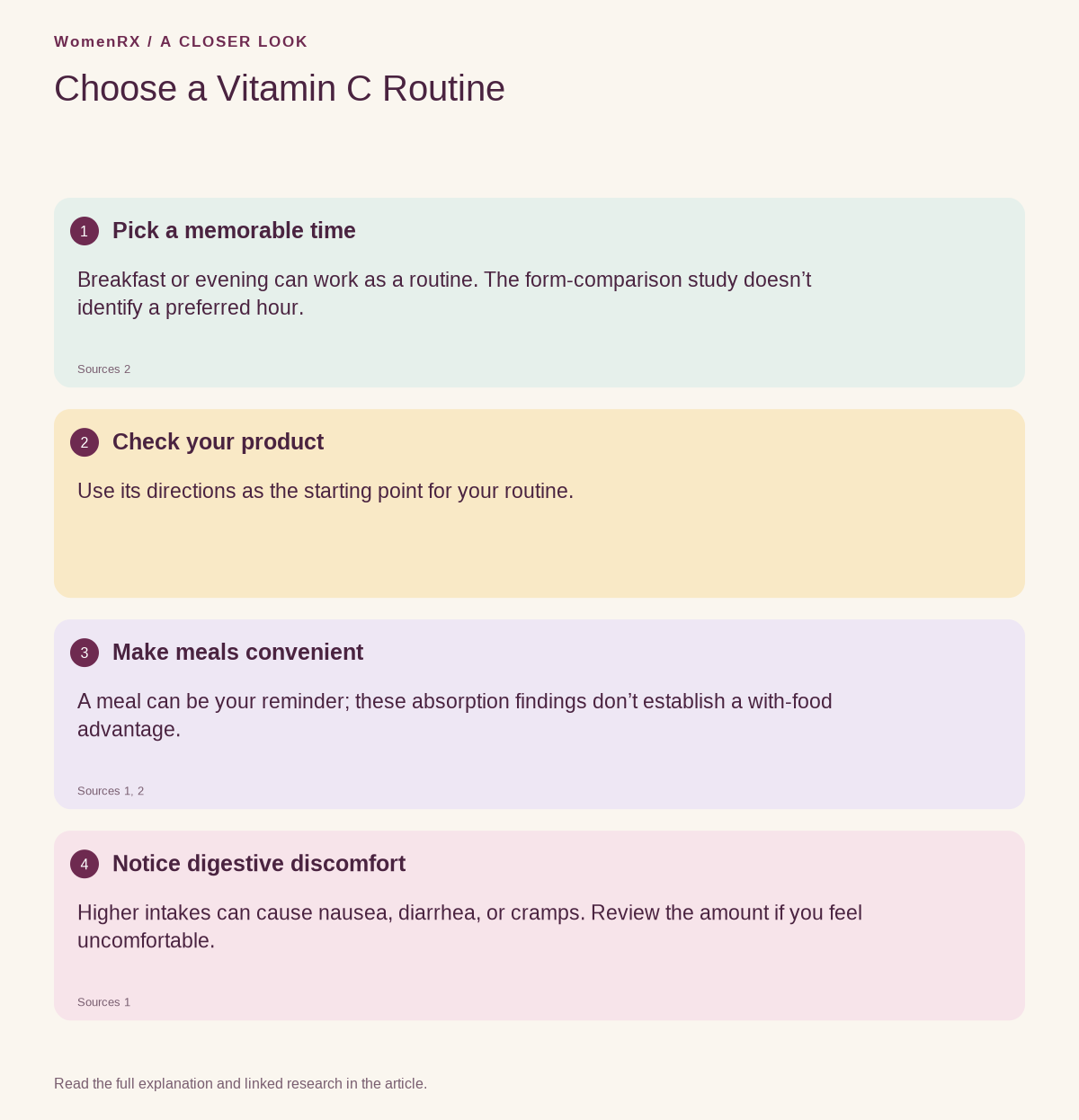
Pick a memorable time: Breakfast or evening can work as a routine. The form-comparison study doesn’t identify a preferred hour.2
Check your product: Use its directions as the starting point for your routine.
Make meals convenient: A meal can be your reminder; these absorption findings don’t establish a with-food advantage.12
Notice digestive discomfort: Higher intakes can cause nausea, diarrhea, or cramps. Review the amount if you feel uncomfortable.1
Read the figure as text
A quick way to choose a schedule without treating the clock as an absorption rule.- Pick a memorable time: Breakfast or evening can work as a routine. The form-comparison study doesn’t identify a preferred hour.2
- Check your product: Use its directions as the starting point for your routine.
- Make meals convenient: A meal can be your reminder; these absorption findings don’t establish a with-food advantage.12
- Notice digestive discomfort: Higher intakes can cause nausea, diarrhea, or cramps. Review the amount if you feel uncomfortable.1
More questions, answered
Does vitamin C have to be taken with food?
A meal can be a convenient reminder. The findings described here don’t compare taking a vitamin C supplement with food against taking it without food, so use your product’s directions rather than assuming a meal improves vitamin C absorption. Vitamin C can help your body absorb nonheme iron from plant-based foods, but that is a separate effect. 12
Should I split a vitamin C supplement between morning and night?
Dose-related absorption figures don’t tell you whether splitting your particular supplement would help. Follow its directions instead of dividing it for a presumed timing advantage. 1
Sources you can check
- Vitamin C - Health Professional Fact SheetAccessed 2026-09-25Return to first citation
- Comparative Bioavailability of Vitamin C After Short-Term Consumption of Raw Fruits and Vegetables and Their Juices: A Randomized Crossover Study.Choi M, Baek J, Yun JM, Hong YS, Park E. · Nutrients · 2025Return to first citation