When Are Estrogen and Progesterone Used Together in Menopause Care?
The key question is whether you have a uterus: with systemic estrogen, that can change whether a second hormone is part of the plan.
When systemic estrogen is used by someone with a uterus, a progestogen is commonly paired with it to protect the uterine lining. The schedule may be continuous, with both hormones used on an ongoing basis, or estrogen may be used continuously while progestogen is added during part of the schedule. Which approach fits depends on your circumstances; ask what bleeding pattern to expect and how it will be followed up. 2 3 1
The reason the uterus changes the discussion
Estrogen can be used to treat bothersome menopause symptoms, but when systemic estrogen is used by someone with a uterus, the uterine lining is part of the decision. A progestogen, such as progesterone or a progestin, may be paired with estrogen to protect that lining. The North American Menopause Society says hormone therapy’s risks vary in part according to whether a progestogen is used, and recommends individualizing treatment and periodically reassessing it. 1 2
If you don’t have a uterus, the endometrial-protection reason for adding a progestogen doesn’t apply. That doesn’t determine the whole treatment plan: the reason for therapy and your individual benefit-risk considerations still matter. 1 2
This discussion is mainly about systemic hormone therapy. Low-dose vaginal estrogen is a separate option for some genitourinary symptoms when systemic hormone therapy isn’t indicated; don’t assume that the same regimen questions automatically apply. 1
Continuous and part-schedule approaches
With continuous combined therapy, estrogen and progestogen are used together on an ongoing schedule. One studied oral capsule combined estradiol and progesterone for continuous daily use. A review of that treatment reported that its trial found endometrial safety across the studied doses, but that result is about the tested product and trial, not a guarantee for every hormone or schedule. 2
In another approach, estrogen is used while progestogen is added during part of the schedule. An older case-control study describes regimens like this as sequential. It doesn’t establish which schedule is best for you or provide a current, individualized prescription. 3
The useful comparison is therefore the pattern of treatment, not a promise that one option will suit everyone. There isn’t a one-size-fits-all answer about which schedule suits you. Ask why a particular approach is being considered for you, and what the plan is if you have bleeding that concerns you.
Make the follow-up plan specific
Before starting or changing treatment, it can help to get clear answers to a few practical questions:
- Does the plan use systemic estrogen, or low-dose vaginal estrogen?
- Do I have a uterus, and how does that affect the reason for adding a progestogen?
- Is the progestogen used continuously or during part of the schedule, and what is the reason for choosing that approach?
- What bleeding pattern should I expect with this specific plan, and what bleeding should prompt me to contact the prescriber?
- When will we review whether the benefits and risks still fit my needs?
These questions matter because hormone therapy is individualized, and periodic reevaluation is part of the North American Menopause Society’s guidance. 1
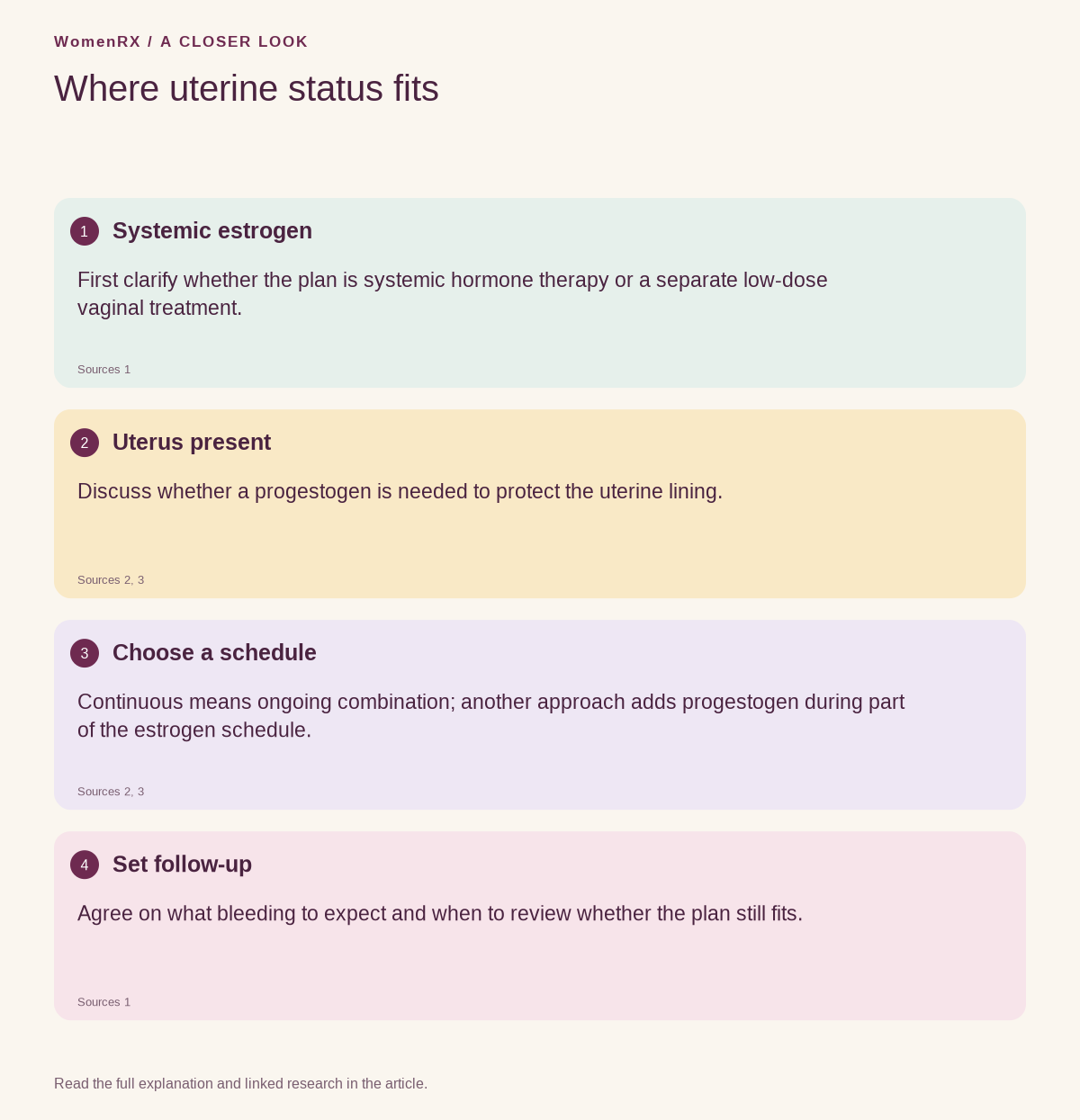
Where uterine status fits
Systemic estrogen: First clarify whether the plan is systemic hormone therapy or a separate low-dose vaginal treatment.1
Uterus present: Discuss whether a progestogen is needed to protect the uterine lining.23
Choose a schedule: Continuous means ongoing combination; another approach adds progestogen during part of the estrogen schedule.23
Set follow-up: Agree on what bleeding to expect and when to review whether the plan still fits.1
Read the figure as text
A simple decision path for understanding why a progestogen may be part of systemic menopause hormone therapy.- Systemic estrogen: First clarify whether the plan is systemic hormone therapy or a separate low-dose vaginal treatment.1
- Uterus present: Discuss whether a progestogen is needed to protect the uterine lining.23
- Choose a schedule: Continuous means ongoing combination; another approach adds progestogen during part of the estrogen schedule.23
- Set follow-up: Agree on what bleeding to expect and when to review whether the plan still fits.1
Sources you can check
- The 2022 hormone therapy position statement of The North American Menopause Society.“The 2022 Hormone Therapy Position Statement of The North American Menopause Society” Advisory Panel. · Menopause (New York, N.Y.) · 2022Return to first citation
- A combined, bioidentical, oral, 17β-estradiol and progesterone capsule for the treatment of moderate to severe vasomotor symptoms due to menopause.Archer DF, Bernick BA, Mirkin S. · Expert review of clinical pharmacology · 2019Return to first citation
- Progestins and menopause: epidemiological studies of risks of endometrial and breast cancer.Pike MC, Ross RK. · Steroids · 2000Return to first citation