What to Review Before Taking Spironolactone
Potassium-raising products deserve special attention, but a useful interaction review starts with everything you take.
Before starting spironolactone or adding another product, tell your clinician or pharmacist about your prescriptions, occasional medicines, supplements, and salt substitutes. Potassium supplements, ACE inhibitors, ARBs, NSAIDs, and heparin products can increase the risk of high potassium. Flag lithium, too: spironolactone can reduce how quickly your kidneys clear it. 12
Start with products that can raise potassium
Spironolactone can raise potassium in your blood. The risk is higher if you have impaired kidney function or take another product that raises potassium. That’s why an interaction review should cover more than your daily prescriptions. 2
Make sure the person reviewing your medicines knows if you take:
- An ACE inhibitor or an ARB. These medicines can add to the risk of high potassium. If an ACE inhibitor or ARB is changed while you take spironolactone, US prescribing information calls for a potassium check. 2
- A potassium supplement or salt substitute. Some salt substitutes contain potassium. Give the reviewer the product name or ingredients, including for products you use only occasionally. 12
- An NSAID, such as ibuprofen, aspirin, or diclofenac. NSAIDs are listed among medicines that can raise potassium with spironolactone. In some people, they can also reduce a diuretic’s effects on fluid and blood pressure. 12
- Heparin or low-molecular-weight heparin. Both are listed as possible contributors to high potassium when used with spironolactone. 2
A listed interaction doesn’t mean you should stop a prescribed medicine on your own. It means the combination needs review in the context of why you take each medicine, your kidney function, and your potassium results. 2
Lithium needs a different kind of review
Potassium isn’t the only concern. Spironolactone reduces the kidneys’ clearance of lithium, raising the risk of lithium toxicity. If you take lithium, say so before spironolactone is started or changed. 2
Include short-term prescriptions, over-the-counter medicines, vitamins, herbs, and other supplements, even if you don’t use them every day. Write down each product’s name and how often you use it. If you’re unsure what’s in something, bring the package or a clear photo of its ingredients. NHS guidance specifically advises telling your prescriber or pharmacist about medicines, herbal remedies, vitamins, and supplements before taking spironolactone. 1
Ask what your potassium-testing plan is
US prescribing information calls for a potassium check within one week of starting spironolactone or changing its dose, followed by regular checks. More frequent monitoring may be needed if you have impaired kidney function or take another medicine that can raise potassium. Ask how a change to an ACE inhibitor, ARB, or other medicine would affect your testing plan. 2
Food can be worth discussing without making automatic cuts. Potassium-rich foods and potassium-containing salt substitutes may add to the concern; NHS guidance names bananas and avocados as examples. Ask whether any dietary change makes sense for your medicines and health rather than removing foods on your own. 12
Add the context that applies to you
Mention kidney problems and recent medicine changes alongside your product list. If you’re breastfeeding, raise that too: NHS guidance advises checking with a clinician before taking spironolactone while breastfeeding. 12
You can also mention contraception, pregnancy plans, a current pregnancy, or medicines prescribed during pregnancy if any apply to you. Those details give the person reviewing your treatment a fuller picture; they aren’t assumptions about your circumstances.
Build Your Spironolactone Review List
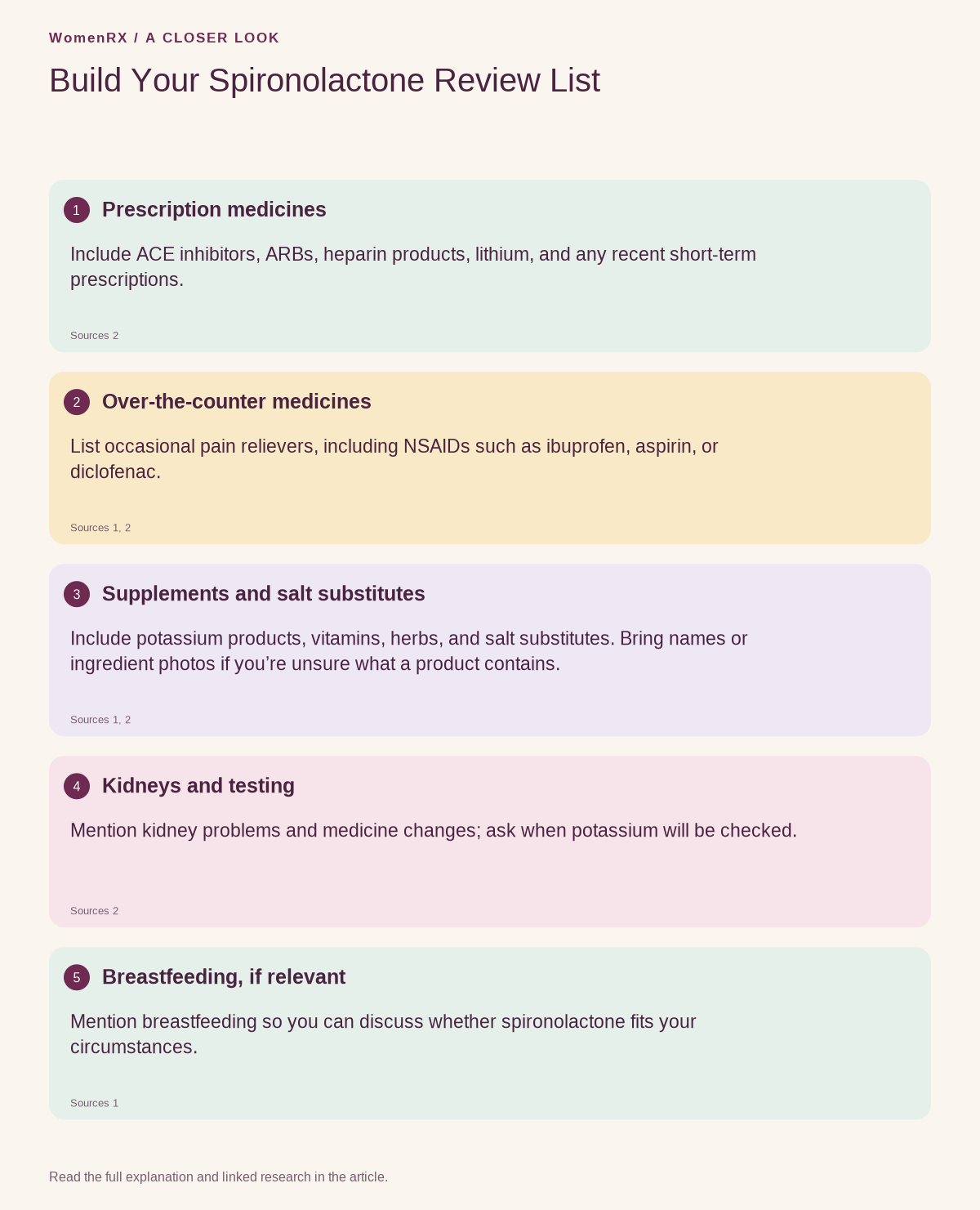
Prescription medicines: Include ACE inhibitors, ARBs, heparin products, lithium, and any recent short-term prescriptions.2
Over-the-counter medicines: List occasional pain relievers, including NSAIDs such as ibuprofen, aspirin, or diclofenac.12
Supplements and salt substitutes: Include potassium products, vitamins, herbs, and salt substitutes. Bring names or ingredient photos if you’re unsure what a product contains.12
Kidneys and testing: Mention kidney problems and medicine changes; ask when potassium will be checked.2
Breastfeeding, if relevant: Mention breastfeeding so you can discuss whether spironolactone fits your circumstances.1
Read the figure as text
Gather these details for an interaction review. If relevant, also mention contraception, pregnancy plans, a current pregnancy, or medicines used during pregnancy.- Prescription medicines: Include ACE inhibitors, ARBs, heparin products, lithium, and any recent short-term prescriptions.2
- Over-the-counter medicines: List occasional pain relievers, including NSAIDs such as ibuprofen, aspirin, or diclofenac.12
- Supplements and salt substitutes: Include potassium products, vitamins, herbs, and salt substitutes. Bring names or ingredient photos if you’re unsure what a product contains.12
- Kidneys and testing: Mention kidney problems and medicine changes; ask when potassium will be checked.2
- Breastfeeding, if relevant: Mention breastfeeding so you can discuss whether spironolactone fits your circumstances.1
More questions, answered
Do I need to avoid all foods that contain potassium?
Don’t cut out potassium-containing foods automatically. Foods can contribute to your overall potassium intake, so ask whether a dietary change makes sense for your medicines, kidney function, and potassium results. 12
Should I stop a potassium supplement before starting spironolactone?
Tell your prescriber what you take and ask what to do with it rather than changing it on your own. Potassium supplements can increase the risk of high potassium with spironolactone. 2