Spironolactone and Alcohol: What Matters for You
Your reason for taking spironolactone, other medicines, kidney health, and current symptoms all matter when you ask about drinking.
There isn’t one drinking rule that fits everyone taking spironolactone. The medicine can contribute to dehydration or low blood pressure if it causes excessive fluid loss, and certain health conditions and medicines can add to those risks. Before you drink, tell a pharmacist or prescriber why you take it, what else you use, and whether you’ve felt dizzy. 12

Start with why you take it
Spironolactone is used for different conditions, including high blood pressure, heart failure, and certain causes of swelling. It can make you pee more. If it causes excessive fluid loss, its US prescribing information warns of symptomatic dehydration, low blood pressure, and worsening kidney function. Those are reasons to make the alcohol question personal, not proof of a direct alcohol-spironolactone interaction. 12
When you ask about drinking, begin with your reason for taking spironolactone. For example, someone taking it alongside other medicines for heart failure may have different considerations from someone taking it for high blood pressure. Your pharmacist or prescriber needs your actual treatment plan to give you a useful answer. 2
Mention the medicines and conditions that change the picture
Bring a current list of prescriptions, over-the-counter medicines, and supplements. Two groups are especially worth naming:
- ACE inhibitors and angiotensin receptor blockers (ARBs). The prescribing information highlights people taking these medicines in its warning about dehydration, low blood pressure, and worsening kidney function with excessive diuresis. It also identifies them as medicines that can increase the risk of high potassium when taken with spironolactone. 2
- NSAIDs, such as ibuprofen, aspirin, and diclofenac. The NHS lists these among medicines that may not mix well with spironolactone. US prescribing information also names NSAIDs as drugs that may contribute to worsening kidney function. If you use one occasionally, say that too. 12
Mention any known kidney-function problem, concern about salt depletion, or use of potassium supplements or potassium-containing salt substitutes. Kidney impairment and those potassium products can increase spironolactone’s high-potassium risk. That’s a separate medication concern, not a reason to assume alcohol raises potassium. 2
Say how you feel now
If you’ve been dizzy or have had vision problems after taking spironolactone, say so before asking whether a drink is a good idea for you. Don’t assume alcohol caused symptoms that started before you drank. The NHS advises waiting until dizziness or vision problems have stopped before driving or using machinery. 1
Pregnancy plans or breastfeeding also belong in your medication review. In particular, the NHS advises checking with a healthcare professional about spironolactone while breastfeeding. 1
A focused way to ask is: “Given why I take spironolactone, my other medicines, my kidney health, and how I’ve been feeling, what’s your advice about alcohol for me?” If you’ve had dizziness, add: “Does that change your advice, and what should I do about the symptom?”
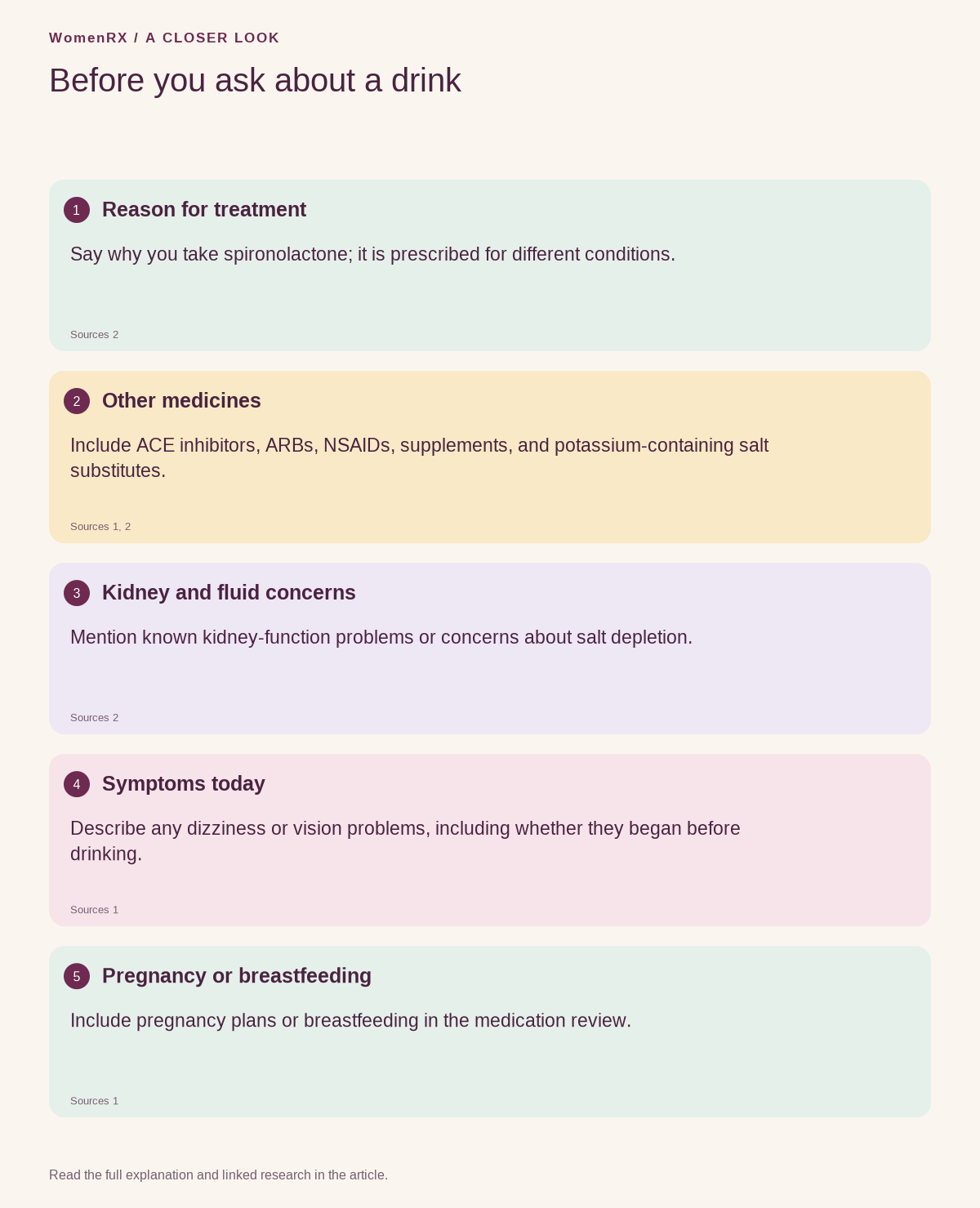
Before you ask about a drink
Reason for treatment: Say why you take spironolactone; it is prescribed for different conditions.2
Other medicines: Include ACE inhibitors, ARBs, NSAIDs, supplements, and potassium-containing salt substitutes.12
Kidney and fluid concerns: Mention known kidney-function problems or concerns about salt depletion.2
Symptoms today: Describe any dizziness or vision problems, including whether they began before drinking.1
Pregnancy or breastfeeding: Include pregnancy plans or breastfeeding in the medication review.1
Read the figure as text
These details help make advice about alcohol specific to your treatment and how you’re feeling.- Reason for treatment: Say why you take spironolactone; it is prescribed for different conditions.2
- Other medicines: Include ACE inhibitors, ARBs, NSAIDs, supplements, and potassium-containing salt substitutes.12
- Kidney and fluid concerns: Mention known kidney-function problems or concerns about salt depletion.2
- Symptoms today: Describe any dizziness or vision problems, including whether they began before drinking.1
- Pregnancy or breastfeeding: Include pregnancy plans or breastfeeding in the medication review.1