What an Ounce of Pumpkin Seeds Adds to Your Meal
An ounce of roasted, salted pumpkin-seed kernels adds protein and fat, but the package matters when you compare portions and sodium.
For one ounce (28 grams) of roasted, salted pumpkin and squash seed kernels, USDA reference data estimate about 163 calories, 8.4 grams of protein, 13.9 grams of fat, 1.8 grams of fiber, and 73 milligrams of sodium. Those numbers describe shelled kernels, not a shell-on handful or every brand. Use the package serving size and sodium figure to compare what you’re buying. 4
Start with an ounce of kernels
If you’re adding pumpkin seeds to oatmeal or packing them as a snack, an ounce is a useful amount to picture. USDA’s April 2018 food-composition data estimate that one ounce (28.35 grams) of roasted kernels with salt added provides about 163 calories, 8.4 grams of protein, 13.9 grams of fat, 1.8 grams of fiber, and 73 milligrams of sodium. It’s a reference estimate, not a measurement of the bag in your kitchen. 4
That protein is a meaningful addition, but it’s worth keeping the portion in view. Seeds also bring fat and calories, so sprinkling some over a meal isn’t the same as building the meal’s entire protein contribution around them. For example, you could add kernels to yogurt and fruit for crunch, or scatter them over a grain-and-bean bowl. The seeds complement the other foods rather than having to do every job themselves. 4
Compare kernels with kernels
The USDA figures above are for kernels, the edible part inside the shell. If you buy shell-on seeds, an ounce weighed with the shells isn’t an ounce of kernels. Check whether the package’s serving size describes the whole shell-on product or shelled seeds before comparing its nutrition panel with kernel figures. 4
Roasted and raw products shouldn’t automatically inherit each other’s nutrition numbers, either. The USDA estimate here describes roasted, salted kernels. For a different preparation, the package label is the better place to find that product’s stated serving size and nutrients. 4
Salt is the most useful difference to check when choosing between otherwise similar bags. The USDA’s 73-milligram sodium estimate belongs to its particular roasted, salted reference food; it isn’t a promise that every salted brand has the same amount. Compare sodium for the same edible weight, especially if one label lists an ounce and another lists a smaller serving. If you’re watching your blood pressure, that comparison has a practical reason: MedlinePlus includes limiting sodium as part of a blood-pressure-friendly eating pattern. It doesn’t mean pumpkin seeds themselves treat high blood pressure. 41
What the nutrient numbers don’t promise
You may see striking protein percentages quoted for pumpkin-seed flour, oilseed meal, or protein isolate. Those are processed ingredients, not interchangeable with an ounce of snackable kernels. One food-processing study, for example, measured protein in pumpkin oilseed isolates. Use a kernel nutrition panel when deciding what a handful adds to lunch. 24
The same distinction matters for health claims. A review of specialty seeds describes promising bioactive compounds but calls for longer, well-designed human intervention trials to establish health effects. Nutrient composition alone doesn’t show that pumpkin seeds correct iron deficiency, ease hormonal symptoms, or offer a special benefit during pregnancy. If you’re pregnant, they can be one food in a varied meal, but the kernel numbers shouldn’t be treated as a pregnancy-specific recommendation. 34
A simple way to use them is to decide what role you want: a crunchy topping, an ingredient mixed into a meal, or a snack. Then check how much you’re actually using against the label’s serving size. That keeps both the protein and the sodium in context without asking a small serving of seeds to be a complete meal. 4
Compare the edible portion
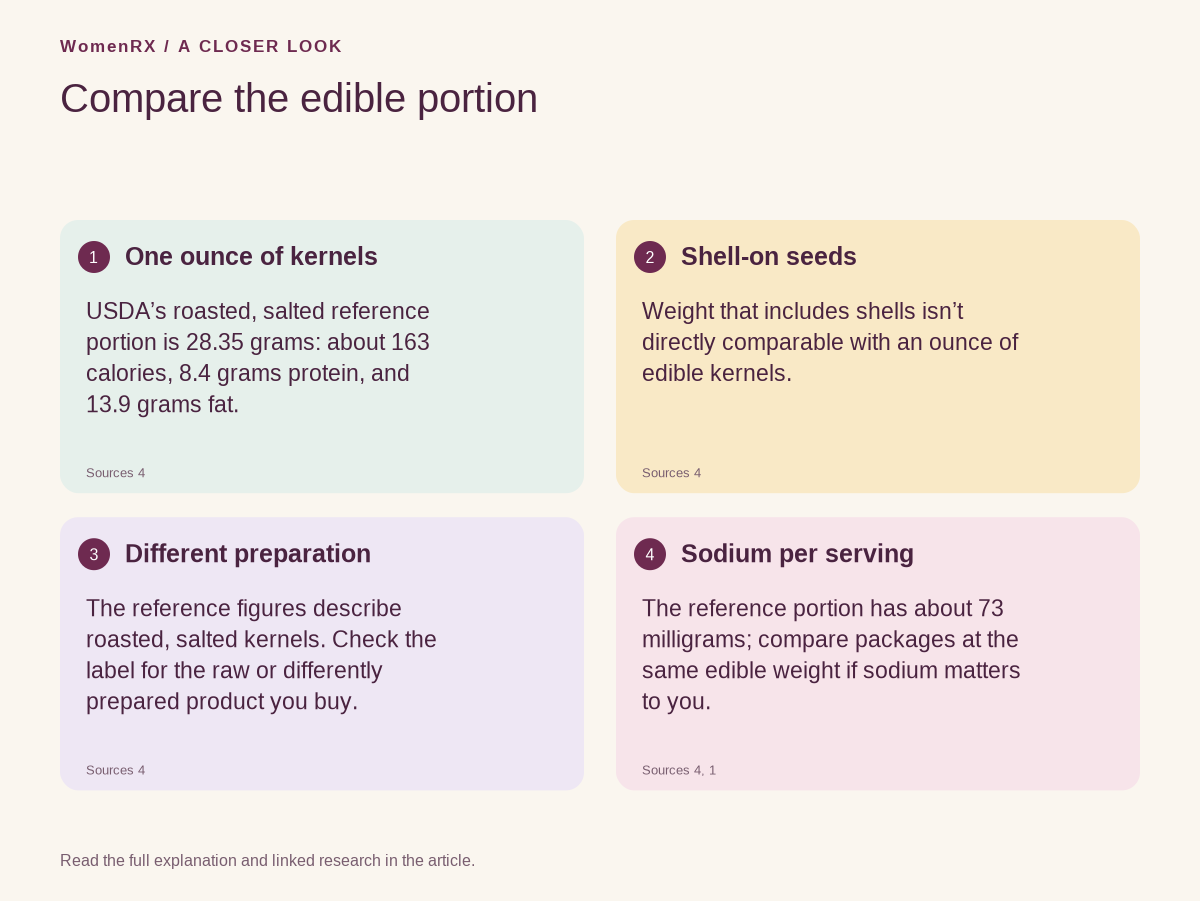
One ounce of kernels: USDA’s roasted, salted reference portion is 28.35 grams: about 163 calories, 8.4 grams protein, and 13.9 grams fat.4
Shell-on seeds: Weight that includes shells isn’t directly comparable with an ounce of edible kernels.4
Different preparation: The reference figures describe roasted, salted kernels. Check the label for the raw or differently prepared product you buy.4
Sodium per serving: The reference portion has about 73 milligrams; compare packages at the same edible weight if sodium matters to you.41
Read the figure as text
Use the defined kernel portion as a reference, then check which food and serving size your package describes.- One ounce of kernels: USDA’s roasted, salted reference portion is 28.35 grams: about 163 calories, 8.4 grams protein, and 13.9 grams fat.4
- Shell-on seeds: Weight that includes shells isn’t directly comparable with an ounce of edible kernels.4
- Different preparation: The reference figures describe roasted, salted kernels. Check the label for the raw or differently prepared product you buy.4
- Sodium per serving: The reference portion has about 73 milligrams; compare packages at the same edible weight if sodium matters to you.41
More questions, answered
Why do some pumpkin-seed protein figures look much higher?
Some figures describe flour or protein isolated from oilseed meal rather than whole kernels. Processing changes what’s being measured. For the seeds you eat, compare the protein amount for the package’s stated serving, or use the USDA’s 8.4-gram estimate for one ounce of roasted, salted kernels as a reference. 24
Sources you can check
- How to Prevent High Blood Pressure: MedlinePlusAccessed 2026-09-25Return to first citation
- Extraction of protein from oilseed meal residues of sesame, hazelnut, almond and pumpkin produced in the oil industry for application in human and animal food.Rahemizadeh N, Gholami A. · RSC advances · 2025Return to first citation
- Specialty seeds: Nutrients, bioactives, bioavailability, and health benefits: A comprehensive review.Alasalvar C, Chang SK, Bolling B, Oh WY, Shahidi F. · Comprehensive reviews in food science and food safety · 2021Return to first citation
- USDA SR Legacy: Seeds, pumpkin and squash seed kernels, roasted, with salt added (FDC 169415)Accessed 2026-09-25Return to first citation