Can Pumpkin Seeds Fit Into a Weight-Management Diet?
Pumpkin seeds add crunch and nutrients, but their nutrition profile alone doesn’t show that they cause weight loss.
Yes. Pumpkin seeds can fit into meals or snacks. Because they’re rich in fat, treat them as a concentrated ingredient: check the product’s serving size and calories, compare plain and seasoned labels, and decide whether the seeds are replacing a topping or being added to the meal. A broad obesity-related finding isn’t proof of weight loss or greater fullness from pumpkin seeds. 2
Pumpkin seeds can add crunch to a meal, but they aren’t a shortcut to weight loss. Their protein, fiber, and unsaturated fats are nutritional features, not proof that eating them leads to weight loss or longer-lasting fullness. 2
MedlinePlus says good nutrition and exercise can help with losing weight. For a meal or snack, a practical question is how the seeds fit into what you already eat. 1
Whole seeds and kernels aren’t quite the same
Whole pumpkin seeds and kernels can differ in carbohydrate and fiber content. 2
Choose based on how you plan to use them, not on a promised weight benefit. Kernels are easy to sprinkle over oatmeal, yogurt, or a salad. Shell-on seeds can be eaten as a snack if you like them that way. When comparing packages, check the serving size and calories on each label. If you want a clearer sense of how much you’re adding, portion some into a bowl rather than eating from a large bag.
Pumpkin seeds are rich in fat: a review reports that lipids make up about 41.4% to 50.5% of pumpkin seeds, with variation among the seeds it describes. That makes it useful to notice the amount you add, especially if they’re going on a meal that already has other toppings. The percentage is a composition measure, not a calorie count for a particular product or a demonstrated weight effect. 2
Compare salted and flavored products on the label
Salted and flavored products can’t be compared just by their names. Check the nutrition facts and ingredient lists for similar serving sizes. Look at sodium, added sugars, and any added oils or flavorings; the specific amounts depend on the product. Don’t assume a weight-loss advantage from a seasoning label; compare the product information instead.
If seeds are topping a meal, decide whether they’ll replace another crunchy topping or be an extra ingredient. For example, you might put kernels on yogurt instead of your usual topping, or add them alongside it. Either can suit your preferences, but the amount you add still contributes to the meal.
What pumpkin-seed weight evidence can tell you
A review broadly relates regular consumption of milpa seeds, including pumpkin seeds, to preventing or mitigating obesity. That broad statement is not, by itself, a pumpkin-seed-specific weight-loss result or evidence that the seeds improve fullness. It also doesn’t show whether weight outcomes differ for women. 2
For a practical choice, compare the product labels, notice the amount you use, and fit the seeds into the overall eating pattern that works for you.
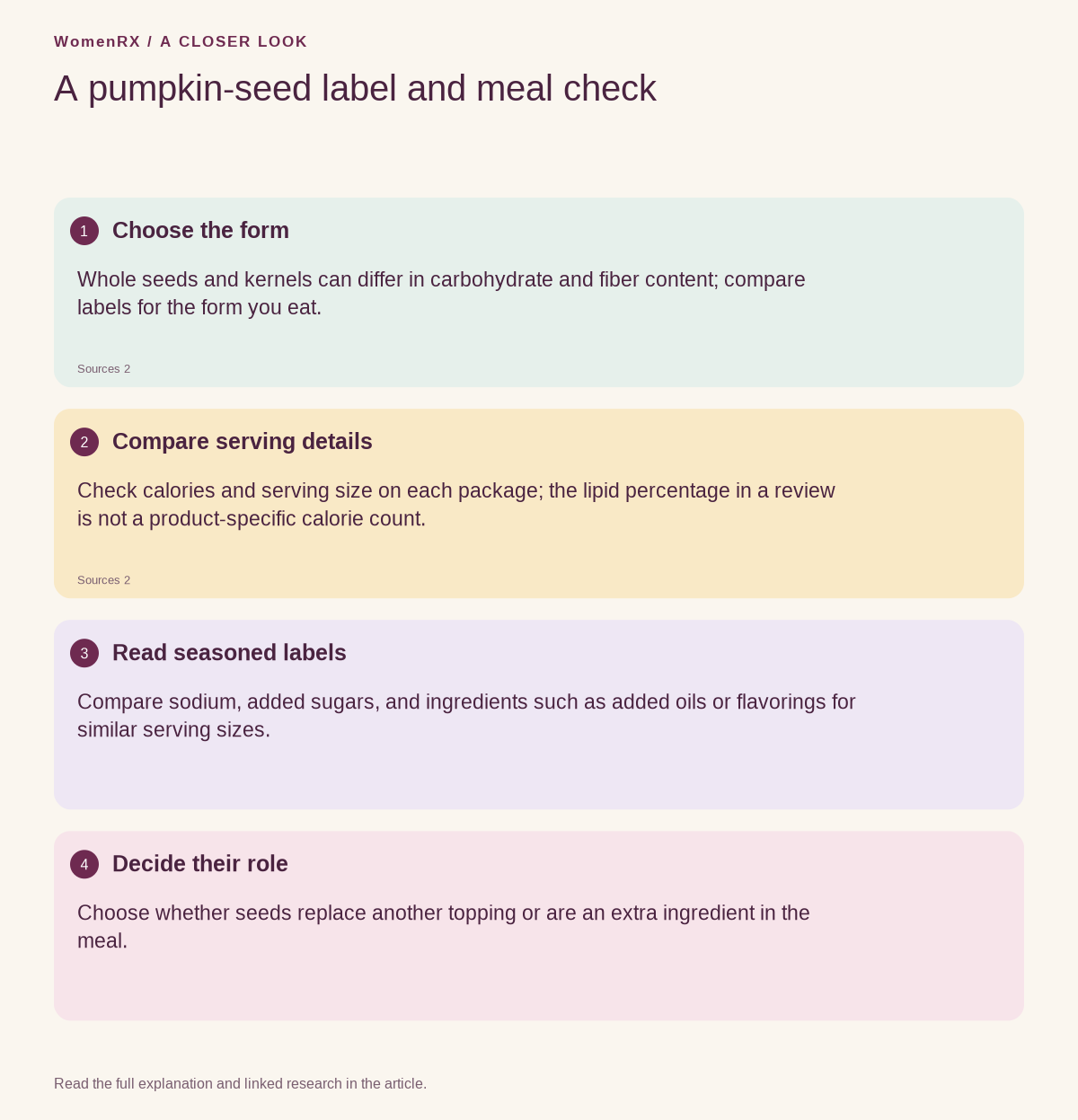
A pumpkin-seed label and meal check
Choose the form: Whole seeds and kernels can differ in carbohydrate and fiber content; compare labels for the form you eat.2
Compare serving details: Check calories and serving size on each package; the lipid percentage in a review is not a product-specific calorie count.2
Read seasoned labels: Compare sodium, added sugars, and ingredients such as added oils or flavorings for similar serving sizes.
Decide their role: Choose whether seeds replace another topping or are an extra ingredient in the meal.
Read the figure as text
Compare the form and product label, then decide how the seeds fit into a meal or snack.- Choose the form: Whole seeds and kernels can differ in carbohydrate and fiber content; compare labels for the form you eat.2
- Compare serving details: Check calories and serving size on each package; the lipid percentage in a review is not a product-specific calorie count.2
- Read seasoned labels: Compare sodium, added sugars, and ingredients such as added oils or flavorings for similar serving sizes.
- Decide their role: Choose whether seeds replace another topping or are an extra ingredient in the meal.
More questions, answered
Should I choose shell-on seeds or kernels?
Choose the form that suits how you plan to eat them. Whole seeds and kernels can differ in carbohydrate and fiber content, so check serving sizes and nutrition information when comparing packages. 2
Sources you can check
- Body Weight: MedlinePlusAccessed 2026-09-25Return to first citation
- Nutritional, bioactive components and health properties of the milpa triad system seeds (corn, common bean and pumpkin).Sánchez-Velázquez OA, Luna-Vital DA, Morales-Hernandez N, Contreras J, Villaseñor-Tapia EC, Fragoso-Medina JA, Mojica L. · Frontiers in nutrition · 2023Return to first citation