What a Calorie Deficit Means, and When to Pause
A calorie deficit can lead to weight loss over time, but it isn’t a required calorie target or a judgment about how you eat.
A calorie deficit means taking in less energy from food and drinks than your body uses over time. A sustained deficit can lead to weight loss, but the definition can’t predict how much you’ll lose or tell you what to eat. 2 4 Whether weight loss is a useful goal depends on your health and circumstances. Pregnancy, breastfeeding, adolescence, and a history of disordered eating all deserve more thought than a generic calorie target.
The idea, without the moral judgment
Your body uses energy for daily living and physical activity. When, over time, more energy comes in than is used, the body stores some of the extra energy as fat. A calorie deficit is the opposite side of that comparison: energy intake is below energy use over time. A sustained deficit can lead to weight loss, but that relationship doesn’t predict how much weight you’ll lose or give you a personal calorie target. 2 4
A deficit isn’t a measure of willpower. It describes energy coming in compared with energy being used, not a particular way of eating. Pursuing a deficit can involve restrictive eating, but the definition doesn’t require skipping meals, avoiding whole food groups, or following rigid rules.
Why one number can’t fit every situation
The right balance between calories and activity differs among people. Health conditions and some medicines can affect weight, too, so the same calorie number shouldn’t be assumed to suit everyone. 2
It helps to separate three questions: Is weight loss a useful goal for my health? Would an energy deficit be an appropriate way to pursue it? And what approach could I maintain while still eating well and living my life? The answer to one doesn’t automatically answer the others.
Times to pause before setting a target
During pregnancy: Pregnancy involves specific nutrient needs that matter for maternal and fetal health. If you’re thinking about a calorie goal, bring those needs into the conversation with your prenatal care team rather than relying on a general adult number. 1
While breastfeeding: If you’re considering weight loss, bring breastfeeding into a conversation about your health and goals rather than borrowing someone else’s calorie target. Weight assessment can take your health history and other individual factors into account. 3
During adolescence: Children’s weight and growth are tracked over time based on age. An adult calorie-deficit target isn’t a substitute for considering growth and individual circumstances. 3
If calorie goals or tracking feel upsetting: You can pause before pursuing a deficit and seek support that takes your circumstances into account. That includes telling someone supporting your care about a current or past eating disorder if it’s relevant to how you feel about the goal.
A medical condition, a medication that may affect weight, or an unexplained weight change can also change what makes sense. MedlinePlus advises discussing unexpected weight gain or loss with a provider; an assessment may consider health history, conditions, and medicines. 2 3
A practical check before pursuing weight loss
Try asking yourself:
- Is there a specific health reason for this goal, or am I reacting to pressure or a number on the scale?
- Could I pursue it while meeting my nutrition needs and keeping daily life manageable?
- Am I pregnant, breastfeeding, still growing, managing a health condition, or taking a medicine that affects weight?
- Do I have a current or past eating disorder or disordered eating? Does tracking food or restricting intake feel upsetting or at odds with how I want to care for myself?
If the goal feels unclear, or one of those situations applies, start by discussing the goal and your health history with a clinician or registered dietitian. A useful next step may be a broader health assessment, not a calorie target. MedlinePlus describes weight assessment as more than the scale, including health history and other factors. 3
A calorie deficit is one way to describe energy balance. It isn’t a verdict on your choices, and it isn’t the right starting point for every person or life stage.
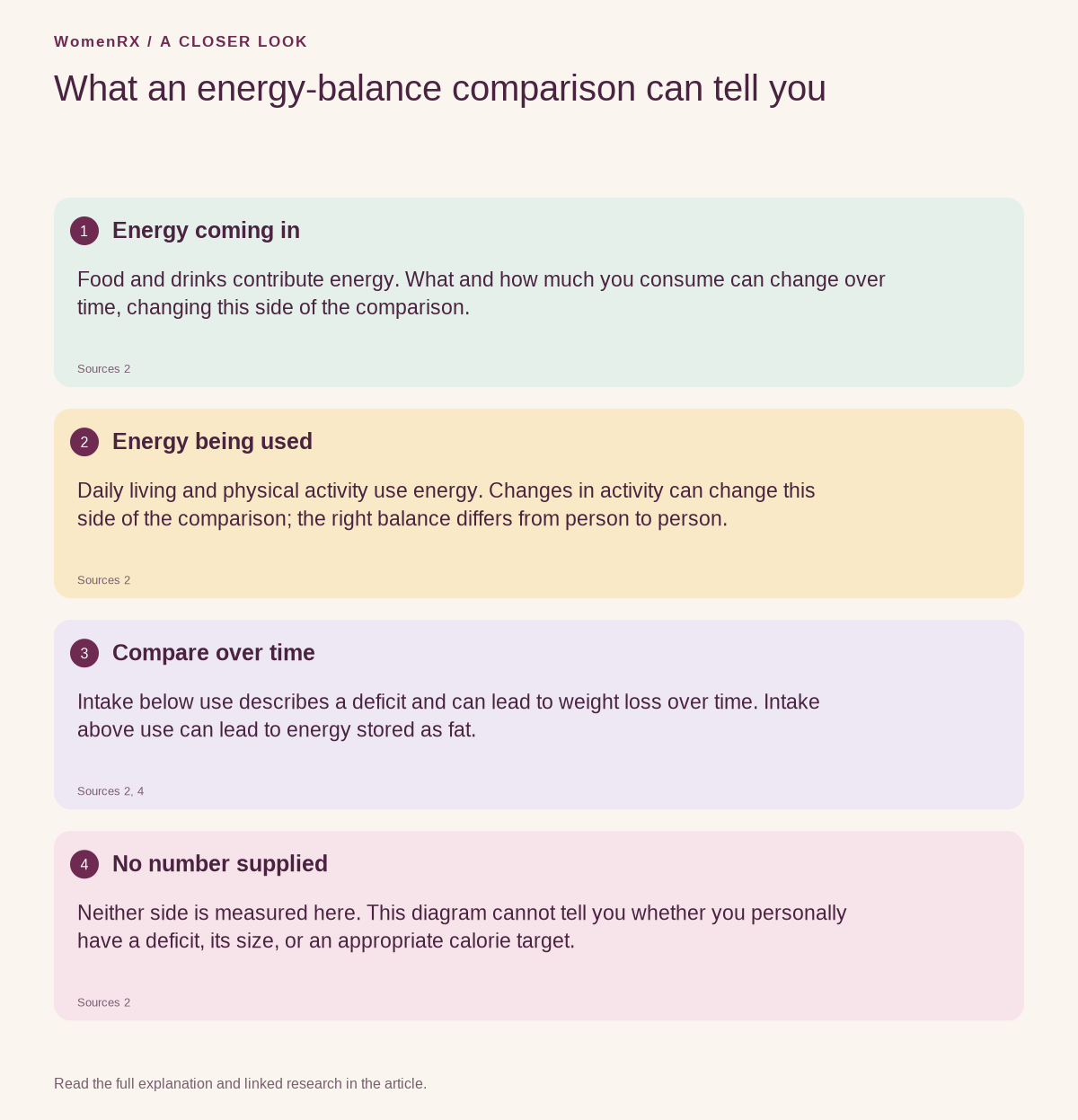
What an energy-balance comparison can tell you
Energy coming in: Food and drinks contribute energy. What and how much you consume can change over time, changing this side of the comparison.2
Energy being used: Daily living and physical activity use energy. Changes in activity can change this side of the comparison; the right balance differs from person to person.2
Compare over time: Intake below use describes a deficit and can lead to weight loss over time. Intake above use can lead to energy stored as fat.24
No number supplied: Neither side is measured here. This diagram cannot tell you whether you personally have a deficit, its size, or an appropriate calorie target.2
Read the figure as text
This conceptual diagram compares energy coming in with energy being used over time. Either side can change as food, drinks, or activity change. It provides no measurements from which to estimate your own balance.- Energy coming in: Food and drinks contribute energy. What and how much you consume can change over time, changing this side of the comparison.2
- Energy being used: Daily living and physical activity use energy. Changes in activity can change this side of the comparison; the right balance differs from person to person.2
- Compare over time: Intake below use describes a deficit and can lead to weight loss over time. Intake above use can lead to energy stored as fat.24
- No number supplied: Neither side is measured here. This diagram cannot tell you whether you personally have a deficit, its size, or an appropriate calorie target.2
More questions, answered
Does a calorie deficit mean I have to count calories?
No. The term describes the relationship between energy intake and energy use over time; it doesn’t require calorie counting or prescribe a particular eating method. 2
What changes about this decision during pregnancy?
Pregnancy brings specific nutrient needs for maternal and fetal health. If you’re considering a calorie goal, discuss how you’ll meet those needs with your prenatal care team rather than treating a general adult number as a complete nutrition plan. 1
Sources you can check
- Dietary Supplements and Life Stages: Pregnancy - Health Professional Fact SheetAccessed 2026-09-25Return to first citation
- Obesity: MedlinePlusAccessed 2026-09-25Return to first citation
- Body Weight: MedlinePlusAccessed 2026-09-25Return to first citation
- The effects of time-restricted eating on energy balance regulation in adults with overweight/obesity and type 2 diabetes.Kramer CK, Zinman B, Feig DS, Retnakaran R. · International journal of obesity (2005) · 2026Return to first citation