Tracking Constipation on Ozempic for a Useful Care Conversation
Constipation is a reported Ozempic side effect, and a short record of your bowel pattern and other symptoms can make it easier to decide what to discuss with your prescriber.
Constipation was reported more often with Ozempic than placebo in some trials, though the rates varied between the two studied doses. Note when the change began, how often you’re having bowel movements, what the stool is like, and any pain, bloating, or nausea. Contact your prescriber if it’s severe, your bowel habits have changed and aren’t improving, or you’re concerned. 1 2
Why constipation belongs on your radar
Constipation can mean fewer bowel movements than usual, hard or dry stool, or difficulty passing stool. You don’t need to have a bowel movement every day for your pattern to be normal; a meaningful change from your usual routine is worth noticing. 2
Constipation is a reported side effect of Ozempic. In placebo-controlled trials among adults with type 2 diabetes, it was reported by 5% of people taking the 0.5 mg dose and 3.1% taking the 1 mg dose, compared with 1.5% taking placebo. Those figures describe the trial groups, not your personal likelihood, and they don’t show a simple increase with the higher dose. 1
A separate review of trials in adults with overweight or obesity without diabetes also found an increased constipation risk associated with semaglutide. Its estimate was a relative risk, which compares groups and doesn’t tell you the absolute chance that any one person will become constipated. 4
Make a useful record, not a perfect diary
A few clear details can help your prescriber or pharmacist assess the change. You could jot them in your phone or bring them up in a message:
- When it started: Include when you first noticed the change and whether it began around a medication start or change. This timing is useful context, but it doesn’t prove what caused the constipation.
- Your bowel pattern: Note how often you’re going, what’s different from your usual pattern, and whether stool is hard, dry, or difficult to pass. Fewer than three bowel movements in a week is one common definition of constipation, but your usual pattern matters too. 2
- Other symptoms: Include straining, discomfort, stomach ache, bloating, or nausea, and whether these are improving or getting worse. 2 3
- Other medicines or changes: List your current medicines and any recent changes. Medicines can be one of several contributors to constipation, and it’s reasonable to ask whether any could be playing a part. 2
You don’t need to wait for a particular number of days before raising a concern. A new or persistent change, especially one that isn’t getting better, is a sensible reason to contact your prescriber or ask a pharmacist for advice. 2 3
When to seek medical advice
Contact your prescriber if constipation is severe, your bowel habits have changed and aren’t improving, or you’re unsure how to handle it while taking Ozempic. If accompanying stomach symptoms, such as pain, bloating, or nausea, are worsening, contact your prescriber rather than waiting to see if the constipation settles. Severe constipation, fecal impaction, ileus, and intestinal obstruction have been reported after Ozempic was approved for use. These postmarketing reports identify possible serious problems but don’t establish how often they happen. 1 2 3
If you’re also having nausea, vomiting, or diarrhea that makes it hard to keep up with fluids, mention that promptly. Ozempic labeling notes postmarketing reports of kidney injury, most often in people whose gastrointestinal symptoms led to dehydration. 1
Don’t change your Ozempic dose on your own. Share your symptom record and ask your prescriber what to do next. For general constipation self-care, MedlinePlus suggests fruits, vegetables, and grains with fiber, plenty of fluids, and asking a health professional before using laxatives. What’s appropriate for you can depend on your health and other medicines. 2
Pregnancy and postpartum context
Constipation is common during pregnancy and after giving birth, so tell your prescriber if either applies. That context may help the discussion, but it doesn’t establish that pregnancy, postpartum changes, or hormones are the cause of your symptoms. The Ozempic trial figures above don’t report constipation rates by sex, pregnancy, or postpartum status. 1 3
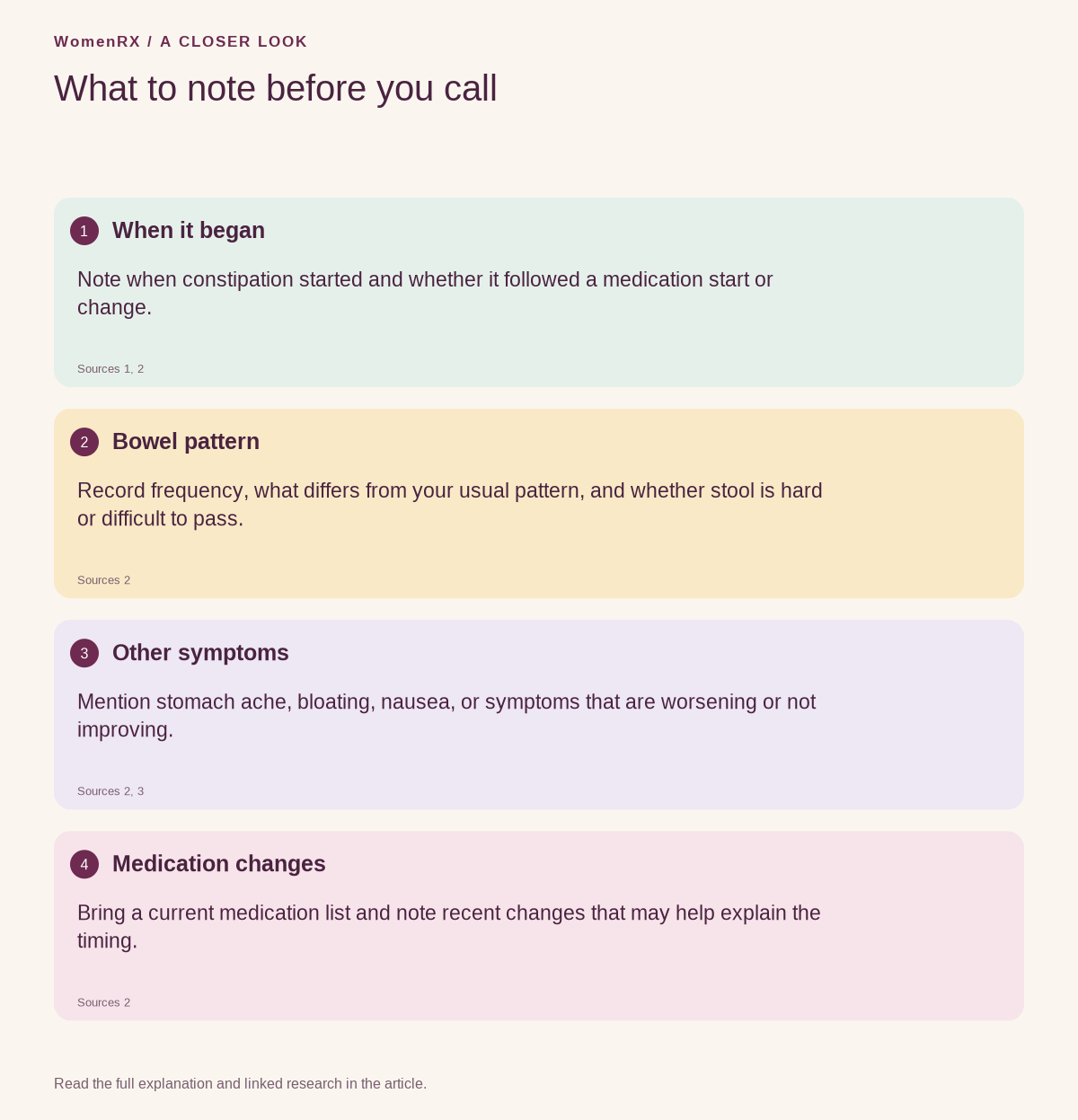
What to note before you call
When it began: Note when constipation started and whether it followed a medication start or change.12
Bowel pattern: Record frequency, what differs from your usual pattern, and whether stool is hard or difficult to pass.2
Other symptoms: Mention stomach ache, bloating, nausea, or symptoms that are worsening or not improving.23
Medication changes: Bring a current medication list and note recent changes that may help explain the timing.2
Read the figure as text
A brief record can help you explain what changed and whether other symptoms or medication changes are part of the picture.- When it began: Note when constipation started and whether it followed a medication start or change.12
- Bowel pattern: Record frequency, what differs from your usual pattern, and whether stool is hard or difficult to pass.2
- Other symptoms: Mention stomach ache, bloating, nausea, or symptoms that are worsening or not improving.23
- Medication changes: Bring a current medication list and note recent changes that may help explain the timing.2
More questions, answered
Does constipation mean Ozempic is causing a blockage?
No. Constipation alone doesn’t show that you have an obstruction. However, ileus, intestinal obstruction, severe constipation, and fecal impaction have been reported after Ozempic’s approval, so severe or persistent symptoms deserve medical advice rather than being brushed off as expected. 1
Should I stop or change my Ozempic dose?
Don’t adjust the dose on your own. Contact your prescriber with the timing and details of your symptoms so you can discuss an appropriate next step.
Sources you can check
- OZEMPIC (SEMAGLUTIDE) INJECTION, SOLUTION [A-S MEDICATION SOLUTIONS] | US prescribing information and patient instructionsAccessed 2026-09-25Return to first citation
- Constipation | MedlinePlusAccessed 2026-09-25Return to first citation
- Constipation - NHSAccessed 2026-09-25Return to first citation
- Gastrointestinal adverse events associated with GLP-1 RA in non-diabetic patients with overweight or obesity: a systematic review and network meta-analysis.Ismaiel A, Scarlata GGM, Boitos I, Leucuta DC, Popa SL, Al Srouji N, Abenavoli L, Dumitrascu DL. · International journal of obesity (2005) · 2025Return to first citation