Oral Minoxidil for Women: What It Can Treat
Oral minoxidil may be considered for some hair-loss patterns, but the cause matters because postpartum shedding and female pattern hair loss aren’t the same diagnosis.
Minoxidil is a vasodilator, but its hair-growth effects appear to involve more than widening blood vessels, and the exact mechanism isn’t settled. Oral minoxidil has been discussed as a possible treatment for female pattern hair loss and chronic telogen effluvium. That doesn’t establish that it treats postpartum shedding or every other cause of hair loss, so identifying the pattern comes first. 3 2
How a vasodilator became a hair-loss treatment
Minoxidil widens blood vessels. Its effect on hair appears to involve more than that: proposed actions include changes in hair-growth signaling and the cycle that moves follicles between growing and resting phases. These pathways help explain why researchers consider minoxidil for hair loss, but they don’t amount to a complete, settled explanation of how it works. 3
The form matters. Topical minoxidil is applied to the scalp, while oral minoxidil is taken by mouth. A review describes oral use as off-label for hair loss, including female pattern hair loss and chronic telogen effluvium, a form of ongoing shedding. The review does not establish that oral treatment works equally well for every woman with either diagnosis. 3
Pattern thinning and shedding call for different questions
Female pattern hair loss is a distinct diagnosis from shedding that begins after a trigger. Hair loss can have several causes, including illness, some medicines, stress, and poor nutrition. A woman may also have more than one cause at once: the American Academy of Dermatology gives the example of noticeable shedding a few months after having a baby alongside early hereditary hair loss. 1 2
That overlap is one reason the timing and course of hair loss matter. A clinician assessing hair loss may ask when it began and whether it came on quickly, and examine the scalp and other clues. Sometimes hair regrows on its own; in other cases, treating an underlying cause may help. The right treatment depends on what is causing the loss, not just on the fact that hair is shedding. 1 2
Postpartum shedding and chronic telogen effluvium shouldn’t be treated as interchangeable labels. The oral-minoxidil review discusses chronic telogen effluvium, but that alone doesn’t show that the same treatment benefit applies to shedding after childbirth. Nor does it mean minoxidil is a general treatment for hair loss from illness, medicines, or other causes. 1 3
What to weigh before considering the pill
The useful first step is to clarify the diagnosis: gradual pattern thinning, ongoing diffuse shedding, or more than one process may call for different approaches. Share when the loss began and any relevant changes, such as recent childbirth, illness, or a medication change. Those details can help a dermatologist work out whether minoxidil is relevant at all. 2
Topical minoxidil has a more established place in the guidance here: the review identifies topical forms as approved for androgenetic hair loss in women and men, and the AAD says topical minoxidil can help early hair loss. That doesn’t prove oral treatment has the same benefits or risks. The oral evidence described for women includes female pattern hair loss and chronic telogen effluvium, but it does not settle how much benefit to expect for an individual or whether postpartum shedding responds similarly. 2 3
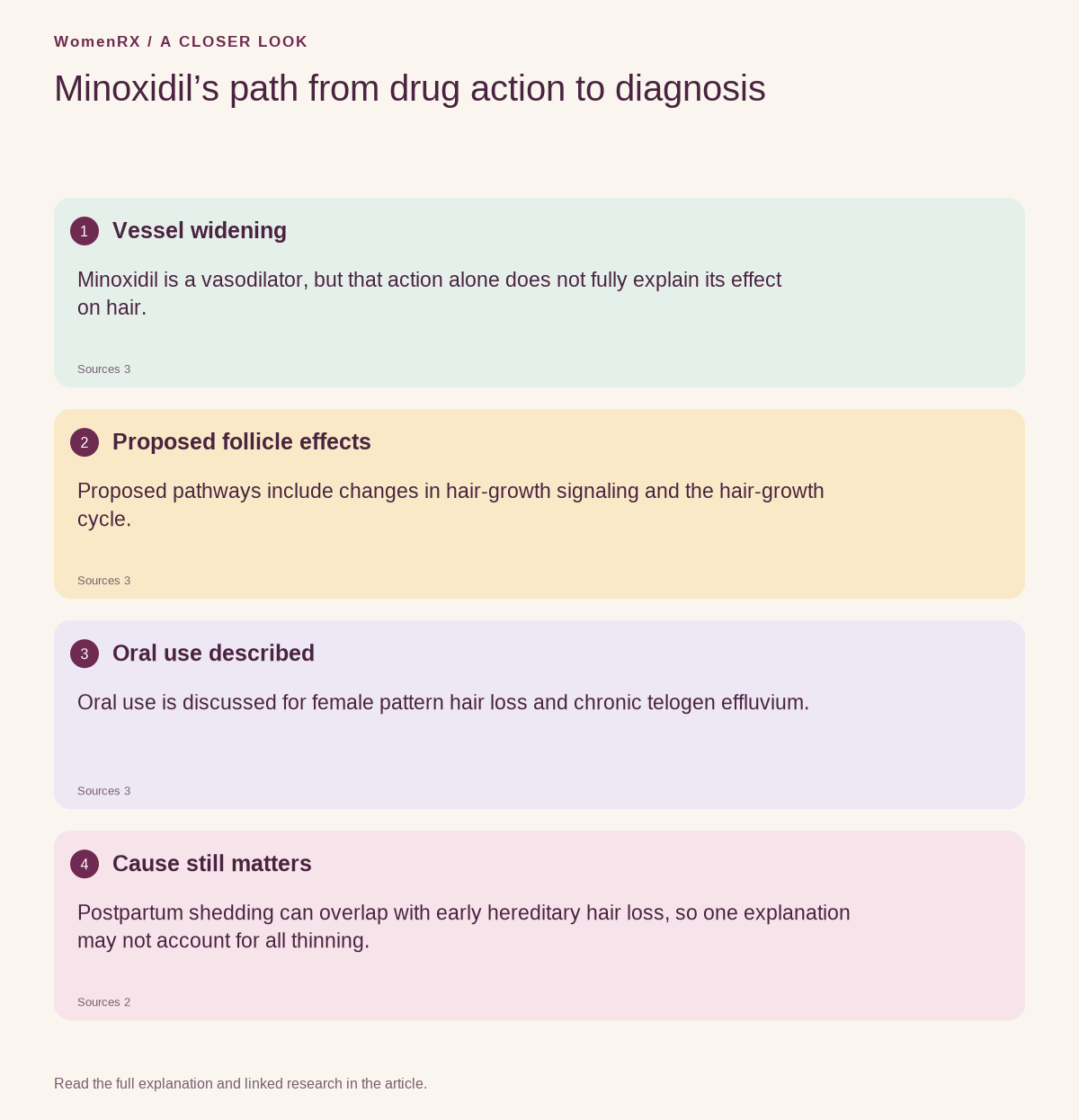
Minoxidil’s path from drug action to diagnosis
Vessel widening: Minoxidil is a vasodilator, but that action alone does not fully explain its effect on hair.3
Proposed follicle effects: Proposed pathways include changes in hair-growth signaling and the hair-growth cycle.3
Oral use described: Oral use is discussed for female pattern hair loss and chronic telogen effluvium.3
Cause still matters: Postpartum shedding can overlap with early hereditary hair loss, so one explanation may not account for all thinning.2
Read the figure as text
Separate minoxidil’s known vasodilator action from proposed follicle effects, then connect the treatment question to the type of hair loss.- Vessel widening: Minoxidil is a vasodilator, but that action alone does not fully explain its effect on hair.3
- Proposed follicle effects: Proposed pathways include changes in hair-growth signaling and the hair-growth cycle.3
- Oral use described: Oral use is discussed for female pattern hair loss and chronic telogen effluvium.3
- Cause still matters: Postpartum shedding can overlap with early hereditary hair loss, so one explanation may not account for all thinning.2
More questions, answered
Is oral minoxidil the same as topical minoxidil?
No. One is taken by mouth and the other is applied to the scalp. Evidence and approval for topical minoxidil don’t automatically establish the benefits or risks of oral use for hair loss; oral use for hair loss is off-label. 3
Does oral minoxidil treat hair shedding after childbirth?
The evidence described for oral minoxidil includes chronic telogen effluvium, but it doesn’t establish a benefit specifically for postpartum shedding. Hair shedding after childbirth can also occur alongside another type of hair loss, so the pattern and timing matter. 2 3
Sources you can check
- Hair Loss | Alopecia | Alopecia Areata | MedlinePlusAccessed 2026-09-25Return to first citation
- Hair loss: Diagnosis and treatmentAccessed 2026-09-25Return to first citation
- Minoxidil: a comprehensive review.Gupta AK, Talukder M, Venkataraman M, Bamimore MA. · The Journal of dermatological treatment · 2022Return to first citation