Oral Minoxidil and Weight Gain: When Swelling Needs Attention
A change on the scale alone doesn’t tell you whether you’re retaining fluid, but new swelling or breathing symptoms deserve a closer look.
Oral minoxidil can cause fluid retention, but weight gain isn’t inevitable, and a scale reading alone can’t identify the cause. A review of low-dose use for hair loss reported fluid retention in 1.3% to 10% of patients, often within the first 1 to 3 months; that range isn’t a personal prediction. Contact your prescriber about new swelling or unexplained gain, and seek urgent assessment for breathing difficulty, palpitations, or one-sided leg swelling. 3 6 1
A higher number on the scale doesn’t automatically mean minoxidil is causing fluid retention. Body weight includes water as well as fat, muscle, and bone, and everyday factors can shift it. But new swelling after starting oral minoxidil is worth discussing with your prescriber, especially if it’s getting worse or comes with other symptoms. 3 6
What the change might mean
Low-dose oral minoxidil used for hair loss can be associated with fluid retention. A 2025 review reported it in 1.3% to 10% of patients, particularly women, and said it typically appeared within 1 to 3 months. Those figures summarize studies with different patients and methods, so they don’t predict what will happen to you. 6
One small study reported lower-leg and periorbital swelling in men taking low-dose minoxidil. Because that study included men only, it doesn’t establish how often those symptoms occur in women. 5
Timing can be a useful clue, not proof. A gain soon after starting minoxidil may raise the question of fluid retention, but weight can change for other reasons too. After birth, swelling in the legs and feet can also occur as part of postpartum changes, so recent delivery is useful context to share rather than a reason to assume one cause. If you’re pregnant, tell your prescriber when you discuss the change; don’t assume minoxidil explains it. 2 3
Choose your next step by symptoms
New swelling or unexplained weight gain, without other concerning symptoms: Contact the prescriber who manages your minoxidil. Describe when the change began, where you’re swollen, and whether it’s progressing. Don’t change or stop a prescribed dose on your own; ask the prescriber what to do.
Swelling with new breathing difficulty, palpitations, or swelling or pain in one leg: Seek urgent medical assessment. These symptoms can have causes beyond minoxidil, and shouldn’t be sorted out by watching the scale at home. 1
Severe trouble breathing, a tight or heavy chest, or chest pain spreading to your arm, back, neck, or jaw: Get emergency help now. 1
Serious complications involving fluid around the heart have been reported, but they’re rare. Case reports and reviews don’t tell us the chance of this happening to a woman taking low-dose minoxidil for hair loss. Most published cases summarized in one report involved people using minoxidil for high blood pressure, often with kidney disease or other health conditions. 4 6
What to note before you call
Keep it simple: write down when you started minoxidil, when the weight change or swelling began, where you notice swelling, and whether you have breathing changes, palpitations, or one-sided leg symptoms. Mention pregnancy or a recent birth, and any other recent changes that might help explain the timing. The point isn’t to diagnose yourself; it’s to give the prescriber a clearer picture of what changed and when.
Swelling or Weight Change: What Next?
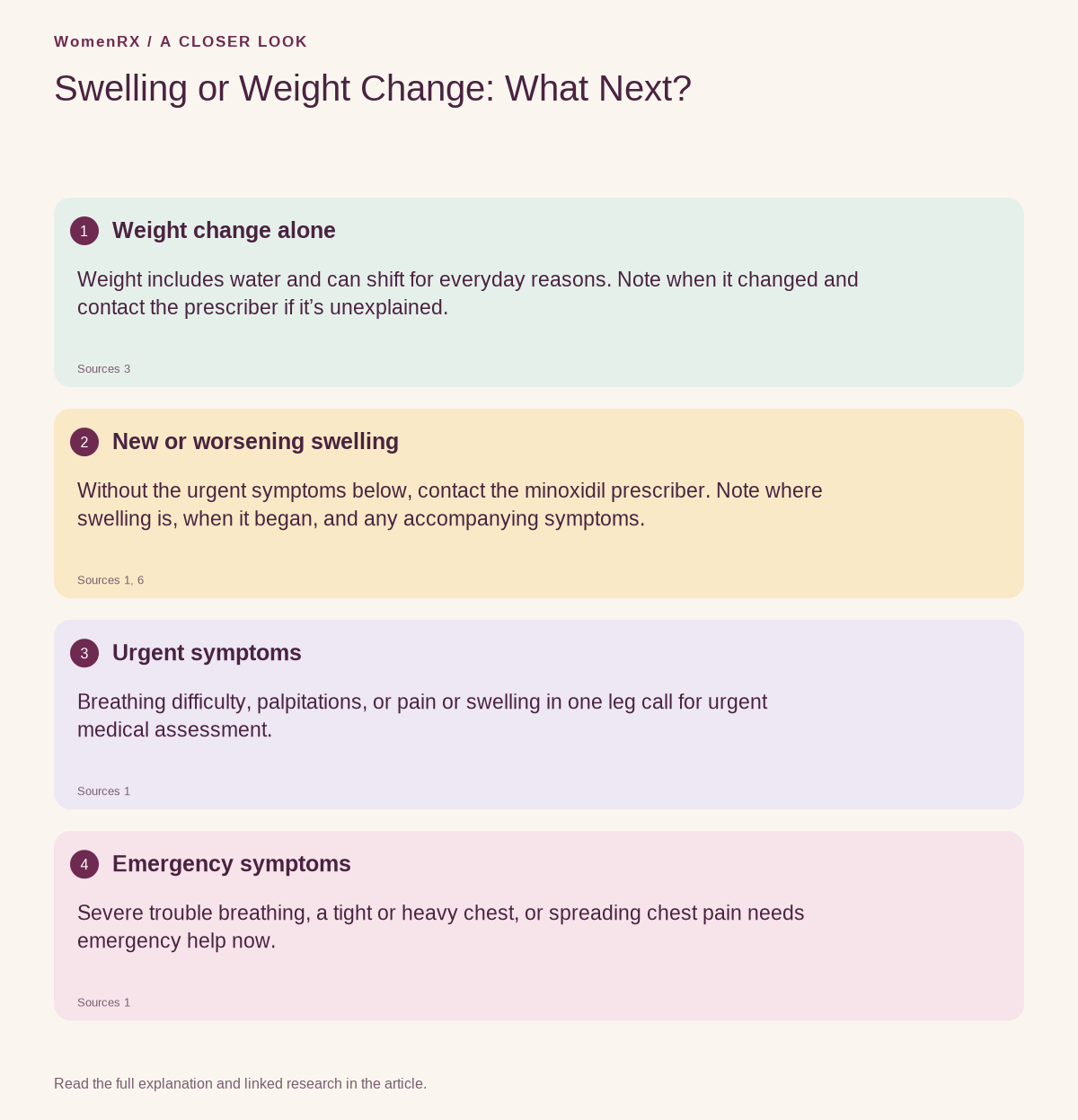
Weight change alone: Weight includes water and can shift for everyday reasons. Note when it changed and contact the prescriber if it’s unexplained.3
New or worsening swelling: Without the urgent symptoms below, contact the minoxidil prescriber. Note where swelling is, when it began, and any accompanying symptoms.16
Urgent symptoms: Breathing difficulty, palpitations, or pain or swelling in one leg call for urgent medical assessment.1
Emergency symptoms: Severe trouble breathing, a tight or heavy chest, or spreading chest pain needs emergency help now.1
Read the figure as text
Use symptoms, not the scale alone, to choose whether to contact the prescriber, seek urgent assessment, or get emergency help.- Weight change alone: Weight includes water and can shift for everyday reasons. Note when it changed and contact the prescriber if it’s unexplained.3
- New or worsening swelling: Without the urgent symptoms below, contact the minoxidil prescriber. Note where swelling is, when it began, and any accompanying symptoms.16
- Urgent symptoms: Breathing difficulty, palpitations, or pain or swelling in one leg call for urgent medical assessment.1
- Emergency symptoms: Severe trouble breathing, a tight or heavy chest, or spreading chest pain needs emergency help now.1
More questions, answered
Does weight gain mean minoxidil is causing fluid retention?
Not necessarily. Weight includes water as well as other body tissue, and everyday factors can affect the number. Swelling and its timing are useful details to report, but neither proves the cause. 3 6
Should I stop taking oral minoxidil if I notice swelling?
Don’t change or stop a prescribed dose on your own. Contact the prescriber who manages it, and seek urgent assessment if swelling comes with breathing difficulty, palpitations, or swelling or pain in one leg. 1 6
Sources you can check
- Shortness of breath - NHSAccessed 2026-09-25Return to first citation
- Postpartum Care: MedlinePlusAccessed 2026-09-25Return to first citation
- Body Weight: MedlinePlusAccessed 2026-09-25Return to first citation
- Cardiac Tamponade due to Minoxidil use: A Case Report and Review of the Literature.Nakarmi P, Hermiz J, Vempati R, Chandna S, Bhagat U, Loree S, Toquica Gahona C. · European journal of case reports in internal medicine · 2025Return to first citation
- Side Effects' Frequency Assessment of Low Dose Oral Minoxidil in Male Androgenetic Alopecia Patients.Bloch LD, Dantas Carlos RM. · Skin appendage disorders · 2025Return to first citation
- Characterization and Management of Adverse Events of Low-Dose Oral Minoxidil Treatment for Alopecia: A Narrative Review.Jimenez-Cauhe J, Lo Sicco KI, Shapiro J, Hermosa-Gelbard A, Burgos-Blasco P, Melian-Olivera A, Ortega-Quijano D, Pindado-Ortega C, Buendia-Castaño D, Asz-Sigall D, Vaño-Galvan S. · Journal of clinical medicine · 2025Return to first citation