Menopause Fatigue: When Might Supplements Help?
Iron or vitamin D may be useful when a deficiency is identified, but fatigue around menopause can have other causes.
If you’re tired for weeks or fatigue is affecting daily life, finding out why is more useful than starting a supplement at random. Sleep disruption, iron-deficiency anemia, thyroid problems, and other conditions can all contribute. Iron stores may run low before anemia appears, so period history and appropriate blood tests can matter. A small trial in adults with iron-deficiency anemia reported improved energy but no clear comparative fatigue result; it doesn’t show fatigue benefit without anemia. 1346
Start with the pattern, not the supplement aisle
Fatigue can show up around menopause, but timing alone doesn’t tell you what’s causing it. Hormonal changes and poor sleep are possibilities. So are stress, anemia, diabetes, thyroid disease, and sleep apnea. For example, waking repeatedly at night points toward a different question than feeling short of breath and noticing your heart pounding when you climb stairs. Neither pattern is a diagnosis, but each is useful to describe. 13
If your periods are still changing, mention whether bleeding has become heavy or changed. Heavy menstrual bleeding is a factor considered when assessing iron-deficiency risk among women of reproductive age, but bleeding history alone can’t establish that you’re low in iron. One study that included this factor involved women attending a chronic pain clinic, not a group selected for menopause symptoms. If your periods have stopped, share that context too, along with any sleep disruption or other changes; menopause timing alone doesn’t identify the cause of fatigue. 145
Which findings make a supplement relevant?
| Possible contributor | What assessment can clarify | Where supplements fit |
|---|---|---|
| Iron-deficiency anemia | Iron-deficiency anemia can cause fatigue, weakness, and trouble concentrating. Hemoglobin and measures of iron stores can help identify it. 4 | Iron treats an iron problem, not menopause fatigue as a category. In a 60-day randomized trial of 96 adults with iron-deficiency anemia, iron groups had greater improvement in hemoglobin than a placebo group. The abstract also says participants reported improved energy and quality of life, but it gives no clear comparative fatigue result. The trial included men and non-pregnant, non-lactating women; it did not report women’s results separately. 6 |
| Low iron stores without anemia | Iron stores can fall while hemoglobin remains in the normal range. Ferritin helps assess stores, though inflammation can affect its interpretation. 4 | This is different from proven iron-deficiency anemia. The trial above doesn’t establish whether iron relieves fatigue in people with low stores but no anemia. 46 |
| Vitamin D deficiency | A blood test can measure vitamin D status when deficiency is a concern. 2 | Supplements are used to treat vitamin D deficiency. That supports treating the deficiency, not using vitamin D as a proven fatigue treatment when a deficiency hasn’t been identified. 2 |
| Sleep or another medical cause | Sleep history and symptoms may suggest a different direction. Assessment for persistent fatigue may include tests for anemia, diabetes, or an overactive thyroid. 13 | Adding nutrients may miss the cause. The useful next step depends on what the assessment finds. 13 |
Why a normal hemoglobin result may not settle the iron question
Iron deficiency develops in stages. Stored iron can decline before hemoglobin drops enough to indicate anemia. That’s why a hemoglobin result alone may not answer whether your iron stores are low. Ferritin measures those stores, but inflammation can affect the result, so it may need to be considered alongside other measurements and your history. 4
This distinction works both ways. Fatigue alone doesn’t mean you need iron. The iron trial reported that participants with iron-deficiency anemia experienced improved energy, but it didn’t provide a clear comparative fatigue result, and it can’t establish a benefit for people without anemia. Supplemental iron can also cause nausea and constipation, particularly at high doses. 46
When to get fatigue checked
If you’ve been tired for several weeks without a clear explanation, or it’s interfering with daily life, arrange an assessment rather than cycling through supplements. Describe whether poor sleep, heavy periods, or other changes came before the fatigue. Mention weight loss, mood changes, or reports that you gasp or choke during sleep, too. Those details can help direct the search for a cause. 13
If a deficiency is found, you can discuss treatment for that finding. If it isn’t, that’s useful information as well: it leaves room to look at sleep and other possible causes instead of assuming the next supplement will be the one that works. 1234
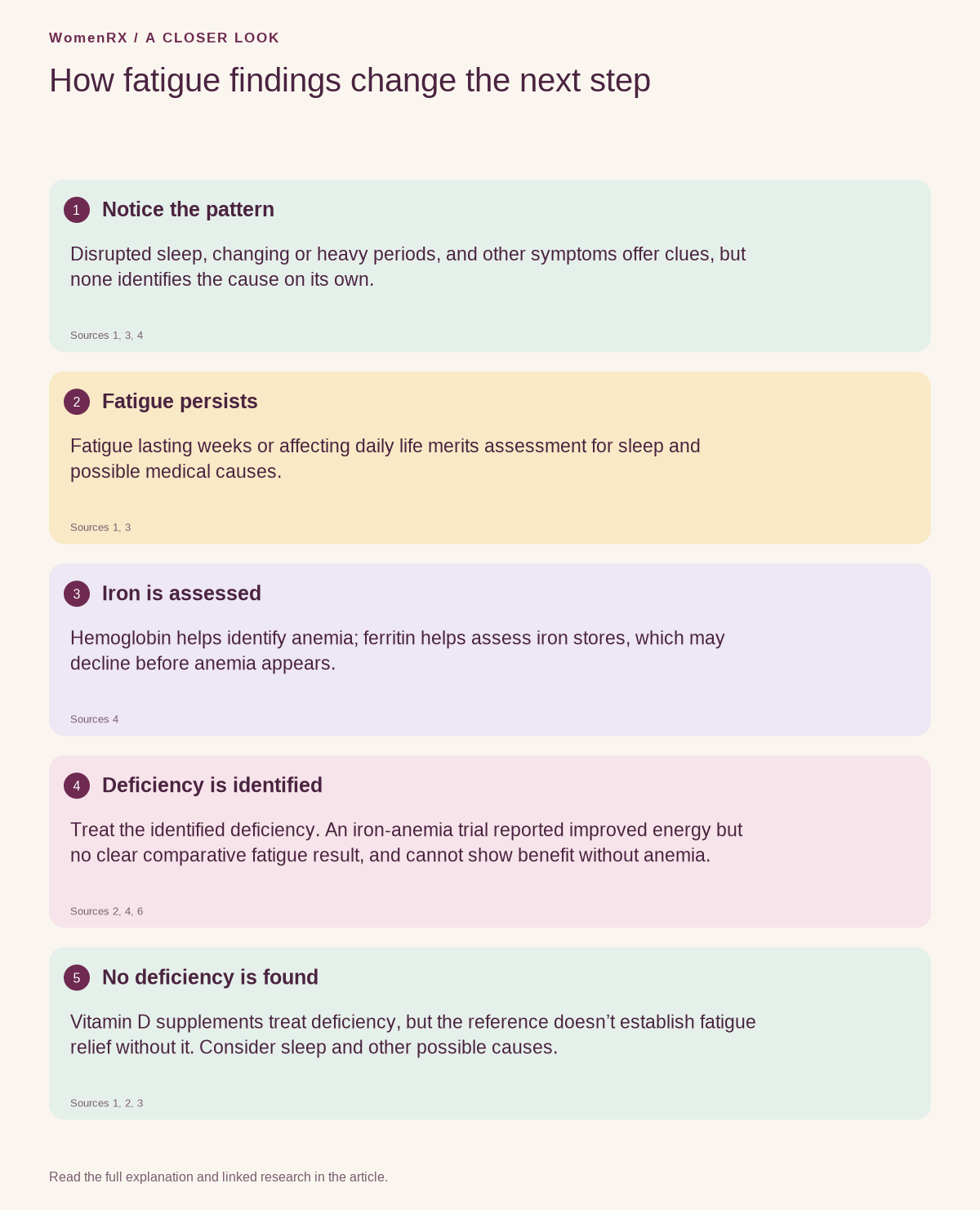
How fatigue findings change the next step
Notice the pattern: Disrupted sleep, changing or heavy periods, and other symptoms offer clues, but none identifies the cause on its own.134
Fatigue persists: Fatigue lasting weeks or affecting daily life merits assessment for sleep and possible medical causes.13
Iron is assessed: Hemoglobin helps identify anemia; ferritin helps assess iron stores, which may decline before anemia appears.4
Deficiency is identified: Treat the identified deficiency. An iron-anemia trial reported improved energy but no clear comparative fatigue result, and cannot show benefit without anemia.246
No deficiency is found: Vitamin D supplements treat deficiency, but the reference doesn’t establish fatigue relief without it. Consider sleep and other possible causes.123
Read the figure as text
The same tired feeling can call for different questions before a supplement makes sense.- Notice the pattern: Disrupted sleep, changing or heavy periods, and other symptoms offer clues, but none identifies the cause on its own.134
- Fatigue persists: Fatigue lasting weeks or affecting daily life merits assessment for sleep and possible medical causes.13
- Iron is assessed: Hemoglobin helps identify anemia; ferritin helps assess iron stores, which may decline before anemia appears.4
- Deficiency is identified: Treat the identified deficiency. An iron-anemia trial reported improved energy but no clear comparative fatigue result, and cannot show benefit without anemia.246
- No deficiency is found: Vitamin D supplements treat deficiency, but the reference doesn’t establish fatigue relief without it. Consider sleep and other possible causes.123
Sources you can check
- Tiredness and fatigue - NHSAccessed 2026-09-25Return to first citation
- Vitamin D Deficiency: MedlinePlusAccessed 2026-09-25Return to first citation
- Fatigue: MedlinePlusAccessed 2026-09-25Return to first citation
- Iron - Health Professional Fact SheetAccessed 2026-09-25Return to first citation
- Prevalence of Risk of Iron Deficiency.Alobeid B, Ali R, Buckley N. · Canadian journal of pain = Revue canadienne de la douleur · 2026Return to first citation
- Efficacy of Plant-Based Iron and Vitamin C in Adults With Iron Deficiency Anemia: A Randomized, Double-Blind Clinical Study.Patel MN, Patel N, Maheshvari J. · Cureus · 2025Return to first citation