Is DASH a Practical Eating Pattern for Women Over 40?
DASH is a flexible, blood-pressure-focused eating pattern, not a guaranteed weight-loss plan or a required menu.
DASH can be a practical option if you want to eat with blood pressure in mind. It emphasizes vegetables, fruit, and whole grains while limiting sugary drinks and sweets; blood-pressure guidance also recommends less sodium. DASH-patterned groceries can include nuts, seeds, legumes, and dairy or nondairy choices. Research supports blood-pressure and cholesterol benefits, but doesn’t establish weight loss or a menopause-specific response. 2 3 5
What DASH asks you to change
DASH stands for Dietary Approaches to Stop Hypertension. Its clearest food-pattern features are more vegetables, fruit, and whole grains, and fewer sugar-sweetened drinks and sweets. Blood-pressure guidance also points to limiting sodium, getting more potassium from food, and choosing foods lower in fat. Those principles describe a direction, not a required daily menu. 2 3
There’s more to consider than produce and grains. A DASH-patterned grocery trial protocol included nuts, seeds, and legumes in its vegetarian adaptations, accommodated dairy or nondairy choices, and limited saturated fat in the groceries selected. Those details show how one program put the pattern into practice; they aren’t a universal menu or proof that every adaptation produces the same results. 5
That flexibility can make the pattern feel more workable. For example, if you already cook with lentils, you might build on a familiar meal by adding vegetables and a whole grain. If dairy doesn’t suit you, a nondairy choice may fit better; one trial protocol accommodated people with lactose intolerance. These are examples, not a prescribed menu. The protocol let participants choose groceries to suit their preferences, while recognizing that access to food can affect what’s realistic. 5
The best-supported reason to consider it
The strongest case for DASH is blood pressure. MedlinePlus describes it as a plan shown in research studies to lower high blood pressure and improve cholesterol levels. A 2025 review of hypertension guidelines also lists DASH among the dietary patterns recommended for blood-pressure management. These are studied outcomes, not a promise that every person will see the same change. 2 4
That doesn’t mean it replaces prescribed care. Blood-pressure treatment can include healthy eating and medicine, and some people need medication when lifestyle changes aren’t enough. If you’re already being treated for high blood pressure, think of a food-pattern change as one possible part of your plan, not a reason to stop or adjust medication on your own. 1
Blood-pressure benefits don’t make DASH a weight-loss promise. DASH is studied and recommended primarily for blood-pressure management; that doesn’t establish a particular amount of weight loss for women over 40. If weight change is your main goal, the blood-pressure findings can’t tell you whether DASH will meet it. 2 4
What the evidence says about women and age
Being over 40 doesn’t automatically mean you have high blood pressure. Blood pressure tends to rise with age, and guidance notes that the pattern of risk differs by age: men are more likely than women to develop high blood pressure through middle age, while older women are more likely than older men to develop it. Those population patterns don’t predict an individual woman’s reading. 3
The findings discussed here don’t compare DASH’s blood-pressure effects before, during, and after menopause. They also don’t show whether a higher starting blood-pressure reading means a larger response. One DASH-patterned grocery trial protocol specifies who could enroll based on their blood-pressure readings, but it reports a study design, not results showing who benefited more. 5 So the more useful question is less “Is DASH right for women my age?” and more “Does a blood-pressure-focused pattern fit my own priorities and food preferences?”
Check the fit against your usual food
You don’t need to score your meals or copy a fixed menu. These questions can help you see which parts of DASH fit comfortably and which would take more thought:
- Build on familiar meals: Where could vegetables, fruit, or a whole grain fit foods you already enjoy? The aim is to assess the pattern, not replace your usual cuisine. 2
- Consider other staples: Do beans or lentils, nuts, or seeds appeal to you? Nuts, seeds, and legumes featured in one DASH-patterned program’s vegetarian adaptations; they weren’t presented as compulsory foods for everyone. 5
- Account for dairy preferences: Would dairy or a nondairy choice work better for you? The grocery program accommodated both and paid attention to saturated fat when selecting foods. 5
- Look at drinks and sodium separately: Would having sugary drinks or sweets less often be manageable? Is there a way to reduce sodium that fits how you shop and cook? This self-audit doesn’t set a personal sodium target. 2 3
If those shifts sound realistic, DASH may offer a useful framework. If they don’t fit your preferences or food access, that matters too; both are recognized challenges in bringing the original plan into everyday eating. 5
A sensible next step is to check your blood pressure rather than assume your risk from your age. High blood pressure often has no symptoms, and blood-pressure readings are used to identify it. If you already have a diagnosis, weigh any dietary changes against your existing treatment plan. 1 3
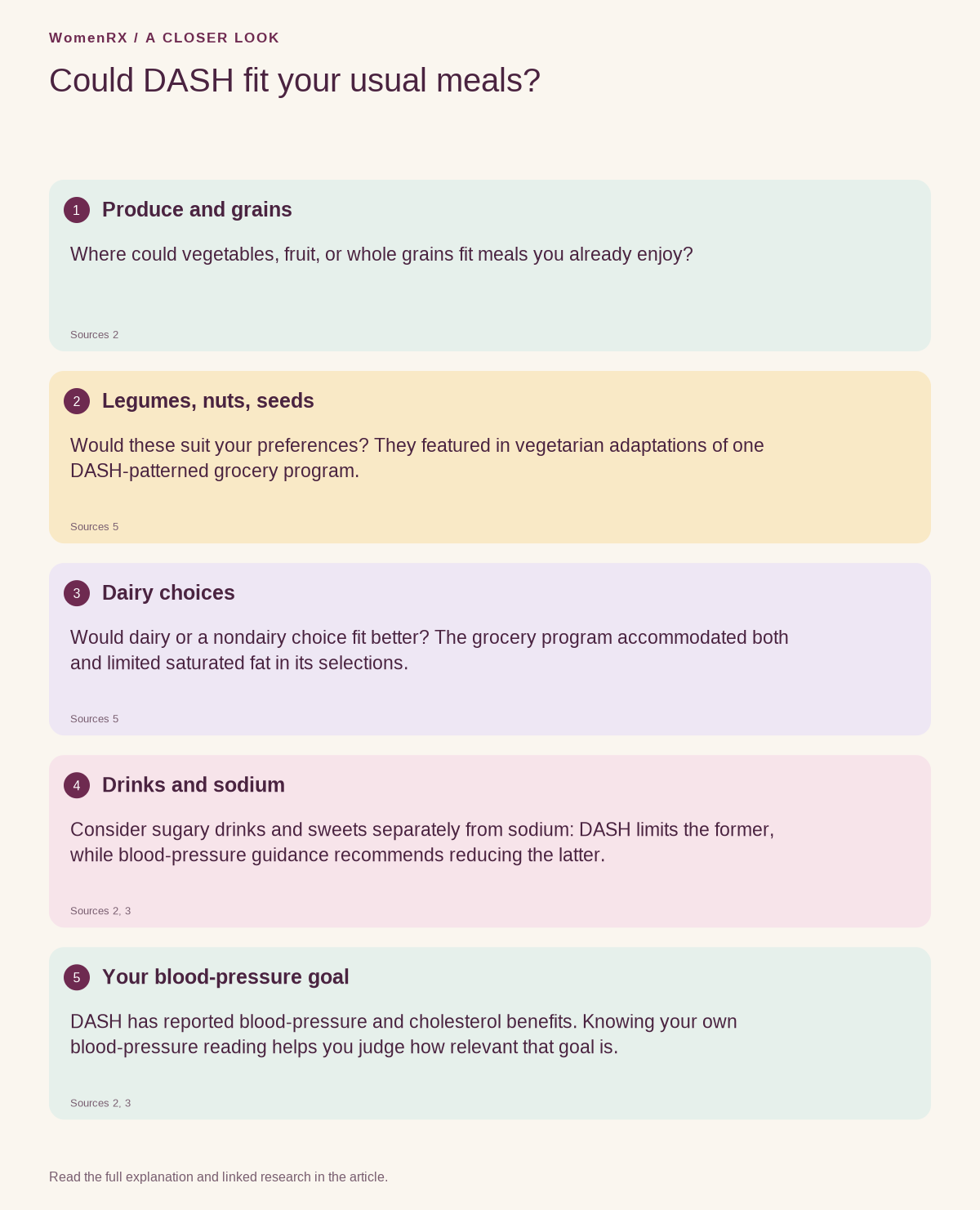
Could DASH fit your usual meals?
Produce and grains: Where could vegetables, fruit, or whole grains fit meals you already enjoy?2
Legumes, nuts, seeds: Would these suit your preferences? They featured in vegetarian adaptations of one DASH-patterned grocery program.5
Dairy choices: Would dairy or a nondairy choice fit better? The grocery program accommodated both and limited saturated fat in its selections.5
Drinks and sodium: Consider sugary drinks and sweets separately from sodium: DASH limits the former, while blood-pressure guidance recommends reducing the latter.23
Your blood-pressure goal: DASH has reported blood-pressure and cholesterol benefits. Knowing your own blood-pressure reading helps you judge how relevant that goal is.23
Read the figure as text
Use these prompts to assess food choices and your reason for considering DASH. They aren’t a scored test or a required menu.- Produce and grains: Where could vegetables, fruit, or whole grains fit meals you already enjoy?2
- Legumes, nuts, seeds: Would these suit your preferences? They featured in vegetarian adaptations of one DASH-patterned grocery program.5
- Dairy choices: Would dairy or a nondairy choice fit better? The grocery program accommodated both and limited saturated fat in its selections.5
- Drinks and sodium: Consider sugary drinks and sweets separately from sodium: DASH limits the former, while blood-pressure guidance recommends reducing the latter.23
- Your blood-pressure goal: DASH has reported blood-pressure and cholesterol benefits. Knowing your own blood-pressure reading helps you judge how relevant that goal is.23
More questions, answered
Should I stop blood-pressure medicine if I start eating DASH-style?
No. Lifestyle changes may be part of treatment, but some people still need medicine to control high blood pressure. Don’t stop or change a prescription based on a diet change alone. 1
Sources you can check
- High Blood Pressure | Hypertension | MedlinePlusAccessed 2026-09-25Return to first citation
- DASH Eating Plan: MedlinePlusAccessed 2026-09-25Return to first citation
- How to Prevent High Blood Pressure: MedlinePlusAccessed 2026-09-25Return to first citation
- Lifestyle interventions for hypertension management in primary care: a narrative review.Han B, Lee GB, Yoon J, Kim YH. · Ewha medical journal · 2025Return to first citation
- Nutrition intervention of groceries for Black residents of Boston to stop hypertension (GoFresh) among adults with or without treated hypertension trial: rationale, design, and guiding domains.Ferro KM, Seager R, McManus K, Kraemer KM, Turkson-Ocran RAN, Michetti J, Allison S, Fitzpatrick S, Juraschek SP. · Trials · 2025Return to first citation