Is an Online Visit a Good Start for Acne?
Remote acne care can work well for some people, but clear photos and a treatment history help a clinician decide what comes next.
An online visit can be a useful starting point for persistent acne. A review found similar results on several acne measures with virtual and in-person care, though an unclear image or uncertain diagnosis may call for an in-person exam. Prepare photos, a list of treatments you’ve tried, and any menstrual-cycle or pregnancy context. A visit doesn’t guarantee a prescription. 4 5
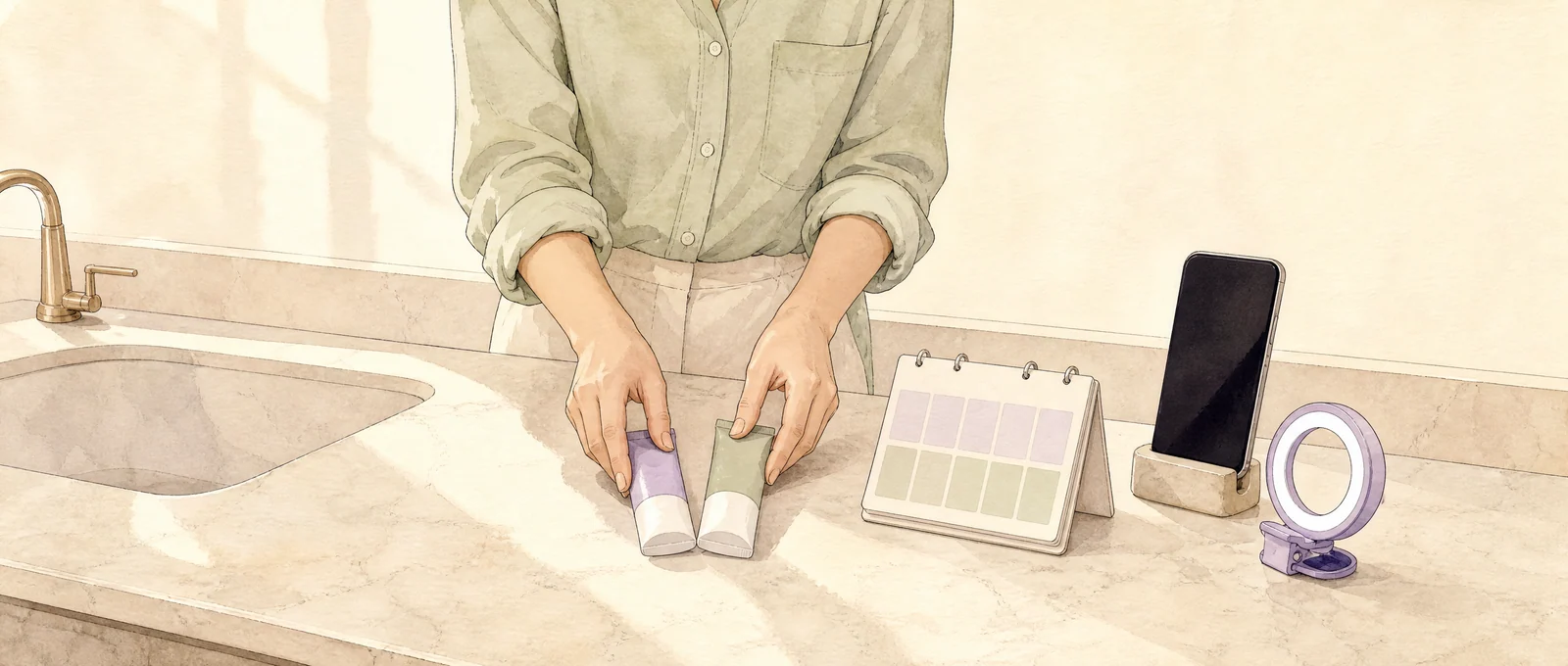
What an online visit can, and can’t, show
Acne is often visible enough to discuss through photos or video. In a review of 21 teledermatology studies, virtual and in-person acne care produced similar results on several acne-grading measures. Nine of those studies directly compared the two approaches. That makes remote care a reasonable starting point for some people, not a promise that an online clinician can identify every spot or provide a prescription. 4
The main tradeoff is that a remote assessment depends on the images and information you can provide. Poor image quality can leave a diagnosis uncertain, and some people need an in-person examination. 5 The review found lower treatment adherence with virtual care, so it’s worth asking how follow-up will work if a treatment irritates your skin or isn’t helping. 4
Bring the story behind the photos
You don’t need a perfect symptom diary. A short note covering these points gives the clinician more to work with:
- Where and when: Which areas are affected, when did the breakouts begin, and are they steady or changing? Mention your chest or back if those areas are affected.
- What the spots are like: Do you see blackheads or whiteheads, smaller inflamed bumps, or deep, painful lumps? Nodules develop beneath the skin, while cyst-like spots carry a particularly high risk of scarring. 2
- What you’ve tried: Bring the names of over-the-counter products and prescriptions, roughly how long you used them, whether they helped, and whether they caused dryness or irritation. This matters when discussing treatments such as benzoyl peroxide. 1 3
- Patterns you’ve noticed: If breakouts seem to flare around your period, say so. It’s useful treatment context, but a monthly pattern alone doesn’t establish why the acne is happening. Acne guidance discusses hormonal therapy as a possible option for some women with period-related flares or conditions such as PCOS. 3
- Pregnancy context: Say if you’re pregnant, breastfeeding, trying to become pregnant, or think you might be. Bring it up before choosing an acne medicine. For example, guidance says benzoyl peroxide can usually be used during pregnancy but recommends checking first. That advice is specific to benzoyl peroxide; it doesn’t establish whether another acne medicine, including tretinoin, is suitable for you. 1
For photos, aim for clear, unfiltered views of the affected areas and tell the clinician about symptoms or changes the images don’t convey. An overall view helps show location; a closer view may help show individual spots. Poor image quality can limit a remote assessment. 5
How those details shape the treatment conversation
A few blackheads, whiteheads, or spots may lead to a discussion of a topical treatment applied to the skin. Benzoyl peroxide is one option; acne guidance also describes azelaic acid as an alternative when benzoyl peroxide is too irritating. What you’ve already used, and how your skin responded, helps make that conversation more specific than simply asking for a stronger product. 3
More extensive or severe acne may call for a different approach. Guidance notes that severe acne, or acne affecting the chest and back, may need antibiotics or stronger prescription creams. Some women may also discuss a treatment taken by mouth, such as a combined oral contraceptive, when period-related flares or other history make hormonal treatment relevant. The topical-versus-oral discussion depends on the spots, your treatment history, and pregnancy plans. These are possible topics for an assessment, not a list of medicines you should expect from an online visit. 2 3
What might it cost?
Separate the cost of a visit from the cost of a medicine. As one dated medication-price example, on September 25, 2026, Cost Plus Drugs listed one 20 g tube of prescription tretinoin 0.025% cream at $14.17, with $5.25 standard shipping added and taxes varying by location. That package price isn’t a monthly treatment estimate, a consultation fee, or a promise that tretinoin is right for you. Before booking, check the service’s visit fee and whether any follow-up or laboratory work would be billed separately. 6
When being seen in person may help
Point out deep, painful lumps or cyst-like spots and any scarring you’ve noticed. Cysts have a greater risk of permanent scarring, so these details deserve attention even if they’re hard to see in a photo. 2
An in-person exam may add value if the images don’t show the affected skin clearly, the diagnosis is uncertain, or the clinician needs to examine the skin directly. In one teledermatology service, some patients had in-person consultations, and biopsies were performed after physical consultation. The report doesn’t say why each patient was seen in person. Remote care may be the first step rather than the whole plan. 5
A useful online visit should leave you knowing what the clinician thinks is happening, what treatment or next assessment makes sense, and how you’ll check whether the plan is working.
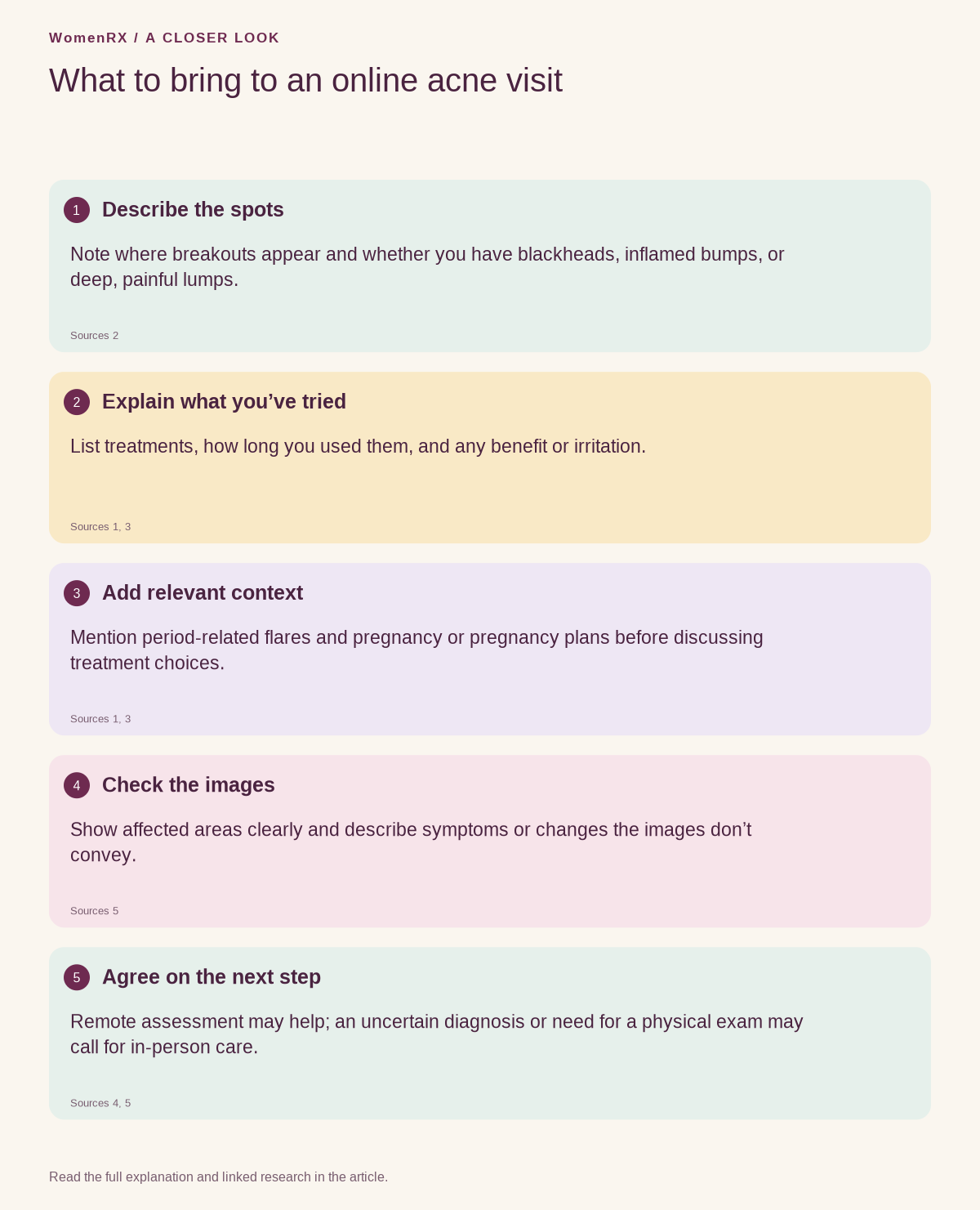
What to bring to an online acne visit
Describe the spots: Note where breakouts appear and whether you have blackheads, inflamed bumps, or deep, painful lumps.2
Explain what you’ve tried: List treatments, how long you used them, and any benefit or irritation.13
Add relevant context: Mention period-related flares and pregnancy or pregnancy plans before discussing treatment choices.13
Check the images: Show affected areas clearly and describe symptoms or changes the images don’t convey.5
Agree on the next step: Remote assessment may help; an uncertain diagnosis or need for a physical exam may call for in-person care.45
Read the figure as text
These details move the conversation from what the camera shows to what kind of assessment may be needed.- Describe the spots: Note where breakouts appear and whether you have blackheads, inflamed bumps, or deep, painful lumps.2
- Explain what you’ve tried: List treatments, how long you used them, and any benefit or irritation.13
- Add relevant context: Mention period-related flares and pregnancy or pregnancy plans before discussing treatment choices.13
- Check the images: Show affected areas clearly and describe symptoms or changes the images don’t convey.5
- Agree on the next step: Remote assessment may help; an uncertain diagnosis or need for a physical exam may call for in-person care.45
More questions, answered
Can photos confirm that my breakouts are acne?
Photos can help a clinician assess visible spots, but unclear images can leave the diagnosis uncertain. An in-person examination may then be the better next step. 5
Sources you can check
- Benzoyl peroxide: a medicine to treat acne - NHSAccessed 2026-09-25Return to first citation
- Acne - NHSAccessed 2026-09-25Return to first citation
- Acne - Treatment - NHSAccessed 2026-09-25Return to first citation
- Teledermatology and Virtual Visits for Acne Management: A Review.Mehta S, Metko D, Maazi M, Wang OJE, Li MK. · Journal of cutaneous medicine and surgery · 2025Return to first citation
- Teledermatology Services during COVID-19 Pandemic: Experience of a Tertiary Care center in Western India.Bains A, Alam A, Singh S, Budania A, Patra S, Bhardwaj A. · Indian dermatology online journal · 2022Return to first citation
- Cost Plus Drugs: Tretinoin exact package priceAccessed 2026-09-25Return to first citation