Headaches Around Menopause: Which Supplements Have Evidence?
Magnesium and riboflavin have evidence for preventing migraine, but the cited findings don’t tell us whether they work differently around menopause.
If your headaches are migraines, magnesium and riboflavin have the strongest prevention evidence among these supplements; coenzyme Q10 has weaker support. They’re not proven ways to stop an attack that’s already started, and the cited migraine findings don’t report results by menopause stage. Arrange medical review for recurring or worsening headaches, and seek urgent help for specific warning symptoms. 1 2 3 4 5
Start with the kind of headache, not the supplement
A headache may show up near a period or during menopause, but its timing doesn’t tell you what kind of headache it is. Migraine often involves intense, throbbing pain and can include an aura. Tension headaches are another common type and can involve tight muscles in the neck, shoulders, scalp, or jaw. The supplement research below is about migraine prevention, not headaches in general. 2 3 4
Prevention also means trying to reduce future attacks. It’s different from treating pain once an attack begins. A review discusses intravenous magnesium for acute migraine care, but that isn’t evidence that an oral magnesium supplement will stop an attack at home. 1 5
How the three options compare
Magnesium has supportive, though limited, prevention evidence. Three of four small, short-term, placebo-controlled trials found modest reductions in migraine frequency with amounts up to 600 mg a day. The fourth found no reduction; soft stools or diarrhea in that trial raised a question about absorption. The American Academy of Neurology and American Headache Society concluded that magnesium is probably effective for migraine prevention. 1
The safety distinction matters here. The adult upper intake level for magnesium from supplements is 350 mg a day, and amounts typically used for migraine prevention exceed it. Higher supplemental amounts can cause diarrhea, nausea, and abdominal cramping. Impaired kidney function raises the risk of magnesium toxicity because the kidneys may not clear excess magnesium effectively. The NIH Office of Dietary Supplements says magnesium use for migraine prevention should be under a healthcare professional’s supervision. The trial amounts describe what researchers studied, not an amount to start taking on your own. 1
Riboflavin, or vitamin B2, also has prevention evidence. In one randomized trial of 55 adults with migraine, 400 mg a day reduced attack frequency by two per month compared with placebo. Other small studies haven’t all found a benefit, but the same neurology and headache societies judged riboflavin probably effective for prevention. Discolored urine is a noted side effect. That trial result is a comparison between groups, not a promise of two fewer attacks for every person. 2
Coenzyme Q10 has less certain support. A 2025 review rates its migraine-prevention evidence at Level C and describes adverse events as low. That supports discussing it as an option, not treating it as equally established or choosing a dose from this comparison. 5
What changes around menopause
If you still have periods, noticing whether migraines cluster around them may help you describe the pattern. Headaches can occur around periods or during menopause, but a change at either time doesn’t prove hormones are the cause. The adult migraine findings for these supplements don’t establish whether they work differently during perimenopause or after menopause. 1 2 4 5
Meanwhile, the basics can help you spot other contributors. Missed meals, too little sleep, and stress are linked with common headaches; keeping a brief record of headache days, period timing if relevant, sleep, and meals may make a pattern easier to see. That record can inform a conversation about prevention, but it isn’t a test for a hormonal headache. 3 4
Before adding a supplement, show a pharmacist or healthcare professional the exact product and your medication and supplement list. Don’t assume that a general description of low side effects rules out an interaction with something you take. Magnesium’s upper-intake concern is a specific reason to check before trying amounts used in prevention studies. 1 5
When to seek medical help
Arrange medical review if headaches are recurring or getting worse. Tell a healthcare professional about a sudden, severe headache. Get medical help right away for a headache after a blow to the head, or one accompanied by a stiff neck, fever, confusion, loss of consciousness, or pain in the eye or ear. These changes need attention regardless of where you are in menopause. 3 4
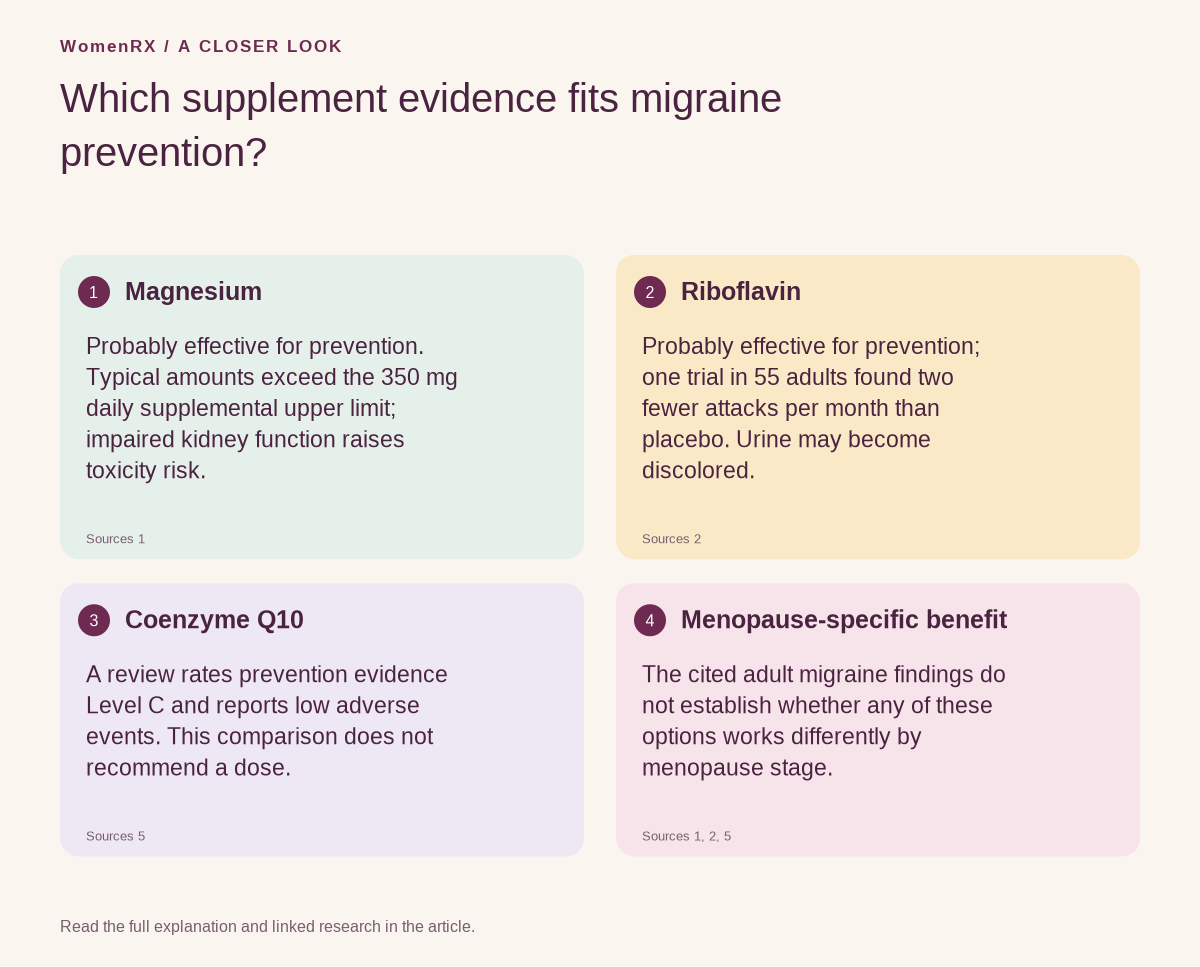
Which supplement evidence fits migraine prevention?
Magnesium: Probably effective for prevention. Typical amounts exceed the 350 mg daily supplemental upper limit; impaired kidney function raises toxicity risk.1
Riboflavin: Probably effective for prevention; one trial in 55 adults found two fewer attacks per month than placebo. Urine may become discolored.2
Coenzyme Q10: A review rates prevention evidence Level C and reports low adverse events. This comparison does not recommend a dose.5
Menopause-specific benefit: The cited adult migraine findings do not establish whether any of these options works differently by menopause stage.125
Read the figure as text
The distinction is prevention of migraine attacks, not relief of every headache or treatment once pain starts.- Magnesium: Probably effective for prevention. Typical amounts exceed the 350 mg daily supplemental upper limit; impaired kidney function raises toxicity risk.1
- Riboflavin: Probably effective for prevention; one trial in 55 adults found two fewer attacks per month than placebo. Urine may become discolored.2
- Coenzyme Q10: A review rates prevention evidence Level C and reports low adverse events. This comparison does not recommend a dose.5
- Menopause-specific benefit: The cited adult migraine findings do not establish whether any of these options works differently by menopause stage.125
More questions, answered
Would a normal magnesium blood test settle whether magnesium might help?
Not necessarily. A blood magnesium measurement doesn’t closely reflect magnesium throughout the body, so it may not give a complete picture of magnesium status. 1
Sources you can check
- Magnesium - Health Professional Fact SheetAccessed 2026-09-25Return to first citation
- Riboflavin - Health Professional Fact SheetAccessed 2026-09-25Return to first citation
- Headache | MedlinePlusAccessed 2026-09-25Return to first citation
- Headaches - NHSAccessed 2026-09-25Return to first citation
- Nutraceuticals and Headache 2024: Riboflavin, Coenzyme Q10, Feverfew, Magnesium, Melatonin, and Butterbur.Tepper SJ, Tepper K. · Current pain and headache reports · 2025Return to first citation