Hashimoto’s and Pregnancy: What to Check and When
Hashimoto’s antibodies and low thyroid hormone aren’t the same thing, so pregnancy planning starts with knowing how your thyroid is functioning.
Hashimoto’s doesn’t automatically mean you can’t become pregnant. Antibodies point to autoimmune thyroid disease; thyroid function tests show whether your body has enough thyroid hormone. Before conception, ask how your results affect your plan. If you take levothyroxine, don’t stop it when pregnant: thyroid levels and the dose may need review during pregnancy and again after birth. 12

Hashimoto’s is an autoimmune thyroid condition, but the diagnosis alone doesn’t tell you whether your thyroid is currently making enough hormone. That distinction matters when you’re trying to conceive or are pregnant: antibody results describe autoimmunity, while thyroid function tests help show whether thyroid hormone replacement is needed or needs adjusting. 2
Separate the antibody result from thyroid function
Thyroid antibodies, such as thyroid peroxidase antibodies, can identify autoimmune thyroid disease even when thyroid hormone levels are adequate. By contrast, subclinical hypothyroidism means TSH is elevated while free T4 remains normal. The results answer related but different questions: antibodies point to the cause; TSH and free T4 describe thyroid function. 23
That means a positive antibody result alone doesn’t tell you what levothyroxine dose you need. It also doesn’t establish that treatment will improve pregnancy outcomes if thyroid function is normal. Research on levothyroxine for women who have thyroid antibodies but normal thyroid function is not a straightforward yes-or-no: one review focused on subfertile women receiving fertility treatment, while another review describes differing findings across treatment settings. Those results shouldn’t be treated as proof that every antibody-positive woman needs medication. 24
Before trying: review your current results and plan
If you have Hashimoto’s or take levothyroxine, bring it up while planning a pregnancy, rather than waiting until later in pregnancy. Ask how your current TSH and free T4 results fit together, whether your treatment plan needs a change before conception, and who will arrange follow-up testing. A medication dose is individualized using thyroid test results and other clinical factors, so there isn’t one dose or target that suits everyone. 12
If you’re having fertility treatment, say so when discussing thyroid results. Some evidence about levothyroxine in women with thyroid antibodies comes from assisted-reproduction settings, and it may not apply to people trying to conceive without fertility treatment. 24
Once pregnant: make thyroid follow-up part of early care
Tell your pregnancy-care team promptly if you’re taking levothyroxine or have been diagnosed with hypothyroidism. The US prescribing information says not to discontinue levothyroxine during pregnancy, and says hypothyroidism diagnosed during pregnancy should be treated promptly. It also calls for TSH monitoring and dose adjustment during pregnancy. 1
Thyroid activity should be checked when pregnancy is confirmed and followed during pregnancy, according to a review of studies involving women with thyroid conditions and fertility treatment. Your prescriber may interpret TSH alongside free T4 when assessing your dose; treatment decisions are based on the individual lab picture, not antibody status alone. 12
If you already take levothyroxine, don’t change or stop your medication based on an antibody result or a general pregnancy target you’ve seen online. Contact the person managing your thyroid care to agree on the next test and dose review. The goal is to respond to your own results, not to apply a single number to everyone. 1
After birth: revisit the pregnancy plan
Pregnancy can bring dose changes, and the US prescribing information includes dose adjustments for the postpartum period. Ask your prescriber when to review your thyroid tests and whether your pregnancy dose should change after delivery. Don’t assume the dose used during pregnancy is automatically the right long-term dose; levothyroxine treatment is adjusted using laboratory results and clinical response. 1
The practical takeaway is simple: keep antibody status, thyroid function, and medication dose as separate parts of the conversation. That makes it easier to ask what your results mean now, what needs monitoring next, and who will follow up after birth.
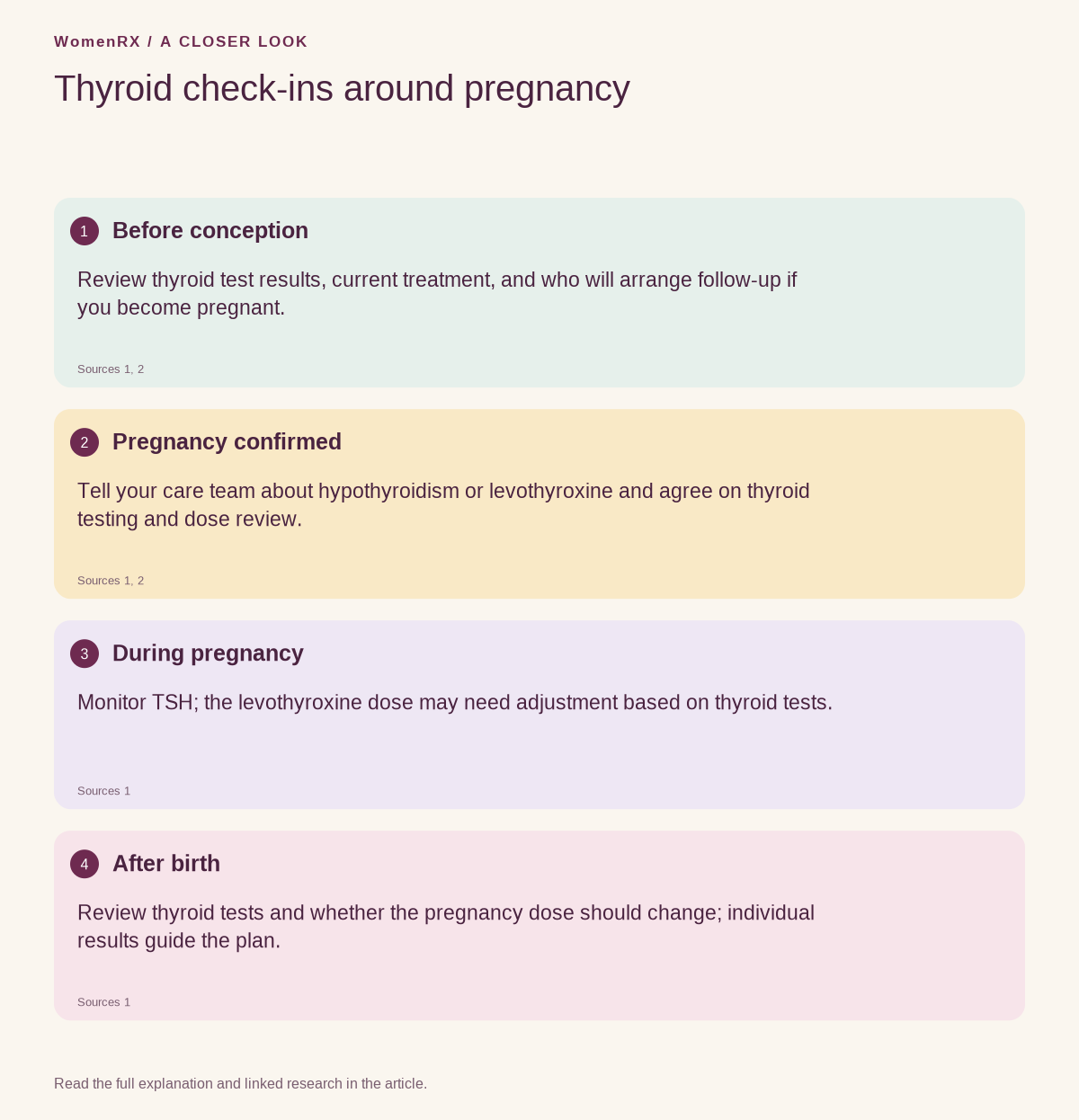
Thyroid check-ins around pregnancy
Before conception: Review thyroid test results, current treatment, and who will arrange follow-up if you become pregnant.12
Pregnancy confirmed: Tell your care team about hypothyroidism or levothyroxine and agree on thyroid testing and dose review.12
During pregnancy: Monitor TSH; the levothyroxine dose may need adjustment based on thyroid tests.1
After birth: Review thyroid tests and whether the pregnancy dose should change; individual results guide the plan.1
Read the figure as text
A practical sequence for discussing thyroid function and levothyroxine without assuming one dose or target fits everyone.- Before conception: Review thyroid test results, current treatment, and who will arrange follow-up if you become pregnant.12
- Pregnancy confirmed: Tell your care team about hypothyroidism or levothyroxine and agree on thyroid testing and dose review.12
- During pregnancy: Monitor TSH; the levothyroxine dose may need adjustment based on thyroid tests.1
- After birth: Review thyroid tests and whether the pregnancy dose should change; individual results guide the plan.1
More questions, answered
Does a positive thyroid antibody test mean I need levothyroxine?
Not by itself. Antibodies identify autoimmune thyroid disease, while thyroid function results help determine whether hormone levels are low or treatment needs adjustment. Evidence about treating women with antibodies but normal thyroid function is mixed and includes research in specific fertility-treatment settings. 24
Should I stop levothyroxine if I become pregnant?
No. US prescribing information says levothyroxine should not be discontinued during pregnancy. Contact the prescriber managing your thyroid care so testing and any dose adjustment can be reviewed. 1
Do I need a different thyroid plan after delivery?
Possibly. The pregnancy dose may need reassessment after birth; the appropriate plan depends on your test results and clinical response. Ask your prescriber when to review both your medication and thyroid tests. 1
Sources you can check
- LEVOTHYROXINE SODIUM TABLET [CARDINAL HEALTH 107, LLC] | US prescribing information and patient instructionsAccessed 2026-09-25Return to first citation
- Thyroxine Replacement for Subfertile Females With Subclinical Hypothyroidism and Autoimmune Thyroiditis: A Systematic Review.Myneni R, Chawla HV, Grewal AS, Vivekanandan G, Ndakotsu A, Abubacker AP, Iqbal A, Khan S. · Cureus · 2021Return to first citation
- Association of maternal thyroid function with birthweight: a systematic review and individual-participant data meta-analysis.Derakhshan A, Peeters RP, Taylor PN, Bliddal S, Carty DM, Meems M, Vaidya B, Chen L, Knight BA, Ghafoor F, Popova PV, Mosso L, Oken E, Suvanto E, Hisada A, Yoshinaga J, Brown SJ, B... · The lancet. Diabetes & endocrinology · 2020Return to first citation
- The impact of gut microbiota on autoimmune thyroiditis and relationship with pregnancy outcomes: a review.Song Y, Bai Y, Liu C, Zhai X, Zhang L. · Frontiers in cellular and infection microbiology · 2024Return to first citation