Fatigue on Zepbound: What Else Could Be Going On?
Fatigue is reported in Zepbound weight-management trials, but changes in eating, fluid intake, sleep, and other medicines can help explain what you’re feeling.
Fatigue was reported more often with Zepbound than with placebo in weight-management trials, so the medicine is one possibility, not the only one. If nausea or a smaller appetite has changed how much you eat, or digestive symptoms have made it harder to drink, those changes may matter. Poor sleep or another medicine may matter too. Look at what changed when the tiredness began, especially around dose increases or digestive symptoms. 12
Start with what the trials actually show
In two pooled weight-reduction and maintenance trials, fatigue-related events were reported by 5% of adults receiving Zepbound 5 mg, 6% receiving 10 mg, and 7% receiving 15 mg, compared with 3% receiving placebo. The label groups fatigue with related reports of weakness, lethargy, and feeling unwell. Those numbers show that tiredness deserves attention during treatment. They can’t tell you what caused yours. These are overall trial figures, not fatigue rates for women specifically. 1
The more useful question is often: What changed at the same time as your energy? A direct treatment effect is possible. So is a chain of smaller changes, if nausea has made meals less appealing to you or diarrhea has made it harder for you to keep up with fluids. The Zepbound trials found gastrointestinal side effects more often with treatment than with placebo, and most nausea, vomiting, and diarrhea events occurred during dose escalation and decreased over time. That makes a recent dose increase worth noting, without assuming it explains every symptom. 1
Check whether your food or fluid intake has changed
If you’re eating less, look at what has fallen away, not just whether the scale is moving. For example, someone who has started skipping lunch may be going much of the day without a substantial meal. That pattern doesn’t prove why she feels tired, but it gives her something practical to address. A varied eating pattern still matters during weight management. If full meals feel unappealing, a smaller option such as yogurt with fruit or vegetables with hummus can provide food without requiring a large plate. There’s no single calorie target that can be inferred from feeling fatigued. 3
Fluids deserve a separate look if nausea, vomiting, or diarrhea is part of the picture. Zepbound’s prescribing information warns that these symptoms can lead to dehydration and, in some cases, kidney injury. Dizziness or feeling faint when standing is also worth mentioning rather than treating it as ordinary tiredness; the trials reported dizziness and low-blood-pressure-related events. If vomiting or diarrhea is making it difficult to drink, discuss those symptoms with your care team; the label recommends monitoring kidney function when side effects could lead to fluid loss. 1
Check what changed outside the injection
Poor sleep can leave you worn out regardless of what’s happening with Zepbound. Ask yourself whether the tiredness follows a rough night, has been present since before treatment, or occurs alongside a new sleep problem. Medicines can matter as well: antihistamines and some medicines for nausea or pain are among those that can contribute to fatigue. If you’ve started taking something to manage a Zepbound side effect, include that change when you describe how you feel. 2
For example, if your energy dips mainly on days when nausea limits both food and fluids, that points to a different conversation than fatigue that continues despite eating and sleeping as usual. A brief note of the injection date, any dose change, meals you missed, digestive symptoms, sleep, and other medicines can help you spot that distinction. It’s a way to explain the pattern, not a test that identifies the cause. A fatigue diary can be useful for seeing when you have less or more energy during the day. 12
Your life stage belongs in that conversation too. If pregnancy is possible or you’re planning it, mention that alongside the fatigue and your treatment plans rather than assuming the injection is the whole story. If you have periods, you can also share any changes in bleeding, including heavier periods, as additional context. Fatigue has many possible causes, including pregnancy. 2
If the tiredness lasts for weeks, interferes with your usual activities, or doesn’t improve as the digestive symptoms settle, arrange a review. A clinician can consider your sleep, appetite, activity, medicines, and whether an examination or tests would help find another cause. Don’t change your Zepbound treatment on the strength of a timing pattern alone. 2
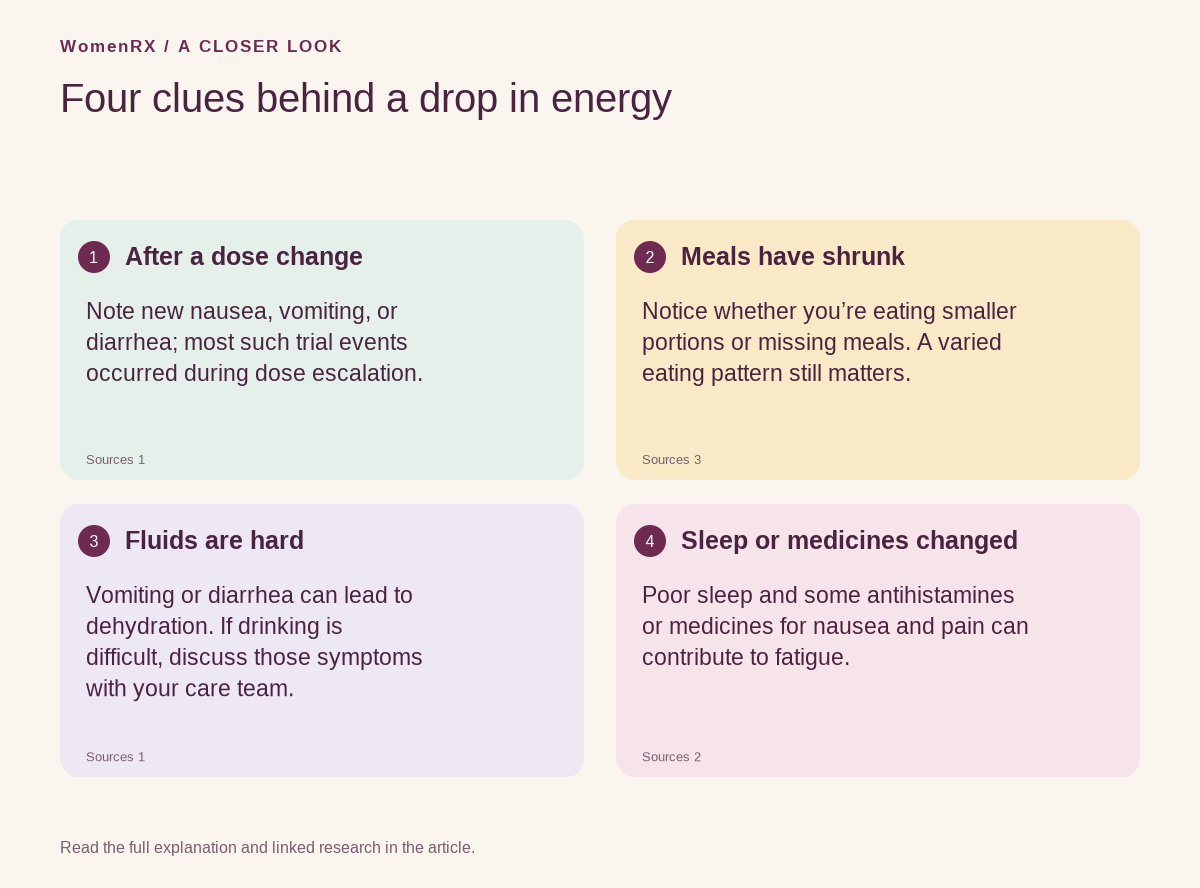
Four clues behind a drop in energy
After a dose change: Note new nausea, vomiting, or diarrhea; most such trial events occurred during dose escalation.1
Meals have shrunk: Notice whether you’re eating smaller portions or missing meals. A varied eating pattern still matters.3
Fluids are hard: Vomiting or diarrhea can lead to dehydration. If drinking is difficult, discuss those symptoms with your care team.1
Sleep or medicines changed: Poor sleep and some antihistamines or medicines for nausea and pain can contribute to fatigue.2
Read the figure as text
These clues suggest what to look at alongside fatigue. None identifies its cause on its own.- After a dose change: Note new nausea, vomiting, or diarrhea; most such trial events occurred during dose escalation.1
- Meals have shrunk: Notice whether you’re eating smaller portions or missing meals. A varied eating pattern still matters.3
- Fluids are hard: Vomiting or diarrhea can lead to dehydration. If drinking is difficult, discuss those symptoms with your care team.1
- Sleep or medicines changed: Poor sleep and some antihistamines or medicines for nausea and pain can contribute to fatigue.2
More questions, answered
Does feeling tired after an injection mean Zepbound caused it?
Not necessarily. The timing is useful to note, particularly if nausea or a dose increase happened too, but it can’t distinguish a direct medicine effect from changes in food, fluids, sleep, or other medicines. 12
Sources you can check
- ZEPBOUND (TIRZEPATIDE) INJECTION, SOLUTION ZEPBOUND (TIRZEPATIDE) INJECTION, SOLUTION ZEPBOUND KWIKPEN (TIRZEPATIDE) INJECTION, SOLUTION [ELI LILLY AND COMPANY] | US prescribing information and patient instructionsAccessed 2026-09-25Return to first citation
- Fatigue: MedlinePlusAccessed 2026-09-25Return to first citation
- MedlinePlus: Managing weight with healthy eatingAccessed 2026-09-25Return to first citation