Estradiol, Explained: Hormone, Lab Result, and Medicine
Estradiol is one kind of estrogen, and its meaning changes depending on whether you’re reading about your body, a blood test, or a medicine.
Estradiol (E2) is one of the body’s estrogens. Estradiol and estrone (E1) can convert into each other, and both can also be converted to estriol (E3). Estradiol is more potent at estrogen receptors than estrone and estriol. A blood result measures estradiol in a sample; it isn’t a complete assessment of estrogen activity or health on its own. 1
Estrogen is the group; estradiol is one member
“Estrogen” is an umbrella term for a group of hormones. Estradiol, often written as E2, is one member. Estrone (E1) and estriol (E3) are two others you may see named in medical information. Estradiol and estrone can convert into each other, and both can also be converted to estriol. 1
These forms aren’t identical in activity. Estradiol is the principal human estrogen inside cells and is more potent at estrogen receptors than estrone and estriol. 1
Why the pattern changes with menopause
During the cycling years, ovarian follicles are the main source of estrogen. How much estradiol they release varies with the phase of the menstrual cycle, so a result can differ depending on when it was measured. 12
After menopause, the pattern shifts. Much of the body’s estrogen is made when androstenedione is converted to estrone in tissues outside the ovaries. Estrone and estrone sulfate are the most abundant circulating estrogens in postmenopausal women. Estradiol remains one part of the picture, but it isn’t the only estrogen present. 12
What an estradiol result can, and can’t, tell you
A blood test for estradiol reports the amount of that hormone in the sample collected at that time. It doesn’t measure every estrogen or summarize all estrogen activity in the body. Since estradiol changes across the menstrual cycle and the mix of circulating estrogens shifts after menopause, a number needs to be understood in context. 12
That context can include whether you’re still cycling, where you are in your cycle, and whether you use an estrogen medicine. A result by itself isn’t a complete assessment of hormone health. If you’re reviewing a result, a useful question is: “What was this test meant to help assess, and how does my reproductive stage or medication affect what it means?”
Estradiol on a medicine label
Estradiol on a medicine label names an ingredient. It doesn’t mean the label is reporting your natural blood level. Medicinal estradiol is an administered form of estrogen, and exogenous estrogens are metabolized through pathways also used for the body’s own estrogens. 12
Not every medicine described as an estrogen contains estradiol. Different medicines may use compounds such as estradiol, conjugated estrogens, or ethinyl estradiol. These are distinct estrogen compounds, not interchangeable names for one ingredient. 3
When you see “estradiol,” first ask what it refers to: a hormone the body makes, a measured level in a blood sample, or an ingredient in a medicine. The word is the same, but those uses answer different questions.
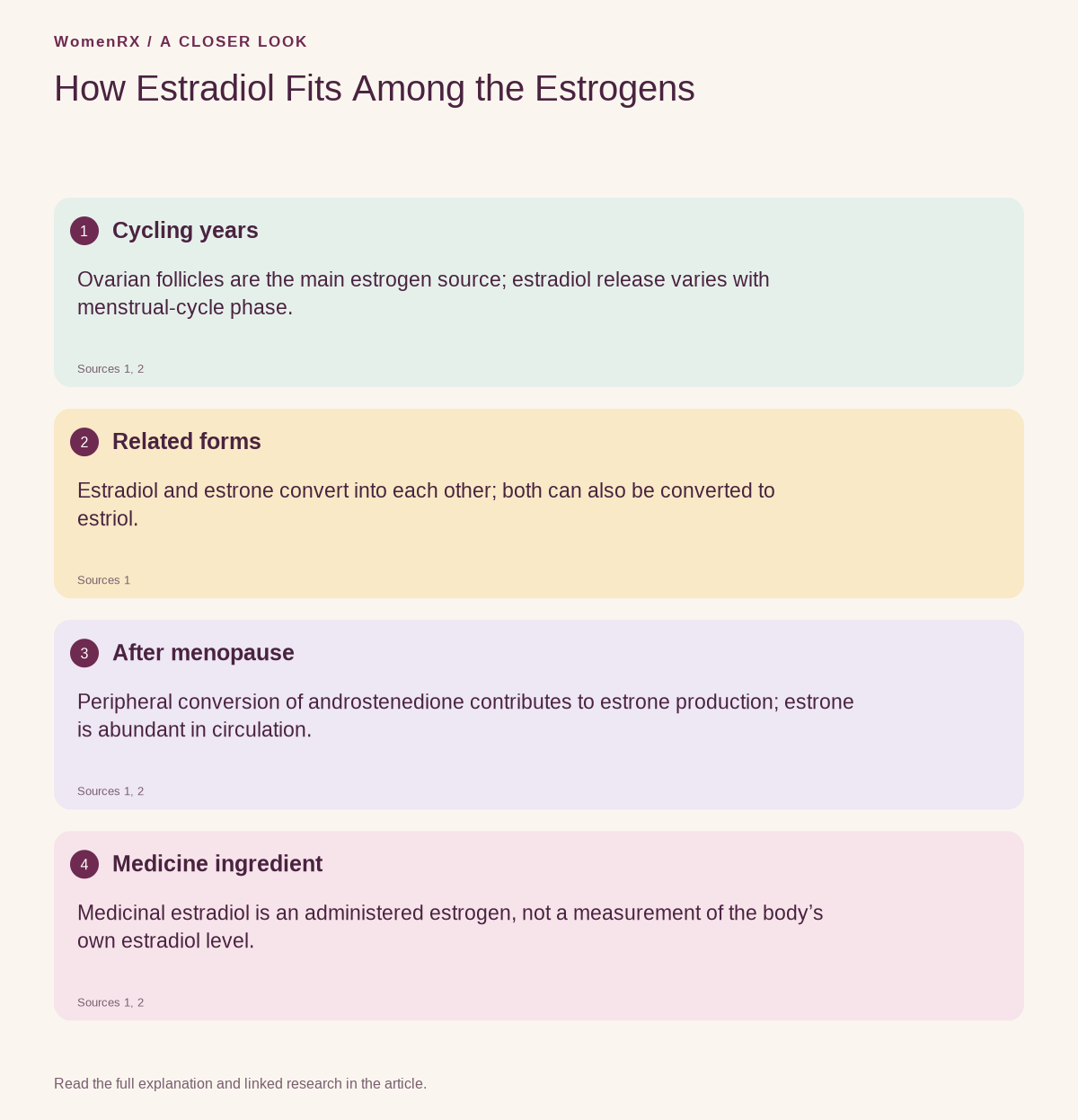
How Estradiol Fits Among the Estrogens
Cycling years: Ovarian follicles are the main estrogen source; estradiol release varies with menstrual-cycle phase.12
Related forms: Estradiol and estrone convert into each other; both can also be converted to estriol.1
After menopause: Peripheral conversion of androstenedione contributes to estrone production; estrone is abundant in circulation.12
Medicine ingredient: Medicinal estradiol is an administered estrogen, not a measurement of the body’s own estradiol level.12
Read the figure as text
This diagram distinguishes estradiol’s relationship to other estrogen forms from the changes in estrogen source after menopause and the separate use of estradiol as a medicine.- Cycling years: Ovarian follicles are the main estrogen source; estradiol release varies with menstrual-cycle phase.12
- Related forms: Estradiol and estrone convert into each other; both can also be converted to estriol.1
- After menopause: Peripheral conversion of androstenedione contributes to estrone production; estrone is abundant in circulation.12
- Medicine ingredient: Medicinal estradiol is an administered estrogen, not a measurement of the body’s own estradiol level.12
More questions, answered
Is estradiol the same thing as estrogen?
Not exactly. Estrogen refers to a group of hormones; estradiol is one type, alongside estrone and estriol. 1
Does one estradiol result tell me whether my estrogen is normal?
Not by itself. Estradiol varies with menstrual-cycle phase, and estrone is the most abundant circulating estrogen after menopause. The meaning of a result depends on context, including why the test was ordered and your reproductive stage. 12
Sources you can check
- CLIMARA PRO (ESTRADIOL AND LEVONORGESTREL) PATCH [BAYER HEALTHCARE PHARMACEUTICALS INC.] | US prescribing information and patient instructionsAccessed 2026-09-25Return to first citation
- CLIMARA (ESTRADIOL) PATCH [BAYER HEALTHCARE PHARMACEUTICALS INC.] | US prescribing information and patient instructionsAccessed 2026-09-25Return to first citation
- Metabolism of endogenous and exogenous estrogens in women.Stanczyk FZ. · The Journal of steroid biochemistry and molecular biology · 2024Return to first citation