Do Sardines Fit a Weight-Management Meal?
Sardines can fit a weight-management meal, but compare the food you’ll actually serve, not just the words “water-packed” or “oil-packed.”
Yes. Canned or fresh sardines can be part of a weight-management meal. A rat study of canned-sardine diets found no effect on weight gain, and broader research on marine fish oil doesn’t establish that eating sardines leads to weight loss in women. 2 3 To compare canned options, start with the amount you’ll eat, then consider whether you’ll use the packing liquid.
Sardines are a meal choice, not a weight-loss treatment
There’s a difference between including a food in a meal plan and showing that it causes weight loss. In a 10-week rat study, dietary treatments containing canned sardines did not affect daily food intake or weight gain. Rat results cannot answer whether sardines affect weight in women. A broader review of marine fish oil covers human and animal research, but it doesn’t establish a sardine-specific weight-loss effect in women. 2 3
For weight management, the more useful question is how a serving fits into your eating pattern. A healthy eating pattern and reduced calorie intake are part of the general approach to long-term weight loss; no single food guarantees that result. 1
Compare the sardines you’ll actually serve
Canned sardines are ready to use, but the packing liquid changes the comparison. Picture two lunches: in one, you drain oil-packed sardines before adding them to a salad; in the other, you pour the oil over the salad too. Those aren’t the same finished meal. Likewise, water-packed sardines with oil added to the dish aren’t simply a meal ‘without oil.’ Neither packing choice is automatically better for weight management. Decide what you’ll use before comparing options.
On each can, check the serving size and the number of servings in the container. If you plan to eat the whole can, a per-serving figure may not describe everything you’ll eat. Compare calories and sodium for the same amount of sardines, and read how each label describes its contents. If you drain a can, don’t assume the printed figures tell you exactly how much oil or sodium remains after draining. The label can help you choose between specific products, but it can’t settle a comparison between every water-packed and oil-packed sardine.
Fresh or canned? Choose for the meal you want
Canned sardines save preparation time. Fresh sardines give you more control over seasoning and cooking, but the finished meal still depends on what you add. For a useful comparison, picture the complete dish: canned sardines with their packing liquid and a sauce, or fresh sardines cooked with your chosen additions. Compare those meals rather than assuming one form of sardines produces a particular weight result.
For example, you might serve sardines with vegetables and a grain, or add them to a salad or toast. These are meal ideas, not tested weight-loss recipes. Choose fresh or canned based on taste, convenience, and the product details that matter to you, then consider how the whole meal fits your eating pattern. 1
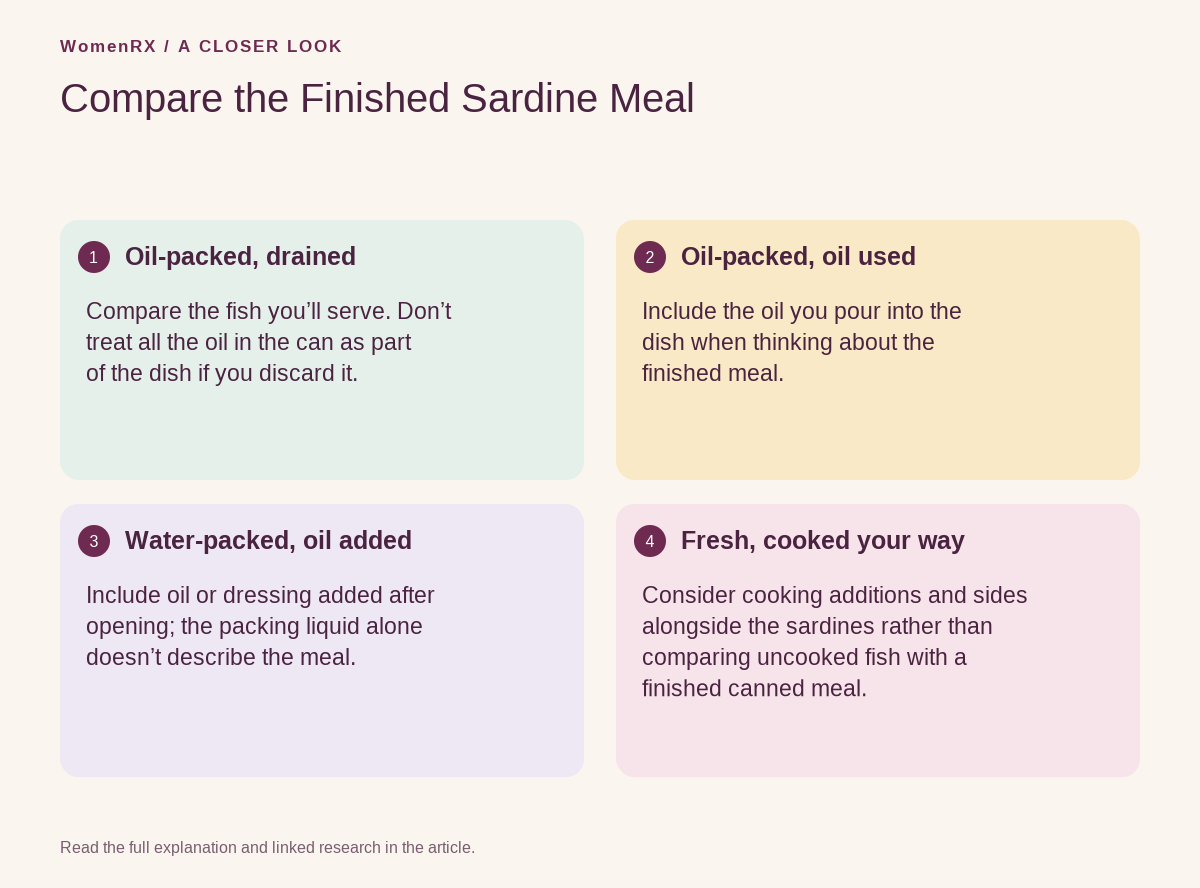
Compare the Finished Sardine Meal
Oil-packed, drained: Compare the fish you’ll serve. Don’t treat all the oil in the can as part of the dish if you discard it.
Oil-packed, oil used: Include the oil you pour into the dish when thinking about the finished meal.
Water-packed, oil added: Include oil or dressing added after opening; the packing liquid alone doesn’t describe the meal.
Fresh, cooked your way: Consider cooking additions and sides alongside the sardines rather than comparing uncooked fish with a finished canned meal.
Read the figure as text
Use the same planned amount of sardines as your starting point. These are preparation comparisons, not rankings of products or weight-loss effects.- Oil-packed, drained: Compare the fish you’ll serve. Don’t treat all the oil in the can as part of the dish if you discard it.
- Oil-packed, oil used: Include the oil you pour into the dish when thinking about the finished meal.
- Water-packed, oil added: Include oil or dressing added after opening; the packing liquid alone doesn’t describe the meal.
- Fresh, cooked your way: Consider cooking additions and sides alongside the sardines rather than comparing uncooked fish with a finished canned meal.
More questions, answered
Are oil-packed sardines automatically a poor choice?
No. First decide whether you’ll drain the oil or use it in the dish. Then compare the amount of sardines you’ll eat and the rest of the meal. A water-packed can with oil added later isn’t a meaningful ‘no-oil’ comparison.
Sources you can check
- Dietary Supplements for Weight Loss - Health Professional Fact SheetAccessed 2026-09-25Return to first citation
- Influence of feeding graded levels of canned sardines on the inflammatory markers and tissue fatty acid composition of Wistar rats.Rodrigues PO, Martins SV, Lopes PA, Ramos C, Miguéis S, Alfaia CM, Pinto RM, Rolo EA, Bispo P, Batista I, Bandarra NM, Prates JA. · The British journal of nutrition · 2014Return to first citation
- Overview of the therapeutic efficacy of marine fish oil in managing obesity and associated metabolic disorders.Kar R, Panchali T, Das P, Dutta A, Phoujdar M, Pradhan S. · Physiological reports · 2024Return to first citation