Do Beets Have a Specific Weight-Loss Benefit?
Beets can be part of a satisfying meal, but research hasn’t shown that beetroot or beet juice directly reduces body weight.
Beets are a useful food to include in meals, but they aren’t a proven weight-loss aid. A review of 12 randomized trials found no meaningful change in body weight or other body-composition measures from beetroot or nitrate supplements. A small trial found that beetroot juice didn’t add to the weight loss seen with calorie restriction. Neither finding establishes a special benefit for women. 3 2
What the weight research found
The clearest direct evidence comes from a 2023 systematic review and meta-analysis of 12 randomized controlled trials. The trials tested beetroot or nitrate supplements, and the pooled results showed no change in body weight, fat mass, waist circumference, or other reported body-composition measures. The authors rated the certainty of evidence as low to moderate. 3
One small trial helps put beetroot juice in context. It randomized 29 overweight or obese middle-aged and older adults to calorie restriction with beetroot juice or calorie restriction alone for 14 days. Both groups had similar changes in body composition and resting energy expenditure. In other words, the juice didn’t appear to amplify the effects of calorie restriction in this short pilot study. 2
That trial did find differences in some vascular and cognitive measures, but those are separate outcomes, not evidence that beetroot juice causes weight loss. 2
Whole beets and juice aren’t interchangeable evidence
The review combined studies of beetroot and nitrate supplements, while the small calorie-restriction trial used beetroot juice. These results don’t show that one preparation is better for weight management than another, and they don’t directly compare whole beets with juice. A result from a supplement or juice study also shouldn’t be treated as proof that eating whole beets changes body weight. 3 2
The research summaries report overall results, not a women-specific estimate. They therefore don’t establish a distinct weight-loss effect in women or tell us whether results differ by sex. 3 2
A practical way to include beets
You don’t need to treat beets as a weight-loss ingredient. Use them as one part of a meal you enjoy: for example, add roasted beets to a bowl with lentils, greens, and a grain, or serve them alongside another protein food and vegetables. That’s a meal-building example, not a studied beet-based weight-loss plan.
If you enjoy beet juice, you can choose it for taste or convenience, but don’t count on it to reduce body weight. The available trial tested juice alongside calorie restriction, not as a stand-alone weight-loss treatment. More broadly, NIH guidance describes a sensible weight-loss approach as a healthy eating plan that reduces calorie intake, with physical activity, rather than relying on a supplement ingredient. 2 1
The useful takeaway is simple: choose whole beets, juice, or another preparation based on how you like to eat, not on a promise of extra fat loss. The current evidence doesn’t show a specific body-weight advantage for beets, and it doesn’t identify a special benefit for women.
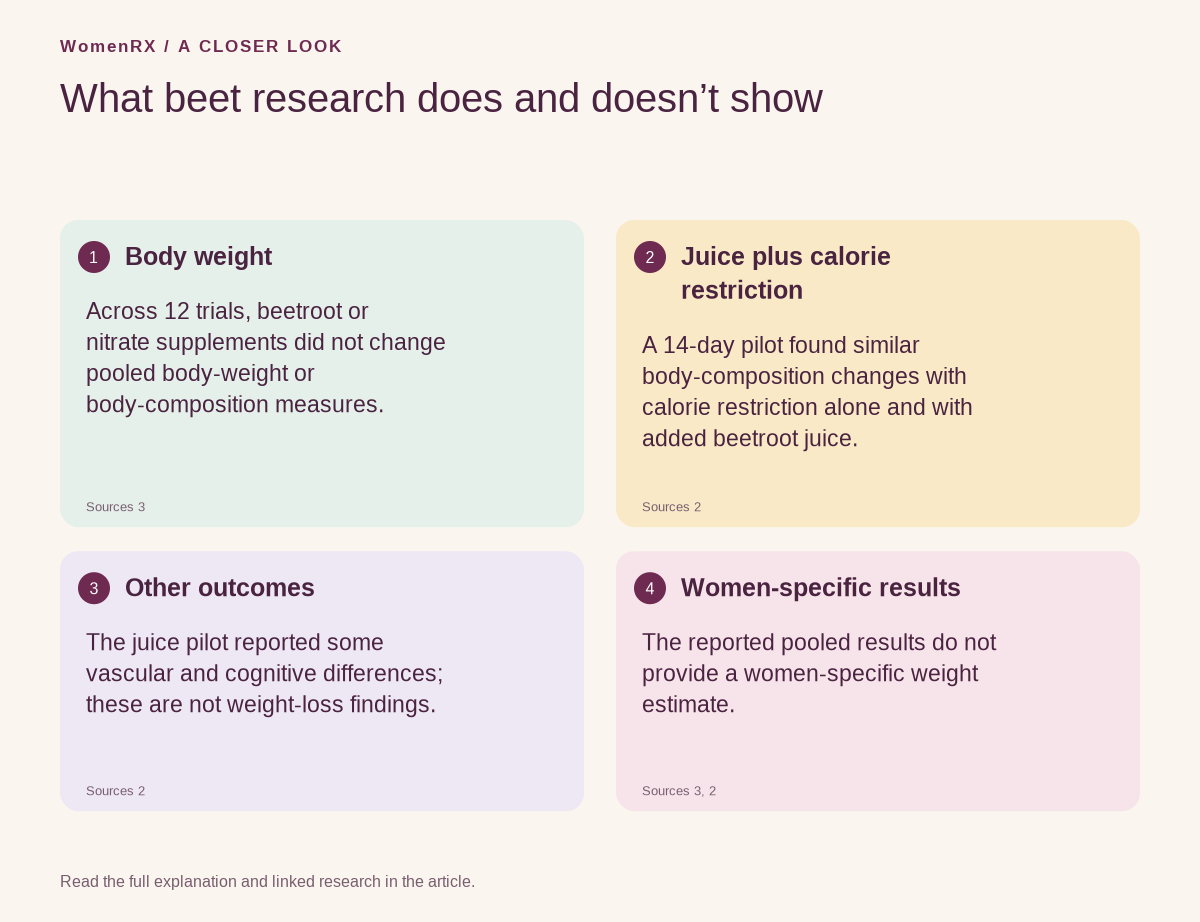
What beet research does and doesn’t show
Body weight: Across 12 trials, beetroot or nitrate supplements did not change pooled body-weight or body-composition measures.3
Juice plus calorie restriction: A 14-day pilot found similar body-composition changes with calorie restriction alone and with added beetroot juice.2
Other outcomes: The juice pilot reported some vascular and cognitive differences; these are not weight-loss findings.2
Women-specific results: The reported pooled results do not provide a women-specific weight estimate.32
Read the figure as text
Separate the body-weight evidence from other studied outcomes, and see why juice results don’t settle the whole-beet question.- Body weight: Across 12 trials, beetroot or nitrate supplements did not change pooled body-weight or body-composition measures.3
- Juice plus calorie restriction: A 14-day pilot found similar body-composition changes with calorie restriction alone and with added beetroot juice.2
- Other outcomes: The juice pilot reported some vascular and cognitive differences; these are not weight-loss findings.2
- Women-specific results: The reported pooled results do not provide a women-specific weight estimate.32
More questions, answered
Does beetroot juice work better than whole beets for weight loss?
That hasn’t been established. The review pooled trials of beetroot and nitrate supplements, and a separate small trial tested beetroot juice alongside calorie restriction. Neither directly compared juice with whole beets for weight loss. 3 2
Sources you can check
- Dietary Supplements for Weight Loss - Health Professional Fact SheetAccessed 2026-09-25Return to first citation
- Caloric Restriction (CR) Plus High-Nitrate Beetroot Juice Does Not Amplify CR-Induced Metabolic Adaptation and Improves Vascular and Cognitive Functions in Overweight Adults: A 14-Day Pilot Randomised Trial.Alharbi M, Chiurazzi M, Nasti G, Muscariello E, Mastantuono T, Koechl C, Stephan BC, Shannon OM, Colantuoni A, Siervo M. · Nutrients · 2023Return to first citation
- The effects of beetroot and nitrate supplementation on body composition: a GRADE-assessed systematic review and meta-analysis.Afrisham R, Farrokhi V, Ghanavati M, Asbaghi O, Mohammadi S, Mohammadian M, Taghvaei-Yazdeli T, Safaei-Kooyshahi S, Jadidi Y, Ashtary-Larky D. · The British journal of nutrition · 2023Return to first citation