Constipation: What to Try and When to Get Help
You don’t need a bowel movement every day, but a new change, troublesome symptoms, or signs of possible blockage call for a different response than routine self-care.
Constipation can mean fewer than three bowel movements a week, hard or dry stools, straining, or feeling that you haven’t fully emptied. For mild symptoms, gradually add fiber-rich foods, drink fluids, move regularly, and make time to go when you feel the urge. Polyethylene glycol (PEG) has a strong guideline recommendation for adults with chronic idiopathic constipation. Sudden, severe abdominal pain needs urgent medical assessment, especially with vomiting or swelling. 12456
Constipation isn’t defined by whether you go every day. Fewer than three bowel movements a week can be a sign, but hard or dry stools, straining, pain, or feeling incompletely emptied matter too. A change from your usual pattern is worth noticing. 2
Start with changes that support regularity
If symptoms are mild, try a few practical changes together: eat more fiber-rich fruits, vegetables, and grains; drink plenty of fluids; get regular activity; and take time to use the bathroom when you feel the urge. You don’t need to force a daily bowel movement. 12
Add fiber gradually. A sudden increase can bring gas, bloating, or cramps, so build up through meals rather than making a sharp change. Fiber supports digestion and can help prevent constipation. 1
How fiber and laxatives compare
Food fiber is a reasonable first step for mild symptoms. It supports digestion and can help prevent constipation, but increasing it too quickly may make you feel more uncomfortable. The adult constipation guideline makes a conditional recommendation for fiber as a treatment for chronic idiopathic constipation. 16
Polyethylene glycol (PEG) is an option to discuss when constipation continues despite routine changes. The American Gastroenterological Association and American College of Gastroenterology give PEG a strong recommendation for adults with chronic idiopathic constipation, while their recommendation for fiber is conditional. These recommendation strengths aren’t a direct, head-to-head comparison, and they don’t mean PEG is right for every person or every cause of constipation. This comparison tells you about the strength of the guideline recommendations, not which option will feel better or work faster for you. The guideline also says preferences, cost, and availability matter when choosing treatment. 6
If symptoms keep going despite gradual food and lifestyle changes, ask about treatment options rather than continuing to add more fiber. The guideline also discusses other over-the-counter and prescription medicines, including stimulant laxatives and prescription treatments. For ongoing symptoms, the choice depends on the pattern and likely cause. 6
Check whether a medicine could be contributing
Some medicines can cause constipation. If symptoms began after starting a medicine, or you take an opioid pain medicine, ask the person who prescribed it whether it could be playing a role. A medication review may help clarify whether a medicine is contributing. 23
Pregnancy, postpartum, and menstrual patterns
Constipation is common during pregnancy and after giving birth. Simple diet and lifestyle measures are described as safe to try during pregnancy. Because the adult chronic-constipation guideline concerns chronic idiopathic constipation in adults, it shouldn’t be treated as pregnancy-specific advice. Ask for advice suited to pregnancy or postpartum recovery before choosing a laxative. 36
If you notice constipation changing around your period, you can keep that pattern in mind when deciding whether it is new or persistent. That observation alone doesn’t establish the cause.
When self-care isn’t enough
Arrange medical review if your bowel habits change suddenly, you have abdominal pain, or you think a medicine is causing constipation. You don’t have to wait for a particular number of days if symptoms are getting worse or are unusual for you. 23
Sudden, severe abdominal pain calls for urgent medical assessment rather than more constipation self-care. Vomiting, a swollen abdomen, or inability to pass gas alongside the pain adds concern: these symptoms can occur with intestinal obstruction, a surgical emergency. They aren’t a way to diagnose obstruction at home. 45
A useful first distinction is whether this feels like familiar, mild constipation or a new and worsening problem. For mild symptoms, gradual routine changes are reasonable. For a sudden change, medication concern, or abdominal pain, the next step is medical review, not simply adding more fiber. 123
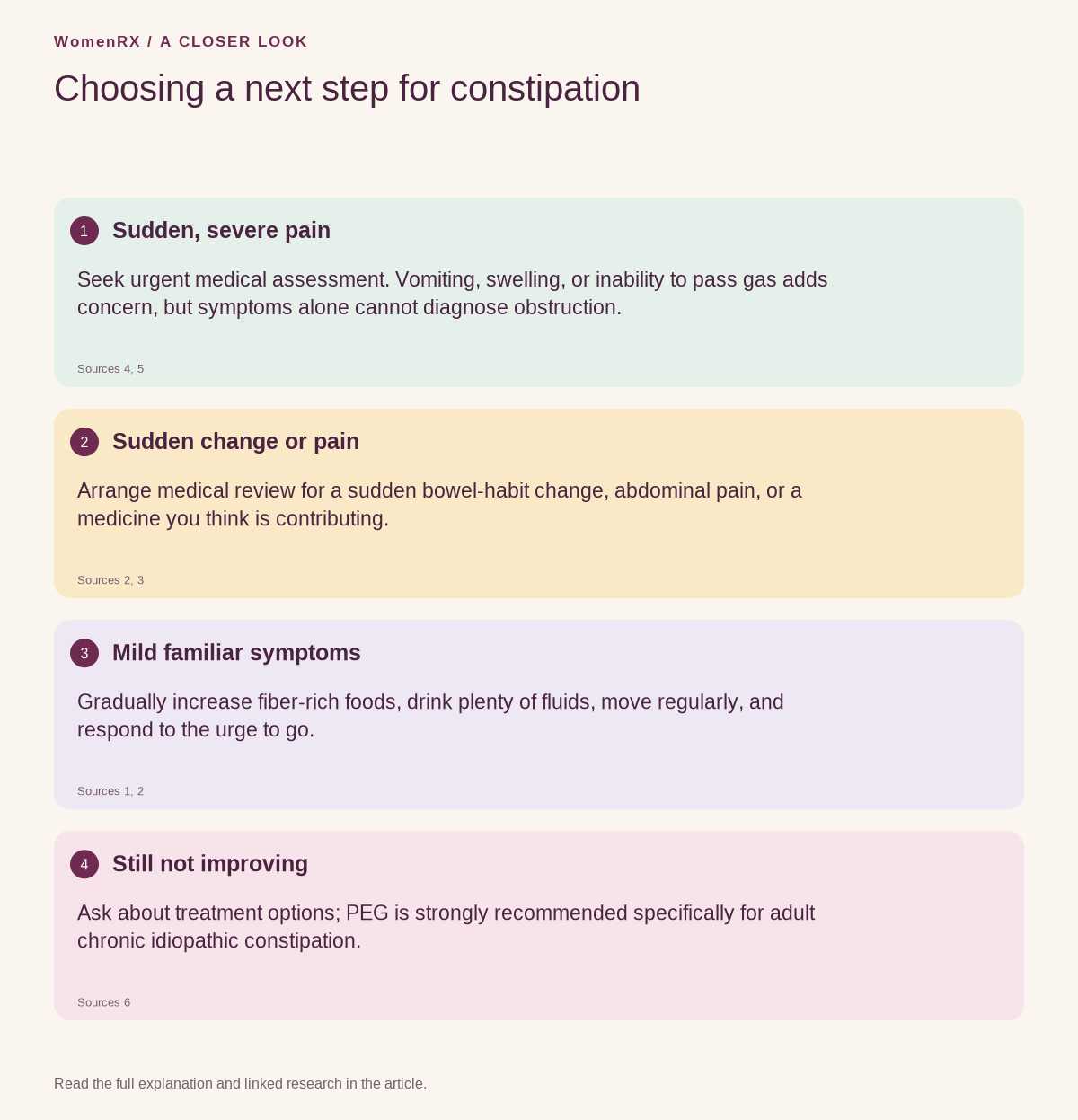
Choosing a next step for constipation
Sudden, severe pain: Seek urgent medical assessment. Vomiting, swelling, or inability to pass gas adds concern, but symptoms alone cannot diagnose obstruction.45
Sudden change or pain: Arrange medical review for a sudden bowel-habit change, abdominal pain, or a medicine you think is contributing.23
Mild familiar symptoms: Gradually increase fiber-rich foods, drink plenty of fluids, move regularly, and respond to the urge to go.12
Still not improving: Ask about treatment options; PEG is strongly recommended specifically for adult chronic idiopathic constipation.6
Read the figure as text
This route distinguishes urgent pain from symptoms suited to medical review or routine self-care.- Sudden, severe pain: Seek urgent medical assessment. Vomiting, swelling, or inability to pass gas adds concern, but symptoms alone cannot diagnose obstruction.45
- Sudden change or pain: Arrange medical review for a sudden bowel-habit change, abdominal pain, or a medicine you think is contributing.23
- Mild familiar symptoms: Gradually increase fiber-rich foods, drink plenty of fluids, move regularly, and respond to the urge to go.12
- Still not improving: Ask about treatment options; PEG is strongly recommended specifically for adult chronic idiopathic constipation.6
More questions, answered
Do I need to have a bowel movement every day?
No. A daily bowel movement isn’t required. Frequency is only one clue: hard or dry stool, straining, pain, or feeling that you haven’t emptied can also point to constipation. A change from your usual pattern matters too. 2
Should I add a lot of fiber at once?
It’s better to increase fiber gradually. A quick increase can cause gas, bloating, and cramps. Fruits, vegetables, and grains are sources of dietary fiber; if symptoms persist, consider whether self-care is enough rather than continuing to add more. 16
Sources you can check
- Dietary Fiber: MedlinePlusAccessed 2026-09-25Return to first citation
- Constipation | MedlinePlusAccessed 2026-09-25Return to first citation
- Constipation - NHSAccessed 2026-09-25Return to first citation
- Comparative study of preoperative with postoperative diagnosis in acute abdomen.Bhatta BR, Shrestha S, Jha R, Dahal I, Thapa KS, Maharjan S, Shrestha A, Ghimire SK, Aryal RK, Jaiswar M, Manandhar K. · Annals of medicine and surgery (2012) · 2026Return to first citation
- Evaluation of Multidetector Computed Tomography in the Diagnosis of Intestinal Obstruction.Kelkar A, Thakur VBS, Jeeson J. · Cureus · 2024Return to first citation
- American Gastroenterological Association-American College of Gastroenterology Clinical Practice Guideline: Pharmacological Management of Chronic Idiopathic Constipation.Chang L, Chey WD, Imdad A, Almario CV, Bharucha AE, Diem S, Greer KB, Hanson B, Harris LA, Ko C, Murad MH, Patel A, Shah ED, Lembo AJ, Sultan S. · Gastroenterology · 2023Return to first citation