Coffee and Tirzepatide: What If Caffeine Worsens Your Symptoms?
Coffee may be one trigger, but tirzepatide itself can cause stomach symptoms, especially during dose increases.
Coffee-related symptoms don’t show that caffeine is changing how well tirzepatide works. Tirzepatide can cause nausea, vomiting, diarrhea and, with Mounjaro, reflux; these symptoms often occur during dose increases. Try changing one coffee habit at a time, such as the serving size or timing, and contact your prescriber if symptoms persist or make it hard to keep fluids down. 2
First, separate a possible trigger from a medicine effect
If coffee seems to bring on nausea, reflux or another stomach symptom, it’s reasonable to test that pattern. But the timing alone can’t tell you that caffeine is weakening tirzepatide. A symptom after coffee is not, by itself, evidence that the medicine has stopped working.
Tirzepatide itself can cause gastrointestinal symptoms. In Mounjaro trials, these included nausea, vomiting, diarrhea and reflux. Nausea, vomiting and diarrhea were reported most often during dose increases and tended to lessen over time. So a change in symptoms after starting treatment or increasing a dose may have more than one possible explanation. 2
Try one coffee change at a time
For a few days, notice when symptoms begin and what your coffee routine looks like. Then test one adjustment at a time, rather than changing everything at once. For example:
- Reduce the serving. Try a smaller cup and see whether the symptom is less noticeable.
- Change the timing. If you usually drink coffee before eating, try having it at a different point in your routine. This is a personal test, not a proven tirzepatide rule.
- Try less caffeine. You could switch to a lower-caffeine option or decaf and see whether that changes the pattern. Coffee caffeine content varies, so “one cup” doesn’t always mean the same amount. 1
- Look at the whole drink. If you add ingredients or have coffee alongside other foods, change one part at a time so you can tell what seems to matter.
You don’t have to conclude that coffee is the cause after one uncomfortable morning. A simple note of the drink, timing and symptom can help you spot whether the pattern repeats, particularly around a dose increase. If coffee still seems to be a trigger, choosing a different drink is a reasonable option; there’s no need to force it.
Keep fluids in mind if you’re feeling sick
Nausea, vomiting and diarrhea can make it harder to stay hydrated. The Mounjaro prescribing information describes postmarketing kidney injury associated with fluid loss from gastrointestinal symptoms, particularly around treatment initiation or dose increases. If symptoms are affecting your ability to drink, or vomiting or diarrhea continues, contact your prescriber rather than treating it as just a coffee problem. 2
Pregnancy is a separate caffeine question
Caffeine passes through the placenta. If you’re pregnant, ask your prenatal care team what caffeine limit is appropriate for you. That’s separate from whether coffee seems to trigger symptoms on tirzepatide; a symptom pattern alone doesn’t establish a caffeine-tirzepatide interaction. 1
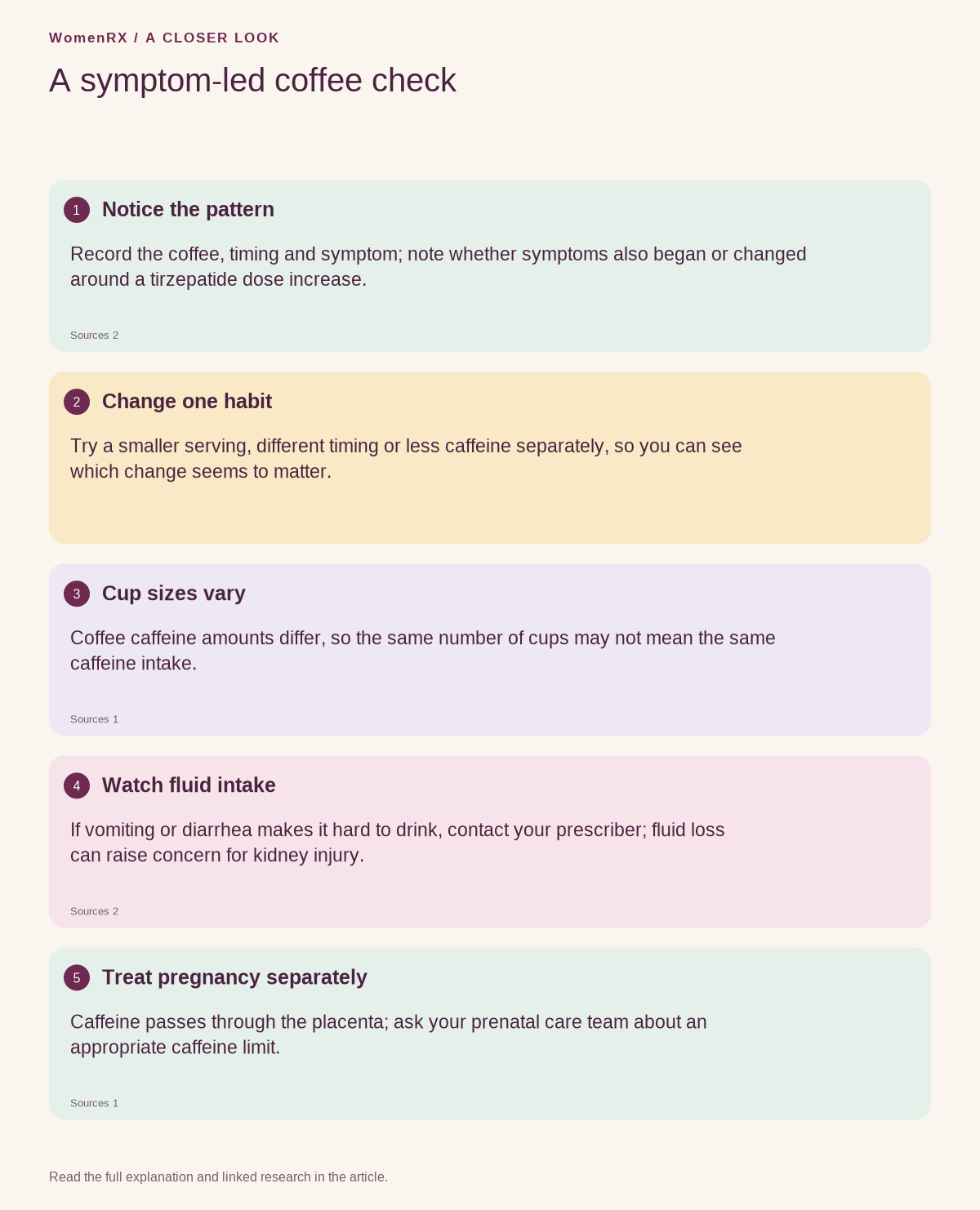
A symptom-led coffee check
Notice the pattern: Record the coffee, timing and symptom; note whether symptoms also began or changed around a tirzepatide dose increase.2
Change one habit: Try a smaller serving, different timing or less caffeine separately, so you can see which change seems to matter.
Cup sizes vary: Coffee caffeine amounts differ, so the same number of cups may not mean the same caffeine intake.1
Watch fluid intake: If vomiting or diarrhea makes it hard to drink, contact your prescriber; fluid loss can raise concern for kidney injury.2
Treat pregnancy separately: Caffeine passes through the placenta; ask your prenatal care team about an appropriate caffeine limit.1
Read the figure as text
Use this checklist to test a possible coffee trigger without assuming it changes tirzepatide’s effect.- Notice the pattern: Record the coffee, timing and symptom; note whether symptoms also began or changed around a tirzepatide dose increase.2
- Change one habit: Try a smaller serving, different timing or less caffeine separately, so you can see which change seems to matter.
- Cup sizes vary: Coffee caffeine amounts differ, so the same number of cups may not mean the same caffeine intake.1
- Watch fluid intake: If vomiting or diarrhea makes it hard to drink, contact your prescriber; fluid loss can raise concern for kidney injury.2
- Treat pregnancy separately: Caffeine passes through the placenta; ask your prenatal care team about an appropriate caffeine limit.1
More questions, answered
Should I stop tirzepatide if coffee makes me nauseated?
A symptom after coffee doesn’t by itself show that you need to stop tirzepatide. You can try adjusting your coffee routine and contact your prescriber if symptoms persist, worsen, or interfere with drinking fluids. Avoid making a treatment change based only on one suspected coffee trigger.
Does switching to decaf prove caffeine was the problem?
No. It can be a practical way to test whether less caffeine changes your symptoms, but a change in symptoms doesn’t prove the cause. Coffee servings can also differ in caffeine content. 1