Chromium for Blood Sugar or Weight: What the Evidence Shows
Chromium is a nutrient, but that doesn’t mean taking more reliably improves blood sugar or weight.
Chromium supplements haven’t shown a dependable, clinically meaningful benefit for blood sugar or weight. In people with diabetes, pooled studies suggest small average improvements in some glucose measures, but results vary and the importance of the changes is unclear. For weight, reviews find only small average differences from placebo. Neither goal alone establishes a reason to supplement. 1 2
A nutrient is not automatically a treatment
Chromium is found in foods and sold in supplements, often as chromium picolinate. It may influence insulin action, but its role in the body is not fully understood. There’s also no validated test for chromium status and no established deficiency condition in healthy people. So a theory about how chromium might affect metabolism, or a supplement label calling it an essential nutrient, doesn’t show that taking extra will improve your blood sugar or weight. 1
The nutrition reference values also need context: the U.S. Adequate Intake (AI) is an estimate used when evidence isn’t sufficient to set a Recommended Dietary Allowance. For women ages 19-50, the AI is 25 micrograms daily; it is 30 micrograms during pregnancy and 45 micrograms while breastfeeding. Those figures describe estimated intake, not a recommended supplement dose or proof that extra chromium treats a health problem. 1
Blood sugar: findings depend on the population
For people with diabetes, reviews of clinical trials found small average reductions in fasting blood glucose and HbA1c with chromium, but the clinical importance is uncertain. Individual studies have not agreed: one trial in 137 people with type 2 diabetes found no significant overall improvement in fasting glucose or HbA1c compared with placebo. The American Diabetes Association’s position, as summarized by the NIH Office of Dietary Supplements, is that evidence is insufficient to support routine chromium use for blood sugar control. 1
That evidence does not establish chromium as a way to prevent diabetes. For people without diabetes, a review cited by the NIH found that chromium supplements did not help moderate glucose levels in healthy individuals. And a possible benefit in a subgroup with poorer insulin sensitivity remains a research question, not a reliable way to identify who should take it. 1
The general diabetes and weight findings summarized here don’t provide a separate women-specific effect estimate, so they can’t establish whether the average results differ for women. PCOS studies are a separate, women-specific evidence base, but their findings are mixed and don’t automatically apply to women without PCOS. 1
Weight: a small difference, not a weight-loss strategy
In a 2019 meta-analysis of 21 trials involving 1,316 adults with overweight or obesity, participants taking chromium lost an average of 0.75 kilograms more than those taking placebo. The trials lasted 9 to 24 weeks. The analysis also found small changes in body mass index and body-fat percentage, but no significant effect on waist circumference. The NIH describes the average weight effect as having little clinical significance. 1
A Cochrane review of nine trials, involving 622 participants with overweight or obesity, found a 1.1-kilogram greater weight reduction with chromium picolinate than placebo. It judged the evidence low quality and the effect of debatable clinical relevance. The estimates differ because the reviews included different sets of trials; both point to a small average effect, not substantial or dependable weight loss. 2
These studies tested supplements over weeks or months. They don’t show that chromium meaningfully changes long-term weight, prevents weight gain, or reduces cravings in a predictable way. A small average difference in a study is also not a promise of an individual result. 1 2
What to weigh before discussing a supplement
If your goal is blood sugar, the key question is whether a supplement has a clear role alongside your existing care. Chromium could add to the effects of insulin, metformin, or other diabetes medicines and may increase the risk of low blood sugar. If you take one of these medicines, discuss chromium before adding it rather than changing your treatment based on a supplement claim. Chromium picolinate can also reduce levothyroxine absorption when taken at the same time. 1
Safety information is not complete. No upper intake limit has been established, but that does not mean any amount is known to be safe. The NIH notes that people with kidney or liver disease might be more vulnerable to harm from high intakes. 1
For pregnancy or breastfeeding, the intake figures above are AIs, not evidence that chromium supplements improve blood sugar or weight in those life stages. The trials summarized here don’t settle whether supplementation is appropriate for an individual pregnancy or while breastfeeding. If you’re considering it, bring the exact product and Supplement Facts label to a prenatal or postpartum care clinician; that’s a practical way to discuss your situation, not a treatment recommendation. 1
For women with PCOS, chromium has been studied directly, but the findings are mixed. Reviews summarized by the NIH found no consistent effect on fasting glucose, and reported changes in some other measures were small or of uncertain clinical relevance. A PCOS diagnosis, weight concern, or interest in cravings therefore doesn’t by itself establish that chromium is useful. 1
A practical bottom line
If you’re considering chromium for blood sugar, ask whether the evidence applies to your diagnosis and current medicines. If you’re considering it for weight, expect at most a small average effect in short-term trials, not a reliable weight-loss treatment. In either case, the reason to discuss a product should be a specific question about your care, not a marketing promise or the idea that more of an essential nutrient must be better.
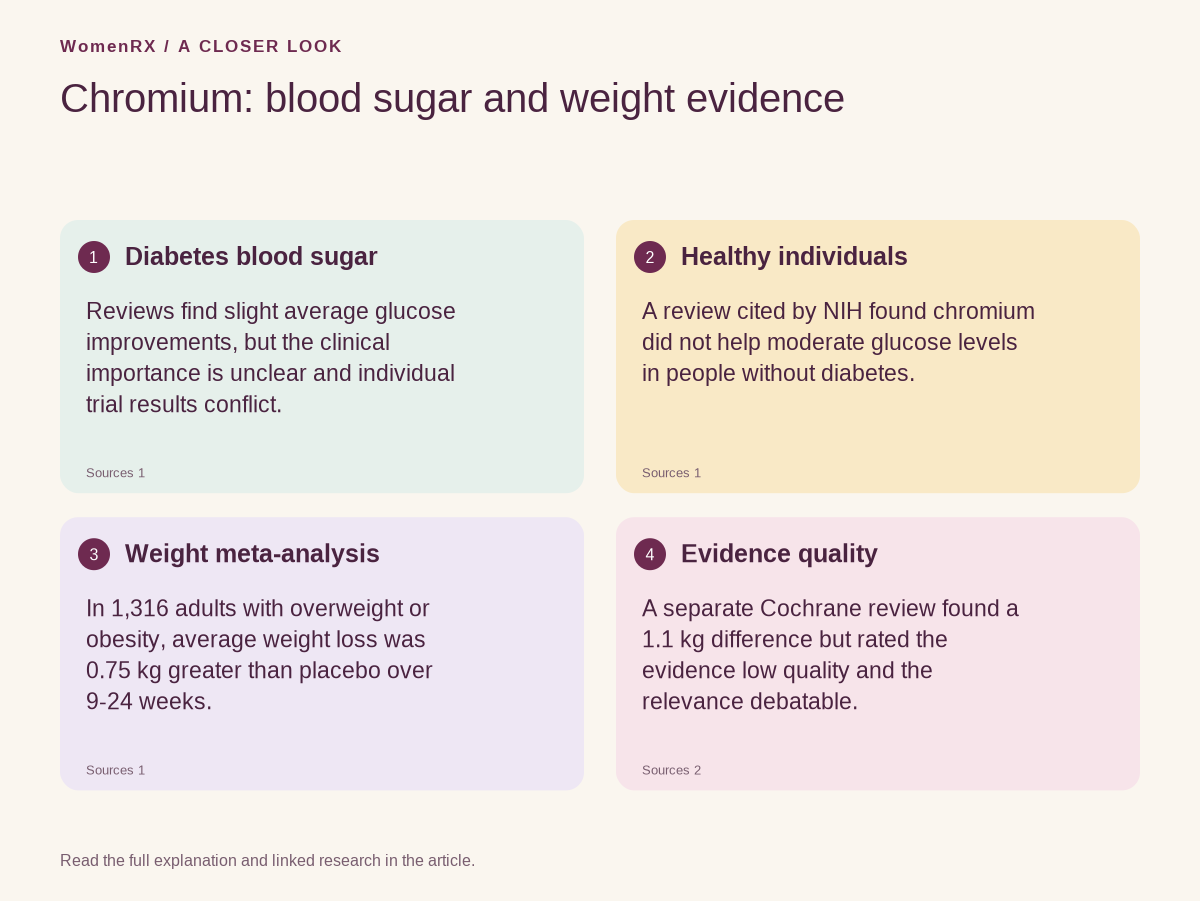
Chromium: blood sugar and weight evidence
Diabetes blood sugar: Reviews find slight average glucose improvements, but the clinical importance is unclear and individual trial results conflict.1
Healthy individuals: A review cited by NIH found chromium did not help moderate glucose levels in people without diabetes.1
Weight meta-analysis: In 1,316 adults with overweight or obesity, average weight loss was 0.75 kg greater than placebo over 9-24 weeks.1
Evidence quality: A separate Cochrane review found a 1.1 kg difference but rated the evidence low quality and the relevance debatable.2
Read the figure as text
The evidence differs by goal and study population. These summaries show why a statistical change in a trial does not automatically make a supplement a useful treatment.- Diabetes blood sugar: Reviews find slight average glucose improvements, but the clinical importance is unclear and individual trial results conflict.1
- Healthy individuals: A review cited by NIH found chromium did not help moderate glucose levels in people without diabetes.1
- Weight meta-analysis: In 1,316 adults with overweight or obesity, average weight loss was 0.75 kg greater than placebo over 9-24 weeks.1
- Evidence quality: A separate Cochrane review found a 1.1 kg difference but rated the evidence low quality and the relevance debatable.2
More questions, answered
Can a chromium test show whether I need a supplement?
There is no validated method for determining chromium status, and no clinically defined deficiency state has been established. That makes a test result an unreliable basis for deciding to supplement. 1
Does chromium picolinate work better than other forms?
Chromium picolinate is commonly studied, but the NIH fact sheet reports similar absorption across several supplement forms. The available evidence doesn’t establish that one form produces a dependable blood-sugar or weight benefit. 1