Can Biotin Supplements Change Blood Test Results?
Include hair and nail supplements when you discuss your supplement list before a blood test.

The detail to share before the sample is taken
A supplement can feel too ordinary to mention. You may have bought it beside shampoo, taken it for months, or assumed the word “vitamin” meant it could not matter to a laboratory. Biotin is a reason to bring the bottle, or a clear photograph of its label, into the conversation.
The concern is a measurement problem. Biotin can interfere with certain laboratory methods, so a result may not reflect what the test is intended to measure. FDA has received reports of falsely low troponin results; troponin is used in the assessment of heart attacks. This does not mean every test is affected or every person taking biotin will receive an incorrect result.1
Why the test method matters
Some assays use a biotin–streptavidin binding system as part of their measurement process. Extra biotin in a sample can interfere with that system. The direction and extent of the error depend on the assay: an affected result can be too high or too low. Laboratory guidance describes differences between methods and manufacturers.3
This is why an online instruction to “stop for the same number of hours before any blood test” leaves out the detail that matters: which test, using which method, in which circumstances? Ask the clinician or laboratory for instructions specific to the planned test and your supplement use. Do not substitute a general article for instructions about a prescribed product.
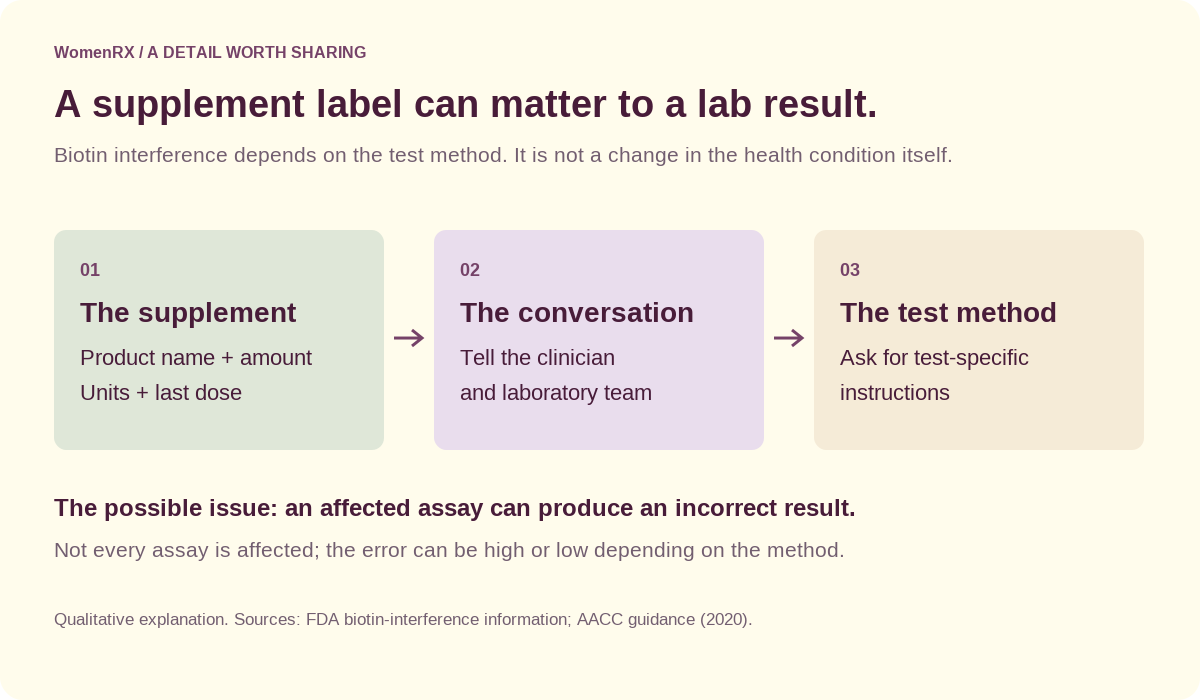
A label can matter to a lab result
1. Record: the product, amount, unit and last dose.
2. Tell: the ordering clinician and testing team.
3. Ask: for instructions specific to the planned test. Some tests are affected; others are not.
Read the label together
Biotin can appear in a stand-alone product or in a combination supplement. NIH discusses interference with tests that include some hormone measurements. A thyroid test ordered for a symptom and a hair supplement bought for that same symptom can therefore belong in the same conversation.2
Rather than trying to remember the front-of-bottle claim, record four things: the product name; the amount per serving and its unit; how much you actually take; and when you last took it. Keep mcg and mg attached to the number. A photograph of the Supplement Facts panel can help the team check the details you may have missed.
Three questions worth taking to the lab
- Could biotin affect the specific tests I am having? Ask about the test, not just whether vitamins are generally allowed.
- Do you need my exact product and timing? Offer the label and the date/time of the last dose.
- What should I do if the result does not fit the situation? Let the treating team decide whether the result needs investigation, another method or repeat testing.
Keep the answer with your appointment details. If you receive different instructions from different places, ask the ordering clinician and laboratory to reconcile them before making a change on your own.
Bring the context, not a self-diagnosis
The downloadable briefing card is deliberately a record, not a pass/fail tool. It has space for the product label, timing, planned test and the instructions you were given. It does not calculate a safe dose or a universal waiting period.
The useful result is a clearer handoff: the person ordering the test and the team measuring the sample have the same information. If you need urgent assessment, tell the treating team about biotin when you arrive; do not postpone needed care to complete a worksheet.