BV Treatment, Recurrence, and What to Do Next
BV is usually treated with antibiotics, but symptoms can return, so getting the diagnosis confirmed matters as much as choosing a treatment.
Bacterial vaginosis (BV) is usually treated with a prescribed antibiotic, such as metronidazole or clindamycin. Because discharge and odor can have other causes, a clinician may examine you or test a vaginal swab rather than relying on symptoms alone. Recurrence is common; if symptoms persist or return, get reassessed instead of assuming it is BV again. 1 3
Start with a confirmed diagnosis
A thin, grayish-white discharge and a strong fishy smell, sometimes more noticeable after sex, can occur with BV. But these symptoms don’t confirm BV, and some people with BV have no symptoms. A clinician may ask about your symptoms, examine you, and take a vaginal swab to check for BV and other infections, including sexually transmitted infections. That helps distinguish BV from other causes of vaginal changes. 1
BV is a change in the balance of vaginal bacteria. It isn’t classed as a sexually transmitted infection, although sexual activity can be associated with it, and it can pass between people with vaginas during sex. 1
What treatment usually involves
Antibiotics are the usual treatment. Metronidazole and clindamycin are examples; treatment may be taken by mouth or used vaginally, depending on the prescription. The right option depends on your situation. 1 3 If you’re prescribed metronidazole, follow its directions and finish the course as instructed. 2
If you’re pregnant or might be, mention that when you seek care. BV in pregnancy calls for specific assessment and treatment advice. 1
If symptoms don’t clear or come back
BV often returns after treatment. A 2026 systematic review describes recurrence in more than half of patients within 6 to 12 months; this is a broad estimate, not a prediction of what will happen to you. If symptoms continue after treatment, worsen, or return, arrange reassessment. Similar symptoms can have a different cause, and a clinician can check whether BV is present again or whether another condition needs attention. 1 3
For repeated episodes, ask about a plan for recurrence rather than repeatedly treating yourself. A clinician may discuss further antibiotics or, for people with frequent recurrences, a longer-term vaginal antibiotic approach. The appropriate plan depends on your history and should be prescribed for you. 1
Prevention claims need a closer look
Vaginal vitamin C has been studied for recurrence prevention, but the evidence remains uncertain. A 2026 review found only one trial of vaginal vitamin C for preventing recurrence after antibiotic treatment. In that trial, recurrence at six months was 16% with vitamin C and 32% with placebo, but the review rated the evidence as low certainty. The review excluded trials enrolling only pregnant patients, so its findings do not establish whether vaginal vitamin C prevents recurrence during pregnancy. The result is a signal worth studying, not proof that vitamin C is a reliable prevention strategy. 3
If you want a simple washing routine, the NHS recommends water and plain soap for the genital area; this is not a promise that washing will prevent BV. 1
Sexual activity or your period may be a trigger for some people. If you notice a pattern, mention it during reassessment; it can help guide a discussion, but it doesn’t establish the cause on its own. 1
A practical path forward
If you notice unusual discharge or odor, arrange an evaluation rather than self-diagnosing. If BV is confirmed, discuss the prescribed antibiotic and how to use it. If symptoms persist or return, go back for reassessment. This is especially relevant during pregnancy, when treatment decisions need specific advice. 1 2
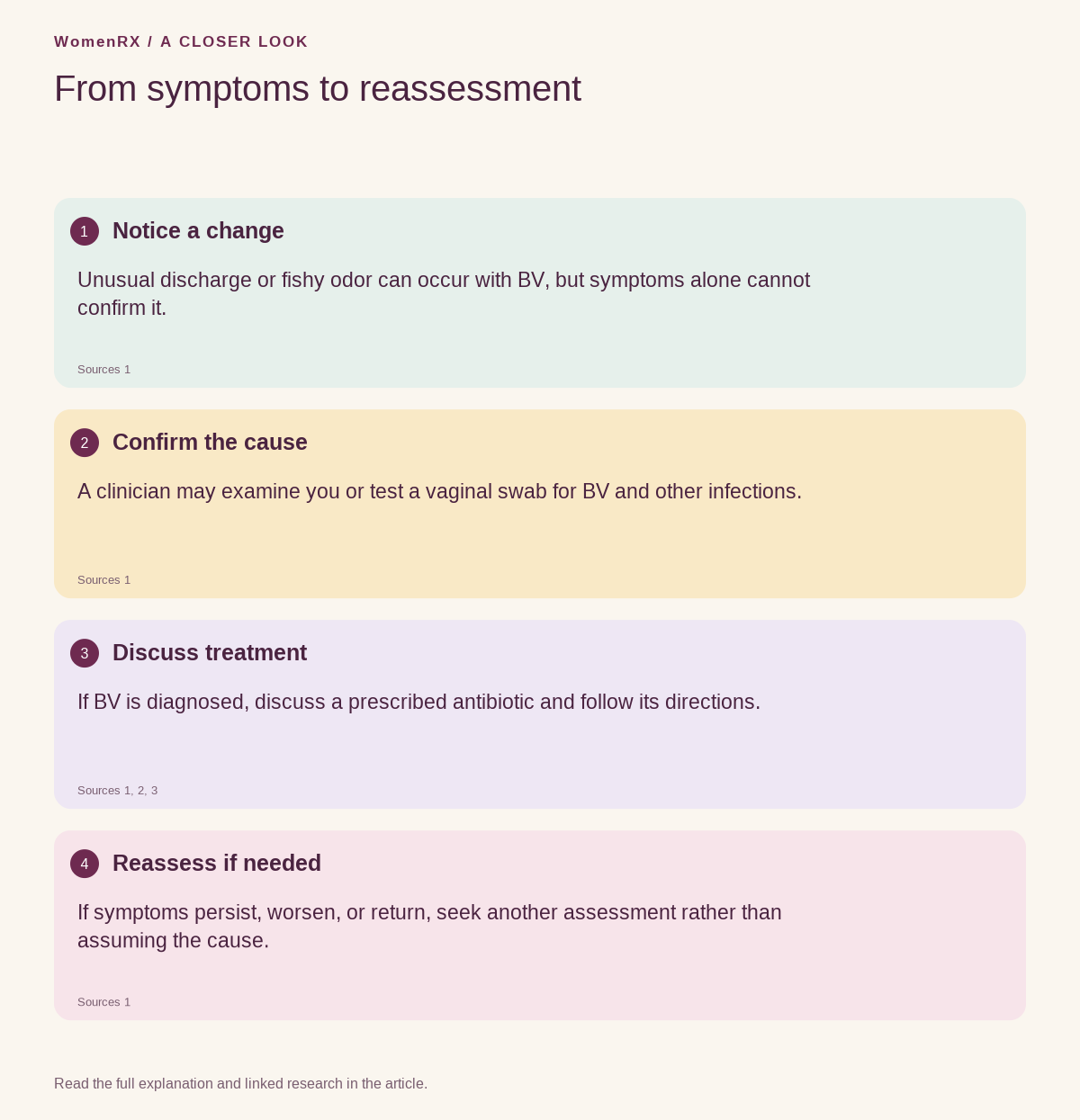
From symptoms to reassessment
Notice a change: Unusual discharge or fishy odor can occur with BV, but symptoms alone cannot confirm it.1
Confirm the cause: A clinician may examine you or test a vaginal swab for BV and other infections.1
Discuss treatment: If BV is diagnosed, discuss a prescribed antibiotic and follow its directions.123
Reassess if needed: If symptoms persist, worsen, or return, seek another assessment rather than assuming the cause.1
Read the figure as text
A simple care path helps distinguish an unconfirmed symptom from a diagnosed episode and shows when to return for another assessment.- Notice a change: Unusual discharge or fishy odor can occur with BV, but symptoms alone cannot confirm it.1
- Confirm the cause: A clinician may examine you or test a vaginal swab for BV and other infections.1
- Discuss treatment: If BV is diagnosed, discuss a prescribed antibiotic and follow its directions.123
- Reassess if needed: If symptoms persist, worsen, or return, seek another assessment rather than assuming the cause.1
More questions, answered
Does BV mean I have an STI?
No. BV isn’t classed as an STI, though sexual activity can be associated with it and BV can pass between people with vaginas during sex. Testing may also help rule out an STI when symptoms are being assessed. 1
Can vaginal vitamin C prevent BV from returning?
One trial found fewer recurrences at six months with vaginal vitamin C than with placebo, but the evidence was low certainty and came from just one prevention trial. Trials enrolling only pregnant patients were excluded, so the review does not establish whether vitamin C prevents recurrence during pregnancy. 3
Sources you can check
- Bacterial vaginosis - NHSAccessed 2026-09-25Return to first citation
- About metronidazole - NHSAccessed 2026-09-25Return to first citation
- Intravaginal Vitamin C for the Treatment and Prevention of Bacterial Vaginosis: A Systematic Review and Meta-analysis.Khaikin Y, Elangainesan P, Winkler E, Liu K, Selk A, Yudin MH. · Obstetrics and gynecology · 2026Return to first citation