Breast Tenderness Around Menopause: Causes, Relief, and When to Act
Hormone changes can contribute to breast tenderness, but the pain’s pattern and any accompanying breast changes matter more for your next step.
Yes, hormone changes during menopause can contribute to breast tenderness. If you still have periods, pain that affects both breasts and eases when a period ends may follow a cycle-linked pattern. A well-fitting bra or a suitable pain reliever may help. Arrange an assessment if pain isn’t improving, and seek prompt care for breast redness, swelling, skin dimpling, or nipple changes. 1
Breast tenderness during the menopause transition can be uncomfortable, especially when it’s new or keeps coming back. Hormone changes are one possible cause, but they aren’t the only one. The useful questions are whether the pain follows your periods, whether it’s improving, and whether you’ve noticed another change in the breast. None of those details can diagnose the cause on its own. 1
If you still have periods, notice when the pain comes and goes
Breast pain linked to periods often starts in the two weeks before a period, gets worse, then goes away when the period ends. It usually affects both breasts and can spread toward the armpits. If that sounds familiar, the timing gives you a way to describe what’s happening. It doesn’t prove that hormones are responsible for this particular episode. 1
Once periods have stopped, you no longer have that monthly pattern to compare with. Hormone changes during menopause can still be one possible contributor to breast pain, but new pain shouldn’t automatically be put down to menopause. Whether it improves and whether there are other breast changes remain useful guides to what to do next. 1
Consider what else changed around the same time
Pain felt in a breast can sometimes come from an injury or strain in the neck, shoulder, or back. Medicines can contribute, too; breast-pain guidance lists the contraceptive pill and some antidepressants as examples. Pregnancy is another possible cause if it’s still possible for you. These possibilities are reasons to consider the wider picture, not ways to identify the cause without an assessment. 1
If tenderness began after you started or changed menopausal hormone therapy, make a note of the timing and bring it up when your treatment is reviewed. Timing alone doesn’t establish that the therapy caused the pain. Decisions about menopausal hormone therapy are individualized and should be reevaluated periodically, so tenderness is worth discussing alongside the reason you use it and how well it’s working for you. 2
What may ease the discomfort
A properly fitted bra during the day may help; a soft bra for sleep is another option if tenderness bothers you at night. Breast-pain guidance also lists acetaminophen, ibuprofen, and pain-relieving gel among comfort measures. Choose a pain-relief option that’s appropriate for you. 1
Vitamin E tablets and evening primrose oil are often suggested for breast pain, but there’s little evidence that they help. You don’t need to try a supplement before seeking help for pain that isn’t getting better. 1
When to arrange care, and when to act promptly
Arrange a medical assessment if the pain isn’t improving or pain relief isn’t helping. This applies whether you still have periods or are postmenopausal. When describing pain that meets either of those criteria, mention if a sore spot is in one area or keeps returning. The typical period-linked pattern affects both breasts, but location alone can’t tell you the cause. 1
Seek prompt medical care if breast pain comes with a very high temperature or you feel hot, cold, or shivery. Do the same if part of the breast is red, hot, or swollen; the skin looks dimpled; there’s a rash on or around the nipple; or a nipple has sunk inward. These accompanying changes need assessment rather than a trial of home comfort measures. 1
Breast pain by itself is unlikely to be a symptom of cancer. That’s reassuring, but tenderness alone can’t tell you what a new breast change means, and it isn’t a reason to wait out pain that doesn’t improve. 1
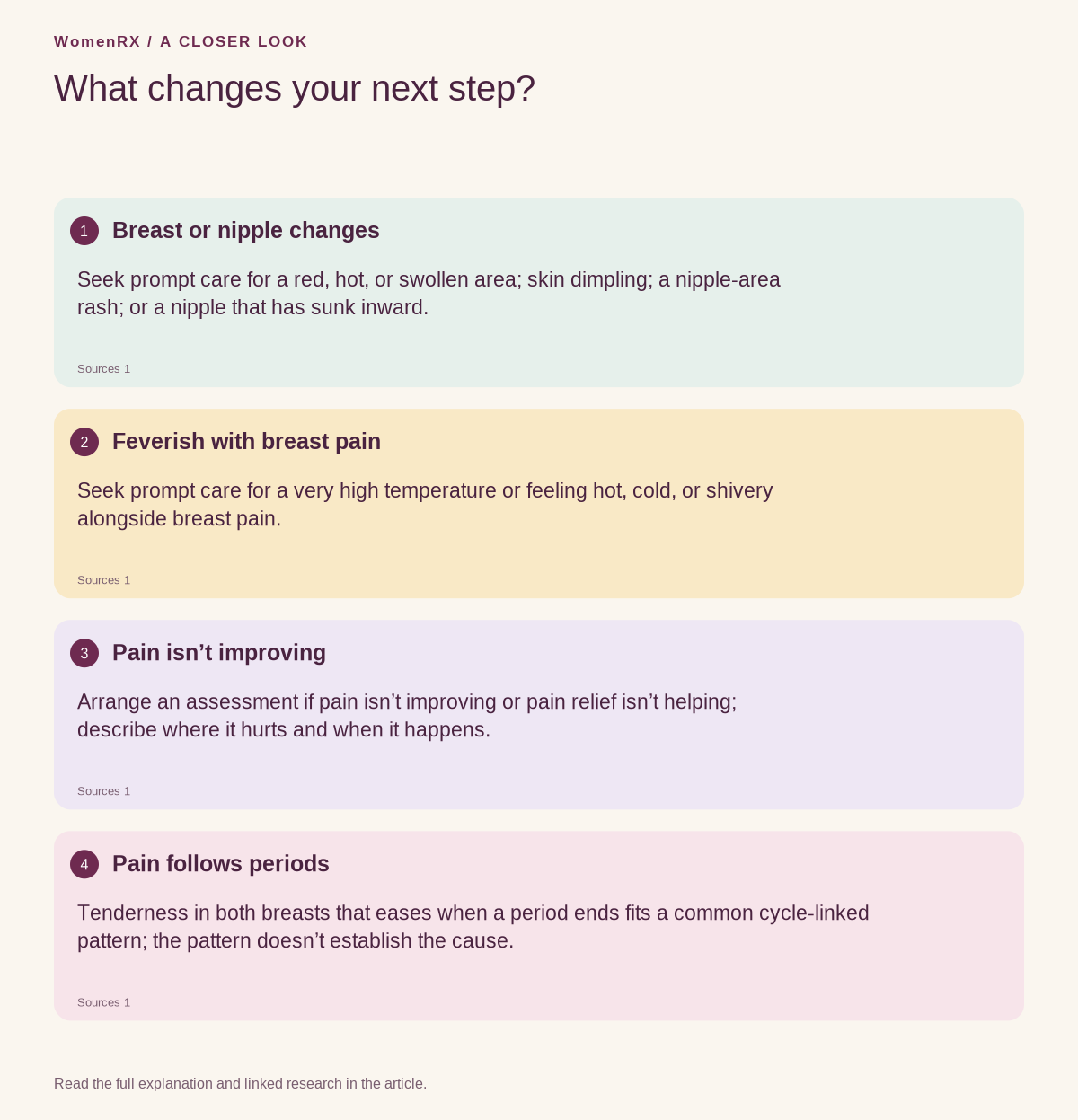
What changes your next step?
Breast or nipple changes: Seek prompt care for a red, hot, or swollen area; skin dimpling; a nipple-area rash; or a nipple that has sunk inward.1
Feverish with breast pain: Seek prompt care for a very high temperature or feeling hot, cold, or shivery alongside breast pain.1
Pain isn’t improving: Arrange an assessment if pain isn’t improving or pain relief isn’t helping; describe where it hurts and when it happens.1
Pain follows periods: Tenderness in both breasts that eases when a period ends fits a common cycle-linked pattern; the pattern doesn’t establish the cause.1
Read the figure as text
Start with accompanying changes, then consider whether the pain is improving and whether it follows a period-linked pattern.- Breast or nipple changes: Seek prompt care for a red, hot, or swollen area; skin dimpling; a nipple-area rash; or a nipple that has sunk inward.1
- Feverish with breast pain: Seek prompt care for a very high temperature or feeling hot, cold, or shivery alongside breast pain.1
- Pain isn’t improving: Arrange an assessment if pain isn’t improving or pain relief isn’t helping; describe where it hurts and when it happens.1
- Pain follows periods: Tenderness in both breasts that eases when a period ends fits a common cycle-linked pattern; the pattern doesn’t establish the cause.1
Sources you can check
- Breast pain - NHSAccessed 2026-09-25Return to first citation
- The 2022 hormone therapy position statement of The North American Menopause Society.“The 2022 Hormone Therapy Position Statement of The North American Menopause Society” Advisory Panel. · Menopause (New York, N.Y.) · 2022Return to first citation