Bloating While Taking Wegovy: Causes and When to Get Help
Bloating can be related to digestion, constipation, or other everyday patterns; pain, vomiting, and how long it lasts help show what to do next.
Bloating on Wegovy may occur alongside digestive symptoms, but bloating alone doesn’t identify the cause. Gas, constipation, and menstrual-cycle timing can also be relevant. Note when it started, any dose change, and bowel or other symptoms. Contact your prescriber promptly for persistent bloating or bloating with pain, vomiting, or constipation. If your abdomen is swollen and you have sudden, severe abdominal pain, seek emergency care. 1 2 3
What bloating can and can’t tell you
Bloating is a sensation of fullness or pressure, sometimes with visible swelling or more gas. By itself, it doesn’t tell you whether Wegovy is the cause. Gas is a common reason for bloating, constipation can add to the feeling of fullness, and some people notice bloating around their period. 2
Semaglutide, the medicine in Wegovy, is a GLP-1 receptor agonist. A systematic review of 12 case reports involving 13 people taking GLP-1 medicines described suspected gastroparesis, or delayed stomach emptying, with symptoms that included bloating, early fullness, nausea, vomiting, and abdominal pain. Some cases followed a dose increase or restarting treatment. These reports explain why ongoing digestive symptoms are worth discussing, but they don’t show how often gastroparesis happens or mean that bloating alone is gastroparesis. 3
The Wegovy prescribing information also lists postmarketing reports of severe constipation, ileus, intestinal obstruction, and pancreatitis. Voluntary reports can’t reliably establish how often these events occur or whether Wegovy caused each one. That’s why the symptoms that accompany bloating, rather than the sensation alone, matter. 1
Look for a pattern you can describe
If the bloating is mild and comes and goes, make a brief note of when it happens and what else is going on. For example, note whether it began after a dose change or restarting treatment, whether your bowel movements changed, and whether you have pain, nausea, or vomiting. A pattern around meals or your menstrual cycle may also be useful context. This isn’t a diagnostic checklist; it’s a way to give your prescriber a clearer picture. 2 3
Constipation deserves particular attention because it can feel like abdominal fullness, and severe constipation has been reported after Wegovy approval. If constipation accompanies bloating, especially if it is severe or persistent, contact your prescriber rather than assuming the problem is only gas. 1 2
If pregnancy is possible, mention that when you contact your prescriber. Bloating alone can’t establish its cause, and the information here doesn’t provide pregnancy-specific Wegovy guidance.
Match the next step to the symptoms
Contact your prescriber promptly if bloating keeps returning, doesn’t go away, or comes with abdominal pain, vomiting, diarrhea, or constipation. Frequent or persistent bloating also deserves assessment, particularly if you have unintentional weight loss or blood in your stool. 2
A swollen abdomen together with sudden, severe abdominal pain calls for emergency care, not a routine appointment. Seek emergency care as well for a swollen abdomen with vomiting blood or vomit that looks like coffee grounds, or severe difficulty breathing. These are different from isolated, mild bloating. 2
When you reach out, share when the bloating began, whether treatment timing changed, and any changes in bowel movements or symptoms such as pain and vomiting. Ask what assessment or treatment-plan changes may be appropriate. Don’t change your dose based only on this symptom guide.
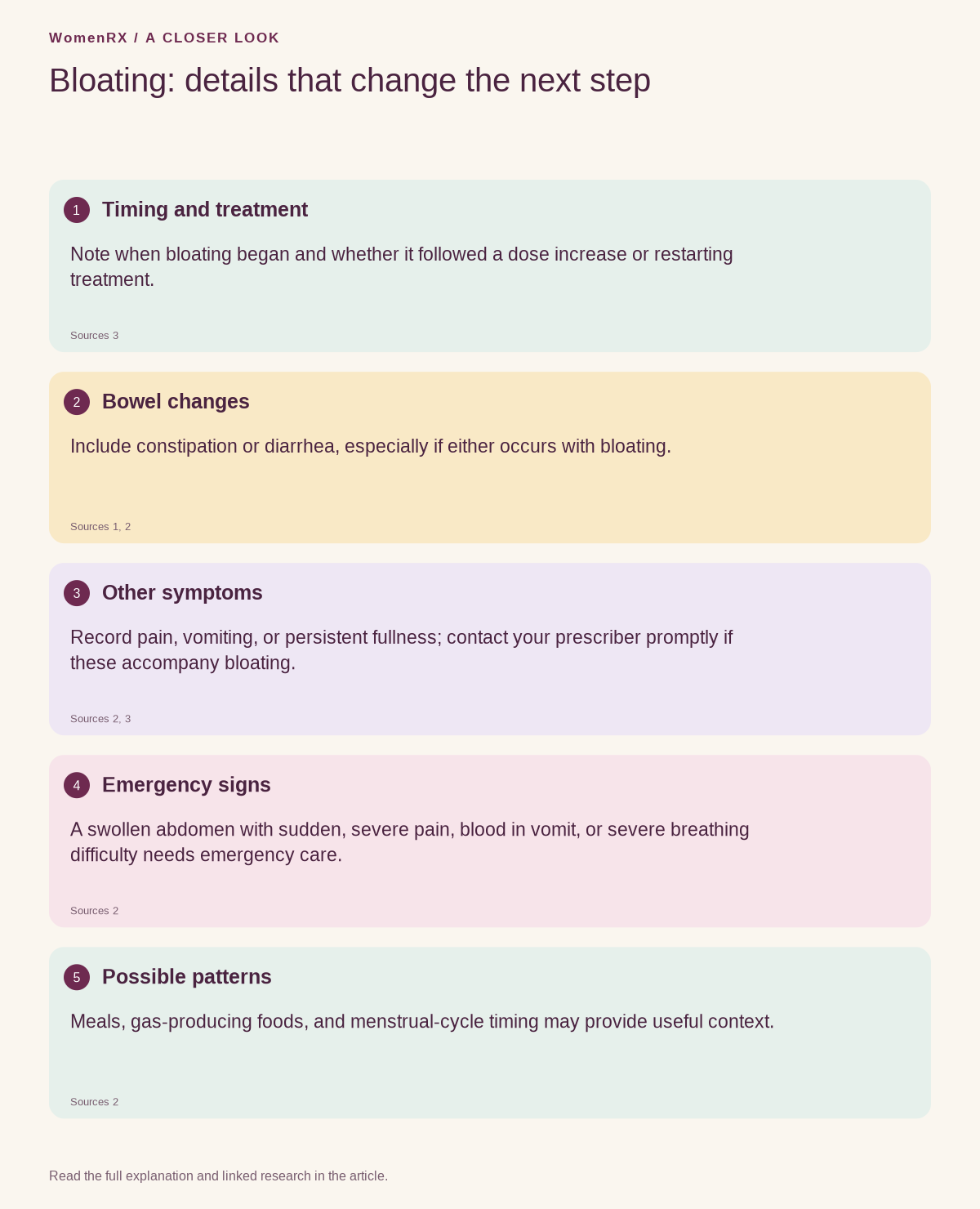
Bloating: details that change the next step
Timing and treatment: Note when bloating began and whether it followed a dose increase or restarting treatment.3
Bowel changes: Include constipation or diarrhea, especially if either occurs with bloating.12
Other symptoms: Record pain, vomiting, or persistent fullness; contact your prescriber promptly if these accompany bloating.23
Emergency signs: A swollen abdomen with sudden, severe pain, blood in vomit, or severe breathing difficulty needs emergency care.2
Possible patterns: Meals, gas-producing foods, and menstrual-cycle timing may provide useful context.2
Read the figure as text
Use these distinctions to describe the pattern and recognize when bloating needs more than routine follow-up. This is a note-taking aid, not a diagnostic test.- Timing and treatment: Note when bloating began and whether it followed a dose increase or restarting treatment.3
- Bowel changes: Include constipation or diarrhea, especially if either occurs with bloating.12
- Other symptoms: Record pain, vomiting, or persistent fullness; contact your prescriber promptly if these accompany bloating.23
- Emergency signs: A swollen abdomen with sudden, severe pain, blood in vomit, or severe breathing difficulty needs emergency care.2
- Possible patterns: Meals, gas-producing foods, and menstrual-cycle timing may provide useful context.2
More questions, answered
Does bloating mean I have gastroparesis?
No. Bloating alone can’t establish gastroparesis. The case reports reviewed described a range of symptoms, including early fullness, nausea, vomiting, and abdominal pain, and can’t tell us how common the condition is. 3
Could my period be contributing?
It could be relevant context: some people experience bloating around their period. Noting the timing may help describe a pattern, but persistent bloating or bloating with concerning symptoms still deserves attention. 2
Sources you can check
- WEGOVY (SEMAGLUTIDE) INJECTION, SOLUTION WEGOVY (SEMAGLUTIDE) TABLET [NOVO NORDISK PHARMACEUTICAL INDUSTRIES, LP] | US prescribing information and patient instructionsAccessed 2026-09-25Return to first citation
- Bloating - NHSAccessed 2026-09-25Return to first citation
- Gastroparesis induced by glucagon-like peptide-1 receptor agonists: A systematic review of clinical features, diagnosis, management, and outcomes.Olubodun T, Osundina MA, Soyoye DO, de Oliveira NMB, Olubodun AB, Ogundele OO. · PloS one · 2026Return to first citation