Bloating While Taking Ozempic: What to Track
Bloating can occur alongside semaglutide-related digestive symptoms, but persistent swelling, pain, vomiting, or constipation deserves a closer look.
Ozempic trial data list nausea, vomiting, diarrhea, abdominal pain, and constipation as common digestive reactions; bloating itself isn’t listed in the trial table. A small study in adults with type 2 diabetes did report abdominal distension. Track when bloating starts, how it changes, and what comes with it. Seek prompt medical assessment for bloating with pain, vomiting, or constipation, and urgent assessment for a suddenly severe pain with a swollen abdomen. 1 3 2
What the Ozempic data say about bloating
Bloating can feel like pressure, fullness, or visible abdominal swelling. In placebo-controlled Ozempic trials involving adults with type 2 diabetes, the prescribing information lists nausea, vomiting, diarrhea, abdominal pain, and constipation among reactions reported by at least 5% of treated participants. Bloating isn’t named in that table, but that doesn’t rule it out as an individual symptom. 1
A small study of 215 adults with type 2 diabetes taking semaglutide recorded gastrointestinal adverse events in 41 people. Abdominal distension was reported in 11 people in the study; some participants had more than one symptom. This offers a specific example of distension being reported, but the study was small and doesn’t establish how often bloating occurs among all Ozempic users. 3
The trial table and this small study don’t report a sex-specific bloating rate, so they can’t tell us whether women experience it more often. Bloating around a period can have other explanations, but timing in the cycle shouldn’t be used to dismiss a new, persistent, or worsening pattern. 2
Track the pattern, not just the feeling
For a few days, make a brief note when bloating occurs and what else is happening. Useful details include:
- When it started, whether it comes and goes, and whether it’s getting worse.
- Where you feel discomfort and whether you have abdominal pain.
- Whether you’re also nauseated, vomiting, having diarrhea, or constipated.
- Whether the swelling seems to follow meals, particular foods or drinks, or a change in your bowel habits.
- Whether it began after starting semaglutide or a change in your treatment. Don’t change your dose on your own; share the pattern with your prescriber.
This kind of note can help distinguish occasional fullness from a pattern that’s persistent or happening with other symptoms. It isn’t a diagnostic test.
When bloating needs more attention
Bloating alone can have ordinary causes, including gas or constipation. But semaglutide’s US prescribing information also reports postmarketing cases of ileus, intestinal obstruction, and severe constipation, including fecal impaction. Because those reports come from after the medicine was approved, they don’t establish how often these problems happen or prove that semaglutide caused a particular case. Still, significant or worsening constipation alongside abdominal swelling is worth taking seriously. 1
Contact your prescriber or seek prompt medical assessment if bloating comes with stomach pain, vomiting, diarrhea, or constipation. Get urgent assessment if your abdomen is swollen and you develop sudden, severe abdominal pain. These accompanying symptoms are more useful signals than bloating by itself. 2
If symptoms are mild and you’re otherwise feeling well, note possible food or drink triggers and whether eating more slowly or moving around helps. General bloating guidance suggests chewing with your mouth closed and exercising regularly; these are general comfort measures, not proven treatments for Ozempic-related symptoms. Avoid cutting out broad food groups based on one episode. If bloating keeps returning or doesn’t settle, discuss the pattern with your prescriber rather than assuming it’s just a side effect. 2
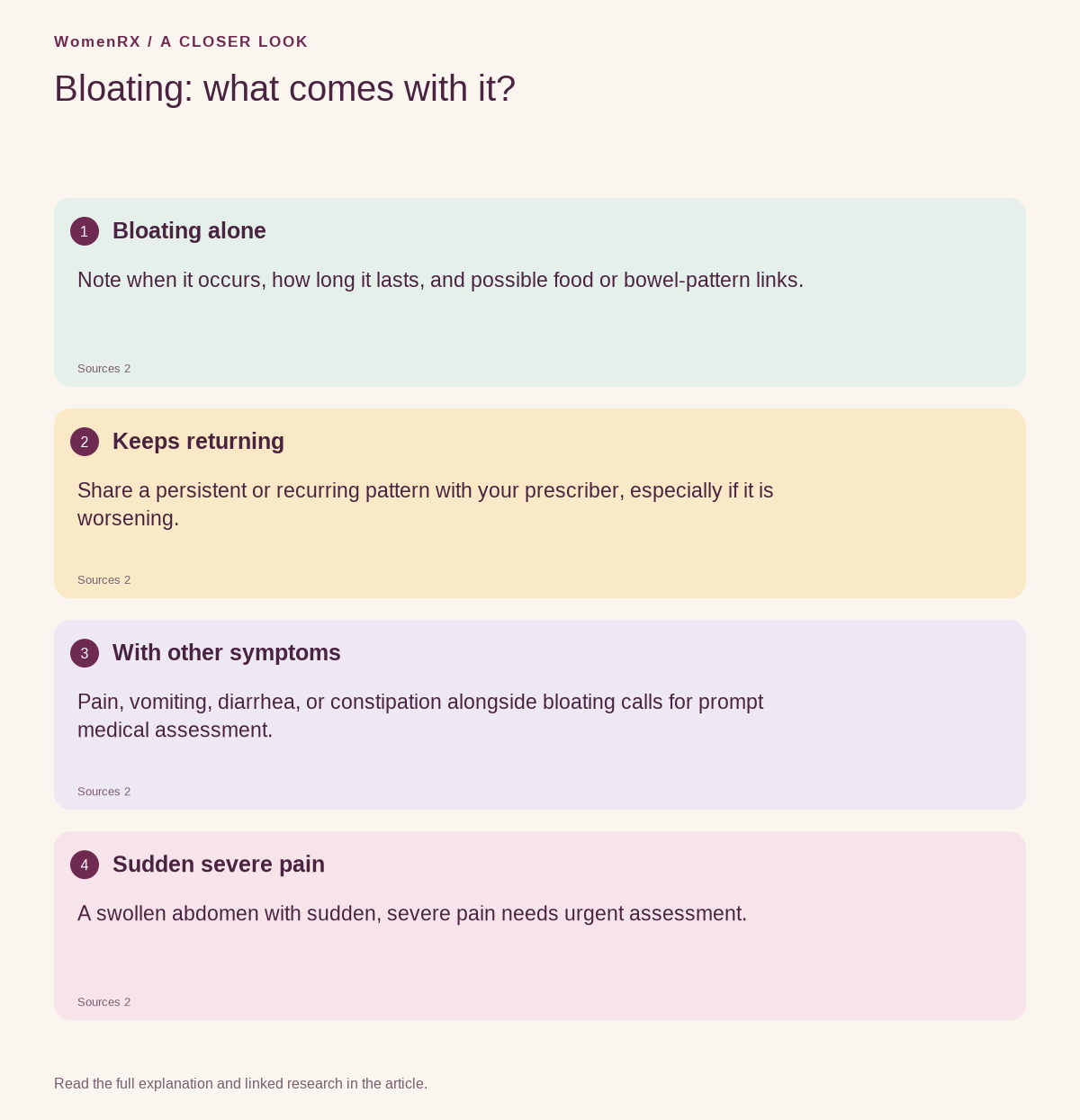
Bloating: what comes with it?
Bloating alone: Note when it occurs, how long it lasts, and possible food or bowel-pattern links.2
Keeps returning: Share a persistent or recurring pattern with your prescriber, especially if it is worsening.2
With other symptoms: Pain, vomiting, diarrhea, or constipation alongside bloating calls for prompt medical assessment.2
Sudden severe pain: A swollen abdomen with sudden, severe pain needs urgent assessment.2
Read the figure as text
Use the accompanying symptoms, not bloating alone, to decide what kind of follow-up is appropriate.- Bloating alone: Note when it occurs, how long it lasts, and possible food or bowel-pattern links.2
- Keeps returning: Share a persistent or recurring pattern with your prescriber, especially if it is worsening.2
- With other symptoms: Pain, vomiting, diarrhea, or constipation alongside bloating calls for prompt medical assessment.2
- Sudden severe pain: A swollen abdomen with sudden, severe pain needs urgent assessment.2
More questions, answered
Does Ozempic’s trial table list bloating as a common side effect?
No. The table lists nausea, vomiting, diarrhea, abdominal pain, and constipation among reactions reported by at least 5% of treated participants, but it doesn’t list bloating. A separate small study in adults with type 2 diabetes did report abdominal distension. 1 3
Should I assume bloating is related to my menstrual cycle?
No. Bloating can happen around a period, but that timing doesn’t establish the cause. Pay attention to whether the symptom is new, persistent, worsening, or accompanied by pain, vomiting, or constipation. 2
Sources you can check
- OZEMPIC (SEMAGLUTIDE) INJECTION, SOLUTION [A-S MEDICATION SOLUTIONS] | US prescribing information and patient instructionsAccessed 2026-09-25Return to first citation
- Bloating - NHSAccessed 2026-09-25Return to first citation
- Development of a risk prediction model for gastrointestinal adverse events associated with semaglutide administration in patients with type 2 diabetes mellitus.Yue D, Hua X, Zhu L, Wang J, Gu L, Yuan Z, Jian W, Chen Y, Meng G. · Frontiers in endocrinology · 2025Return to first citation