Black Cohosh Safety: Side Effects and Liver Concerns
Mild stomach upset or a rash has been reported, but signs of possible liver trouble deserve prompt medical advice.
In menopause trials, the most commonly reported side effects were mild, temporary stomach upset and rash; several other symptoms occurred at similar rates with placebo. Liver injury has been reported, but a causal link to black cohosh hasn’t been established. Stop taking it and seek medical advice if you develop dark urine, yellowing skin or eyes, or abdominal pain. 1
What side effects have been reported?
In clinical trials of black cohosh for menopausal symptoms, gastrointestinal upset and rash were the most commonly reported side effects. They were generally mild and temporary. Breast pain or enlargement, vaginal bleeding or spotting, infections, and muscle or joint complaints were also reported, but occurred at similar rates among women taking placebo. That means these symptoms were seen during trials, but the results don’t show that black cohosh caused them. 1
Trial reports don’t give a complete picture of every possible reaction. A 2026 review found that reporting of adverse effects in black cohosh clinical trials varied widely, with some reports providing limited information. 2
Liver reports call for care, not certainty
Reports from around the world have described liver problems, including hepatitis, liver failure, and elevated liver enzymes, among people using black cohosh. Those reports raise a safety concern, but they don’t establish that black cohosh caused the injury. In some cases, contamination, adulteration, or a different plant species in the product may have been involved. 1
If you have a liver disorder, the U.S. Pharmacopeia advises avoiding black cohosh. Stop using it and contact a health professional if you develop abdominal pain, dark urine, or jaundice, which can make the skin or whites of the eyes look yellow. These are reasons to get advice, not proof that black cohosh is the cause. 1
Short-term trial findings can’t settle the question of long-term safety: the NIH fact sheet reports that most studies examined use for six months or less and that long-term human safety had not been assessed in published studies at the time of its review. 1
Pregnancy, breastfeeding, and health history
Pregnancy is a distinct safety situation from menopause. The American Herbal Products Association advises pregnant women not to take black cohosh unless supervised by a health care provider, because its use during pregnancy has not been rigorously evaluated. 1
Menopause studies don’t establish safety during breastfeeding. If you’re breastfeeding, don’t rely on menopause-trial results as reassurance; ask for advice about the specific product before using it. 1
For a history of breast or uterine cancer, or another condition where hormone effects matter, the available information doesn’t establish a specific black-cohosh risk. Researchers haven’t settled whether it affects estrogen levels or the structure and activity of vaginal and uterine tissues. That uncertainty is a reason to review use with your care team rather than assume that a menopause supplement is hormone-free or safe for your particular history. 1
Make the product itself part of the safety check
Black cohosh products can differ, and liver-injury reports have raised the possibility that some involved impurities, adulterants, or the wrong Actaea species. Bring the bottle or a clear photo of its full ingredient label when asking a pharmacist or clinician to review it. That gives them a better chance of checking the product you actually have, rather than black cohosh in the abstract. 1
A useful conversation is specific: mention any liver disorder, pregnancy or breastfeeding, relevant cancer or hormone-sensitive health history, symptoms you’ve noticed, and the medicines and supplements you use. The key distinction is that mild reactions have been reported in trials, while liver injuries remain reports with uncertain cause. Neither a product label nor the lack of symptoms can establish that a product is safe for you.
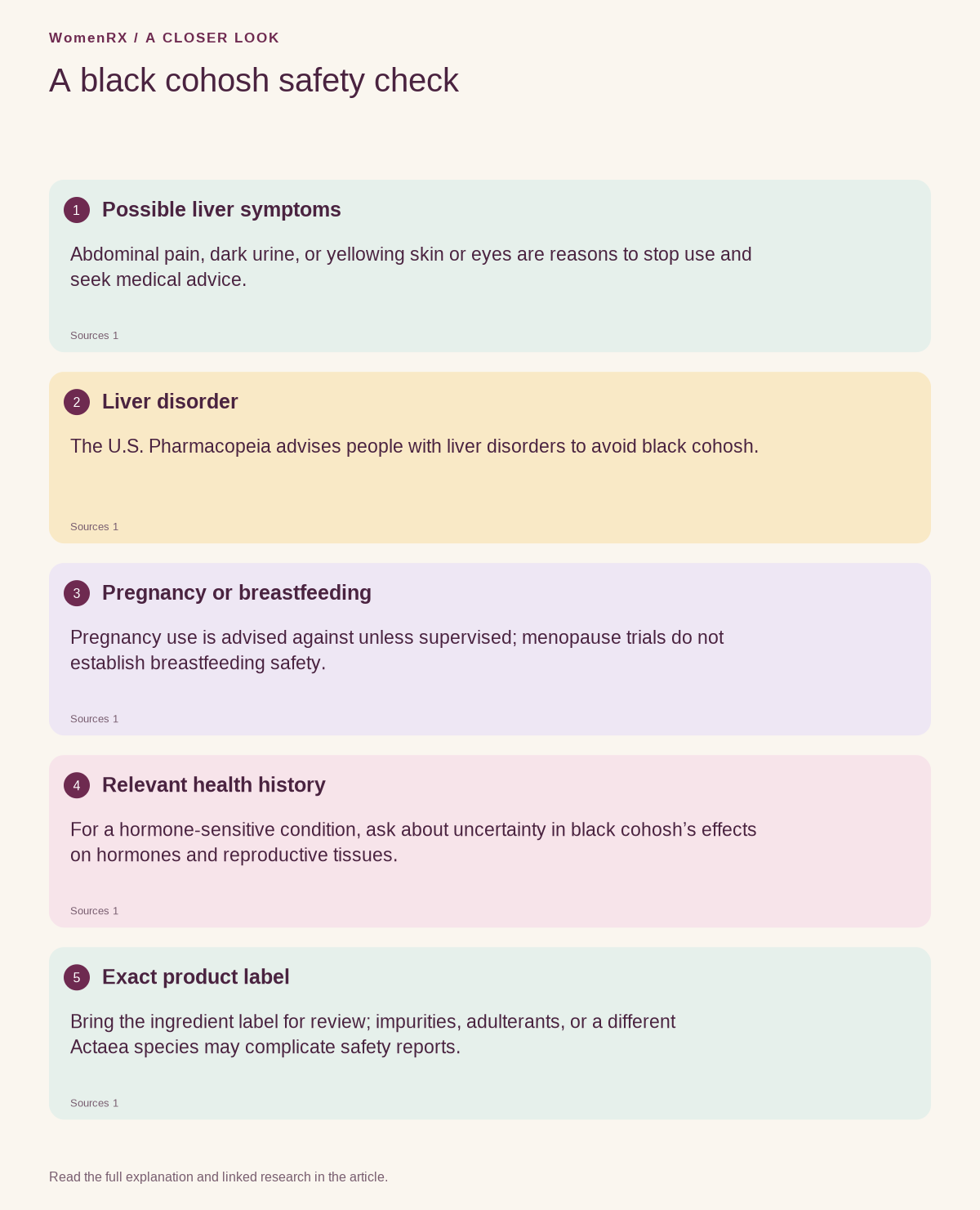
A black cohosh safety check
Possible liver symptoms: Abdominal pain, dark urine, or yellowing skin or eyes are reasons to stop use and seek medical advice.1
Liver disorder: The U.S. Pharmacopeia advises people with liver disorders to avoid black cohosh.1
Pregnancy or breastfeeding: Pregnancy use is advised against unless supervised; menopause trials do not establish breastfeeding safety.1
Relevant health history: For a hormone-sensitive condition, ask about uncertainty in black cohosh’s effects on hormones and reproductive tissues.1
Exact product label: Bring the ingredient label for review; impurities, adulterants, or a different Actaea species may complicate safety reports.1
Read the figure as text
Separate symptoms and circumstances that call for advice from routine product details to review.- Possible liver symptoms: Abdominal pain, dark urine, or yellowing skin or eyes are reasons to stop use and seek medical advice.1
- Liver disorder: The U.S. Pharmacopeia advises people with liver disorders to avoid black cohosh.1
- Pregnancy or breastfeeding: Pregnancy use is advised against unless supervised; menopause trials do not establish breastfeeding safety.1
- Relevant health history: For a hormone-sensitive condition, ask about uncertainty in black cohosh’s effects on hormones and reproductive tissues.1
- Exact product label: Bring the ingredient label for review; impurities, adulterants, or a different Actaea species may complicate safety reports.1
More questions, answered
Which symptoms should prompt medical advice?
Stop taking black cohosh and seek medical advice if you develop abdominal pain, dark urine, or yellowing of the skin or eyes. These are listed as symptoms of possible liver trouble; they don’t by themselves prove the supplement caused it. 1
Do menopause studies answer whether black cohosh is safe during breastfeeding?
No. Menopause-trial findings don’t establish safety during breastfeeding, so ask for advice about the specific product before using it. 1
Sources you can check
- Black Cohosh - Health Professional Fact SheetAccessed 2026-09-25Return to first citation
- Efficacy and safety of Actaea racemosa for relieving climacteric complaints.Curtis S, Moore A, Breakspear I. · Menopause (New York, N.Y.) · 2026Return to first citation