Birth Control Pill Side Effects: What to Watch For
Bleeding changes and other symptoms deserve a closer look, while possible blood-clot symptoms need prompt care.
Spotting, nausea, and headaches are reported by pill users, but a new symptom isn’t automatically caused by the pill. Note what changed and discuss symptoms that persist or bother you. New swelling, pain, or warmth in one leg or arm needs prompt assessment; trouble breathing or chest pain needs immediate medical help. 357

First, check which pill you take
“The pill” can mean a combined pill, which contains estrogen and progestin, or a progestin-only pill. That distinction matters when you’re reviewing symptoms and considering another method. A progestin-only pill may be an option for someone who can’t take estrogen, but your health history and preferences still shape the choice. 14
If you’ve noticed a change since starting a pill, begin with what you can observe: the pill’s name, when you started it, when the symptom appeared, and whether it’s changing. Timing is useful context, not proof of cause. For example, bleeding after childbirth can overlap with bleeding you notice after starting contraception. 2
Bleeding, nausea, or headaches: notice the pattern
Bleeding changes are a practical reason to review a pill. Studies of particular pill formulations report unscheduled bleeding or spotting; reported symptoms also include nausea and headaches. Those findings don’t predict what will happen with every pill or establish that any one symptom you experience came from yours. 3
It’s reasonable to contact your prescribing clinician if bleeding or another symptom is bothersome, persists, or makes you want to stop or switch. Follow-up for progestin-only pill users includes asking about satisfaction, concerns, and changes in health or medications that could affect continued use. You don’t have to decide on your own whether a symptom is a side effect before raising it. 5
If you recently gave birth, mention that too. Spotting or period-like bleeding can occur off and on for up to six weeks during postpartum recovery, so its timing may need to be considered alongside your pill use. If you’re breastfeeding, say so when discussing a switch: progestin-only pills are addressed as a postpartum option in CDC guidance, although the studies of breastfeeding outcomes have limitations. 26
Symptoms that shouldn’t wait for a routine pill review
A blood clot in a deep vein can cause swelling, pain or tenderness, warmth, or redness or discoloration in the affected leg or arm. Seek medical assessment as soon as possible if these appear. A clot in the lungs can cause trouble breathing, chest pain that may worsen with a deep breath or cough, a fast or irregular heartbeat, coughing up blood, lightheadedness, or fainting. Those symptoms need immediate medical help, even if you haven’t noticed leg symptoms. 7
Don’t try to settle whether the pill caused those symptoms before seeking care. Blood clots can occur for more than one reason; estrogen exposure is one factor that can increase risk, and combined pills contain estrogen. 47
Make a symptom review useful
For a nonurgent conversation, bring the pill name or package and a short account of what’s happening. For example: “I started this pill recently. I’ve had spotting on these days, and it’s affecting whether I want to continue.” Include any other symptoms you’ve noticed, whether you’ve recently given birth or are breastfeeding, and any changes in your health or medications. These details help make the discussion about your pill and circumstances rather than side effects in the abstract. 25
Two useful questions are: “Could something besides this pill explain the symptom?” and “If I change methods, what are my options for continued pregnancy prevention?” Side effects, safety, effectiveness, and ease of use are all legitimate considerations when choosing contraception. You can ask about another pill or a different method without having to prove that the current one caused every change you’ve noticed. 4
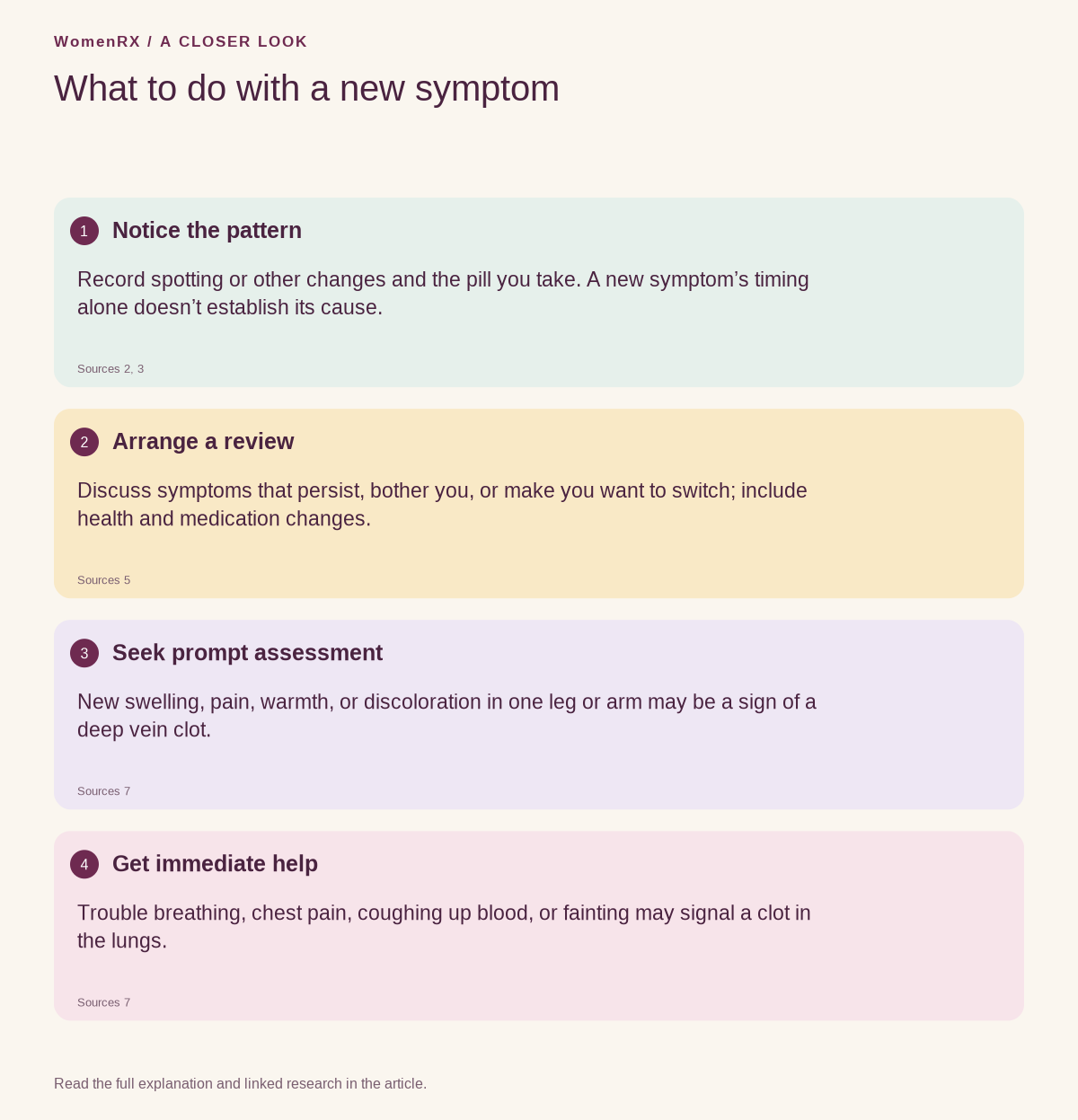
What to do with a new symptom
Notice the pattern: Record spotting or other changes and the pill you take. A new symptom’s timing alone doesn’t establish its cause.23
Arrange a review: Discuss symptoms that persist, bother you, or make you want to switch; include health and medication changes.5
Seek prompt assessment: New swelling, pain, warmth, or discoloration in one leg or arm may be a sign of a deep vein clot.7
Get immediate help: Trouble breathing, chest pain, coughing up blood, or fainting may signal a clot in the lungs.7
Read the figure as text
Use the symptom, not an assumption about its cause, to decide how quickly to seek help.- Notice the pattern: Record spotting or other changes and the pill you take. A new symptom’s timing alone doesn’t establish its cause.23
- Arrange a review: Discuss symptoms that persist, bother you, or make you want to switch; include health and medication changes.5
- Seek prompt assessment: New swelling, pain, warmth, or discoloration in one leg or arm may be a sign of a deep vein clot.7
- Get immediate help: Trouble breathing, chest pain, coughing up blood, or fainting may signal a clot in the lungs.7
More questions, answered
Does spotting mean my pill isn’t working?
Spotting alone doesn’t establish whether a pill is working. Bleeding patterns vary across pill formulations, while inconsistent or incorrect pill use is a separate reason oral contraception can fail. If you’ve also missed pills, give your clinician or pharmacist the exact pill name when asking what to do next, because guidance differs by formulation. 35
Sources you can check
- Birth Control | Contraception | Contraceptives | MedlinePlusAccessed 2026-09-25Return to first citation
- Postpartum Care: MedlinePlusAccessed 2026-09-25Return to first citation
- Combined Oral Contraceptive Pills Versus Progestin-Only Pills for Heavy Menstrual Bleeding: A Systematic Review.Mohamed GS, Abdalla EM, Karamalla S, Osman TI, Hamid Musa HM, Mohamed H, Ahmed OK, Elshaikh SI, Shafiq MM. · Cureus · 2026Return to first citation
- CDC: Birth control methods, barrier methods, fertility awareness and breastfeedingAccessed 2026-09-25Return to first citation
- Progestin-Only Pills | Contraception | CDCAccessed 2026-09-25Return to first citation
- Appendix C: Classifications for Progestin-Only Contraceptives | Contraception | CDCAccessed 2026-09-25Return to first citation
- About Venous Thromboembolism (Blood Clots) | Venous Thromboembolism (Blood Clots) | CDCAccessed 2026-09-25Return to first citation