A practical health checklist before trying to conceive
A focused preconception visit can help you prioritize medicines, health conditions, vaccines, and a few steps to start now.
Before trying to conceive, review your health conditions and every medicine or supplement with a clinician, check whether your vaccines are up to date, and discuss habits such as smoking, alcohol, or drug use. Folic acid is a time-sensitive step: U.S. guidance recommends 400-800 mcg daily starting at least one month before conception for most people planning pregnancy. Not everyone needs the same tests or plan. 1 2 3
Start with the decisions that can change a pregnancy plan
You don’t need to arrive with a long list of tests in mind. A preconception visit is a chance to identify what matters for your health and decide what to address before pregnancy. For example, MedlinePlus highlights managing conditions such as diabetes or high blood pressure and getting vaccines up to date; that doesn’t mean every person needs the same workup. 1
If you can, book the visit before you begin trying. Bring a list of your health conditions, medicines, vitamins, herbs, and other supplements. Product labels or photos can help you review what you actually take. The most useful outcome is a clear plan for any change that needs to happen first, not a universal panel of tests. 1 3
Review medicines early, and don’t stop them on your own
Make this one of the first topics, especially if you take medicine for a long-term condition. Include prescriptions, over-the-counter products, herbs, and supplements. Some medicines may not be suitable during pregnancy, but stopping a medicine you need can also be harmful. MedlinePlus advises talking with a provider before starting or stopping one; the choice depends on the risks and benefits for you and a developing pregnancy. 3
Ask: “Should anything I take change before I try to conceive, and what’s the plan for keeping my condition treated?” If a change is needed, work out the plan before you make it. A general checklist can’t determine whether a particular medicine or supplement is appropriate for you; that depends on the product, your health, and a pregnancy-specific review. 3
Put folic acid on the “start now” list
The neural tube, which develops into the brain and spine, closes within the first 28 days after conception. That can happen before you know you’re pregnant. U.S. guidance summarized by the NIH Office of Dietary Supplements recommends 400-800 mcg of folic acid daily for people planning pregnancy, starting at least one month before conception. 2
Check the label if you use a prenatal product: the form matters. Folic acid is the form shown to reduce neural tube defect risk; other forms of folate in supplements have not been tested in clinical trials for that outcome. Some people, including those with a previous pregnancy affected by a neural tube defect or certain risk factors, may need a different plan. Ask your clinician rather than increasing the amount on your own. 2
Check conditions, vaccines, and everyday habits
Use the visit to review conditions that could affect pregnancy and whether anything needs attention beforehand. Diabetes and high blood pressure are two examples specifically named in preconception guidance. Ask what, if anything, should change in your current care before you try. 1
Bring your vaccine record or ask how to check it. Preconception guidance recommends getting up to date, but the right review depends on your history and records. 1
Be ready to talk plainly about smoking, alcohol, or drug use. MedlinePlus includes avoiding these among steps to discuss before pregnancy. If changing a habit feels difficult, say so; that gives you a chance to ask for practical support rather than leaving with a vague instruction. 1
You can also discuss nutrition and weight goals if they’re relevant to you. The aim is an individualized plan, not a judgment about your body or a requirement to reach a particular number before seeking care. 1
A short visit-preparation checklist
- Review medicines early: Include prescriptions, nonprescription products, herbs, and supplements. Don’t stop or start a medicine without discussing it with your provider. 3
- Ask what needs attention: Discuss chronic conditions and whether any action or testing is appropriate for your history. 1
- Check vaccine records: Find out whether you’re up to date and whether anything should be addressed before pregnancy. 1
- Start the folic acid conversation now: Ask whether the usual preconception recommendation fits your circumstances, especially if you have a risk factor that may call for a different plan. 2
- Name the habits where support would help: Bring up smoking, alcohol, or drug use without waiting for a perfect moment. 1
Some actions, especially medicine review and folic acid, are worth addressing before conception. Other questions, including whether a particular test is useful, can be decided from your health history. A good visit leaves you knowing what to do now, what needs follow-up, and what doesn’t require extra testing.
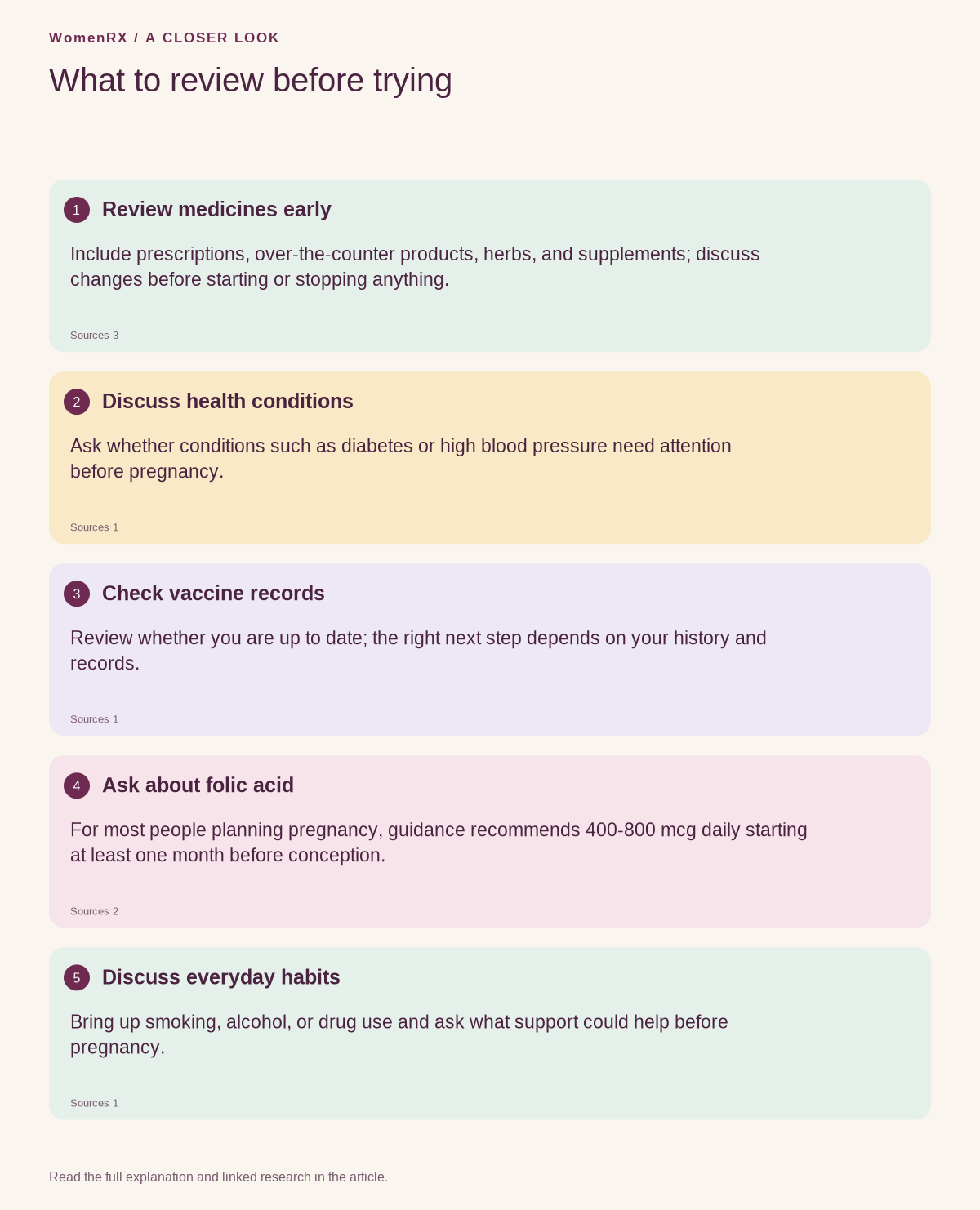
What to review before trying
Review medicines early: Include prescriptions, over-the-counter products, herbs, and supplements; discuss changes before starting or stopping anything.3
Discuss health conditions: Ask whether conditions such as diabetes or high blood pressure need attention before pregnancy.1
Check vaccine records: Review whether you are up to date; the right next step depends on your history and records.1
Ask about folic acid: For most people planning pregnancy, guidance recommends 400-800 mcg daily starting at least one month before conception.2
Discuss everyday habits: Bring up smoking, alcohol, or drug use and ask what support could help before pregnancy.1
Read the figure as text
Separate the time-sensitive conversations from other personalized preconception topics.- Review medicines early: Include prescriptions, over-the-counter products, herbs, and supplements; discuss changes before starting or stopping anything.3
- Discuss health conditions: Ask whether conditions such as diabetes or high blood pressure need attention before pregnancy.1
- Check vaccine records: Review whether you are up to date; the right next step depends on your history and records.1
- Ask about folic acid: For most people planning pregnancy, guidance recommends 400-800 mcg daily starting at least one month before conception.2
- Discuss everyday habits: Bring up smoking, alcohol, or drug use and ask what support could help before pregnancy.1
More questions, answered
When should I start taking folic acid?
U.S. guidance summarized by the NIH Office of Dietary Supplements recommends starting at least one month before conception. Ask about a different plan if you have a history or risk factor that may change the recommendation. 2
Sources you can check
- Preconception Care: MedlinePlusAccessed 2026-09-25Return to first citation
- Dietary Supplements and Life Stages: Pregnancy - Health Professional Fact SheetAccessed 2026-09-25Return to first citation
- Pregnancy and Medicines | MedlinePlusAccessed 2026-09-25Return to first citation