A Flexible Week of Mediterranean-Style Meals
Think varied meals built around vegetables, legumes, whole grains, olive oil, and fish, not a single food promised to fight inflammation.
A practical anti-inflammatory-style week can borrow from Mediterranean dietary patterns: include vegetables and fruit, beans or lentils, whole grains, olive oil, and fish across meals, with room for swaps. 23 Research examines whole eating patterns and inflammatory markers, not whether any one meal treats inflammation. 2 This sample menu is flexible, isn’t a weight-loss prescription, and isn’t tailored to pregnancy.
The pattern matters more than a “superfood”
An anti-inflammatory way of eating isn’t one special ingredient or a strict menu. An umbrella review of dietary patterns found beneficial effects or associations between Mediterranean-style eating and some inflammatory markers in adults with at least one chronic condition. The certainty varied, and the review included different kinds of evidence, so this is not proof that a particular meal will reduce inflammation or treat a condition. 2
For everyday meals, that pattern can mean vegetables, fruit, legumes, whole grains, olive oil, and fish showing up regularly. The menu below turns those broad ingredients into meal ideas; the individual combinations haven’t been tested as treatments. 23
One flexible week of meals
Mix and match the meals. Use leftovers for lunch, swap ingredients you don’t enjoy, and choose the options that fit your appetite and routine. The ideas don’t set portions, calories, or a weight-loss target.
| Day | Breakfast | Lunch | Dinner |
|---|---|---|---|
| Monday | Oatmeal with berries and chopped nuts | Lentil and vegetable soup with whole-grain bread | Baked fish with brown rice and roasted vegetables |
| Tuesday | Whole-grain toast with egg and sliced tomato | Leftover lentil soup with a side of fruit | Chickpea, cucumber, tomato, and leafy-green bowl with olive-oil dressing |
| Wednesday | Plain yogurt with fruit and oats | Whole-grain wrap with hummus and crunchy vegetables | Whole-wheat pasta with white beans, spinach, tomatoes, and olive oil |
| Thursday | Overnight oats with chopped apple and nuts | Leftover pasta and a green salad | Fish with roasted potatoes and broccoli |
| Friday | Eggs with sautéed greens and whole-grain toast | Bean and vegetable soup | Brown rice bowl with roasted vegetables, chickpeas, and olive-oil dressing |
| Saturday | Oatmeal with pear and nuts | Hummus, whole-grain pita, vegetables, and fruit | Whole-grain flatbread topped with vegetables, beans, and a little cheese, if you like |
| Sunday | Whole-grain toast with nut butter and fruit | Leftover bean-and-vegetable bowl | Lentils with tomatoes and greens, served with whole-grain bread |
This menu uses plant foods, legumes, and whole grains highlighted in the umbrella review, alongside olive oil and fish included in a Mediterranean-diet adherence measure. 23 That makes it a practical example of the pattern, not a claim that each listed food has a proven, individual anti-inflammatory effect.
Swaps that keep the pattern flexible
- No fish? Use beans, lentils, or chickpeas in that meal instead. The point is to keep the meal varied, not to make a particular ingredient mandatory.
- No whole-grain pasta or bread? Try brown rice or another whole grain you already enjoy. Whole grains and legumes are among the plant foods discussed in relation to inflammatory markers. 2
- Short on time? Use canned beans, frozen vegetables, and leftovers to assemble a quick soup or bowl. These are practical preparation ideas, not a special research-tested method.
- Prefer a meat-containing meal? MedlinePlus describes healthy eating patterns that may include lean meat or poultry as well as fish, beans, nuts, fruit, vegetables, and whole grains. 1
A useful distinction: research on dietary patterns asks how an overall way of eating relates to inflammatory markers. It doesn’t let us promise that adding one food, or following this sample week, will produce a particular result. The umbrella review also notes that evidence for many other dietary patterns was inconclusive or limited and that comparator diets varied. 2
What the evidence says about women’s life stages
The review included human populations without restricting sex, but its summary doesn’t report findings by menstrual or menopausal stage. It therefore doesn’t establish whether effects differ during cycling years, perimenopause, or after menopause. 2
This sample week isn’t a weight-loss plan: it has no calorie target or weight-loss promise. It also isn’t tailored to pregnancy, so don’t use it as a pregnancy weight-loss menu.
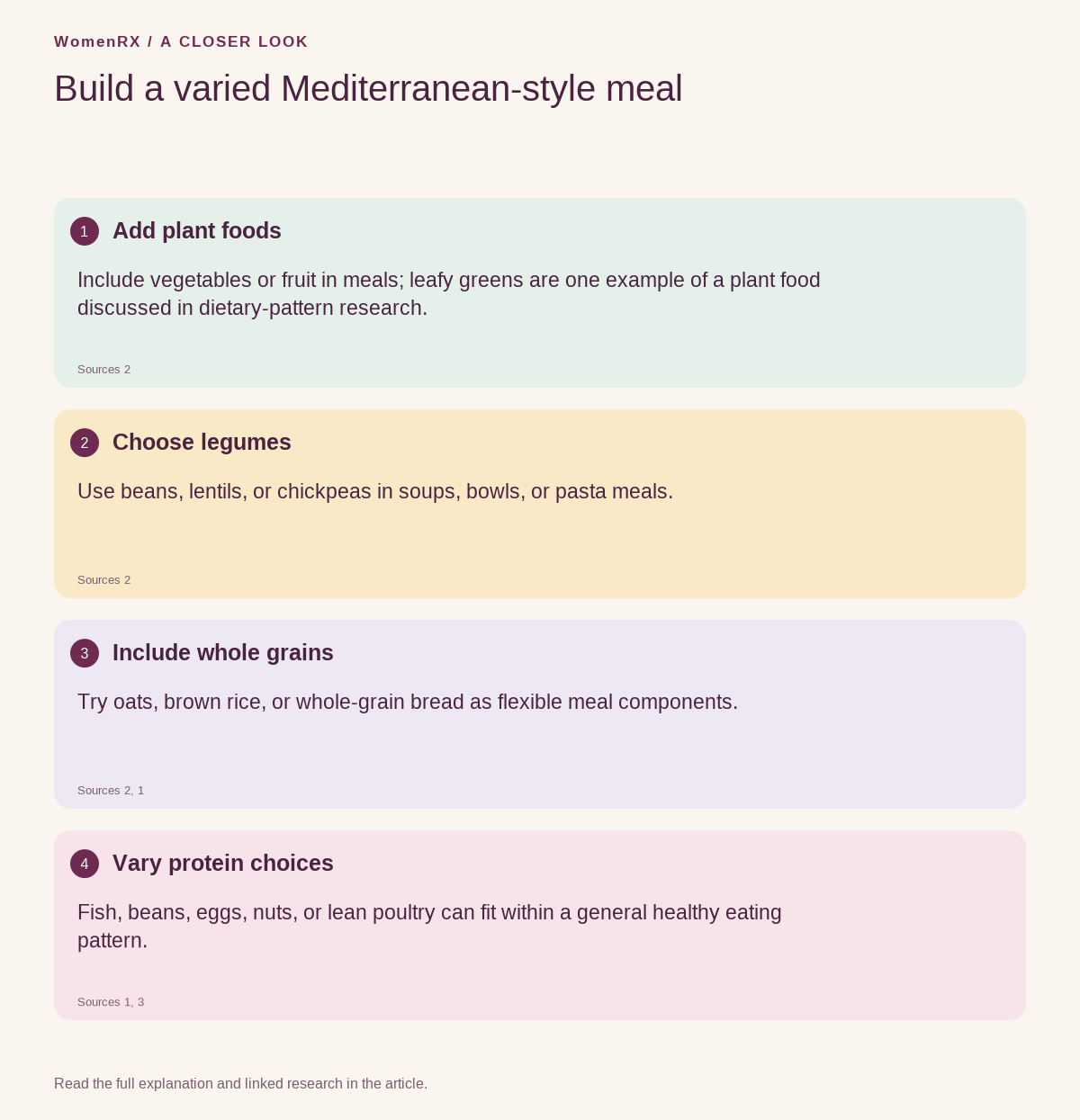
Build a varied Mediterranean-style meal
Add plant foods: Include vegetables or fruit in meals; leafy greens are one example of a plant food discussed in dietary-pattern research.2
Choose legumes: Use beans, lentils, or chickpeas in soups, bowls, or pasta meals.2
Include whole grains: Try oats, brown rice, or whole-grain bread as flexible meal components.21
Vary protein choices: Fish, beans, eggs, nuts, or lean poultry can fit within a general healthy eating pattern.13
Read the figure as text
Use these food groups as flexible building blocks across the week. The checklist illustrates a dietary pattern; it is not a validated inflammation test or treatment plan.- Add plant foods: Include vegetables or fruit in meals; leafy greens are one example of a plant food discussed in dietary-pattern research.2
- Choose legumes: Use beans, lentils, or chickpeas in soups, bowls, or pasta meals.2
- Include whole grains: Try oats, brown rice, or whole-grain bread as flexible meal components.21
- Vary protein choices: Fish, beans, eggs, nuts, or lean poultry can fit within a general healthy eating pattern.13
Sources you can check
- Weight-Loss Diets | Diets | MedlinePlusAccessed 2026-09-25Return to first citation
- Dietary Patterns Associated With Anti-inflammatory Effects: An Umbrella Review of Systematic Reviews and Meta-analyses.Reyneke GL, Lambert K, Beck EJ. · Nutrition reviews · 2026Return to first citation
- Mediterranean diet adherence and systemic inflammation in people with HIV and PrEP users.Manzano M, Campanero Y, Sabogal S, Lorenzo-Mora AM, Simón-Rueda A, Torres M, Valls-Carbó A, Coiras M, Estrada V. · Frontiers in nutrition · 2026Return to first citation