A 7-Day High-Protein Meal Plan You Can Actually Repeat
Six measured meals, a seven-day schedule, and one ingredient list. Change the portions to fit your day.
A useful protein plan starts with meals you can repeat. This week uses six simple combinations of eggs, yogurt, cottage cheese, chicken, lentils and beans, with grains, fruit and vegetables. Each meal has a measured portion and a calculated protein estimate, so swaps and leftovers are easier to plan. Your own needs depend on age, health and activity; the schedule is a flexible starting point. 1719
How to use this week
Pick the three meals for a day, or move them to days when they suit your schedule. The listed quantities make one serving. Add snacks, drinks and extra portions according to your appetite and needs. The three-meal total is not a daily limit or a personalized nutrition prescription.
Weights mean the amount you actually eat: peeled egg and banana, an apple with its core removed, and cooked chicken, beans, lentils and quinoa. Oats are weighed dry, before cooking. Using 200 g of dry beans instead of 200 g cooked would make a very different meal.
The estimated protein below comes from USDA reference foods. Packaged products vary, especially bread and dairy. Use the label on your own product when you want a closer estimate. Season to taste; extra cheese, sauces, seeds, spreads and oil change the totals. 19
The seven-day schedule
| Day | Breakfast | Lunch | Dinner | Protein in the three listed meals |
|---|---|---|---|---|
| 1 | Berry, walnut and yogurt oats | Chicken, quinoa and chopped-vegetable bowl | Lentil, quinoa and cucumber bowl | 100.7 g |
| 2 | Eggs, tomato toast and an apple | Black-bean bowl with a creamy yogurt topping | Chicken, quinoa and chopped-vegetable bowl | 101.4 g |
| 3 | Banana cottage-cheese bowl with peanut-butter toast | Lentil, quinoa and cucumber bowl | Black-bean bowl with a creamy yogurt topping | 99.5 g |
| 4 | Berry, walnut and yogurt oats | Black-bean bowl with a creamy yogurt topping | Lentil, quinoa and cucumber bowl | 94.8 g |
| 5 | Eggs, tomato toast and an apple | Chicken, quinoa and chopped-vegetable bowl | Black-bean bowl with a creamy yogurt topping | 101.4 g |
| 6 | Banana cottage-cheese bowl with peanut-butter toast | Lentil, quinoa and cucumber bowl | Chicken, quinoa and chopped-vegetable bowl | 105.5 g |
| 7 | Berry, walnut and yogurt oats | Black-bean bowl with a creamy yogurt topping | Lentil, quinoa and cucumber bowl | 94.8 g |
These totals cover only the measured meals below. They do not include snacks or additions. 19
Three breakfasts
Berry, walnut and yogurt oats
One serving: 200 g plain nonfat Greek yogurt; 60 g dry oats; 150 g strawberries; 20 g walnuts.
Cook the oats with water following the package directions. Let them cool, then add the yogurt, sliced washed strawberries and chopped walnuts. Use the full cooked portion made from the 60 g of dry oats.
Estimated nutrition: 32.4 g protein and 524 calories. 19
Eggs, tomato toast and an apple
One serving: 100 g peeled hard-boiled egg; 80 g whole-wheat bread; 100 g tomato; 150 g apple with skin, core removed.
Toast the bread. Slice the cooked eggs and washed tomato onto the toast, or serve them alongside it. Cut the washed apple into wedges. The calculation includes no butter or extra spread.
Estimated nutrition: 23.8 g protein and 453 calories. 19
Banana cottage-cheese bowl with peanut-butter toast
One serving: 200 g 1% cottage cheese; 120 g peeled banana; 60 g whole-wheat bread; 16 g smooth unsalted peanut butter.
Slice the banana over the cottage cheese. Toast the bread and spread it with the measured peanut butter.
Estimated nutrition: 37.1 g protein and 498 calories. 19
Three lunch or dinner bowls
These bowls use cooked ingredients. Cook grains and pulses according to their package directions, or use plain ready-cooked versions and their labels. The bowls can be eaten cold.
Chicken, quinoa and chopped-vegetable bowl
One serving: 100 g cooked roasted chicken breast meat; 200 g cooked quinoa; 150 g tomato; 100 g cucumber with peel; 15 g olive oil.
Slice the already cooked chicken. Chop the washed vegetables and toss them with the cooked quinoa and measured oil. Serve cold using safely refrigerated ingredients.
Estimated nutrition: 41.8 g protein and 580 calories. 19
Lentil, quinoa and cucumber bowl
One serving: 200 g cooked drained lentils; 150 g cooked quinoa; 150 g tomato; 100 g cucumber with peel; 15 g olive oil.
Combine the cooked lentils and quinoa with chopped washed vegetables and the measured oil. Serve cold. The reference lentils are boiled without salt.
Estimated nutrition: 26.6 g protein and 587 calories. 19
Black-bean bowl with a creamy yogurt topping
One serving: 200 g cooked drained black beans; 150 g cooked quinoa; 100 g plain nonfat Greek yogurt; 150 g tomato; 10 g olive oil.
Toss the cooked beans and quinoa with chopped washed tomato and the measured oil. Spoon the yogurt over the top. Serve cold. The reference beans are boiled without salt.
Estimated nutrition: 35.8 g protein and 618 calories. 19
Shop once, prepare in two rounds
For the exact week above, use the following edible quantities. The chicken, beans, lentils and quinoa amounts are cooked totals, so they are a batch-planning list rather than raw package weights. Buy extra fruit and vegetables if you want more variety or larger servings.
| Ingredient | Total used across the week |
|---|---|
| Plain nonfat Greek yogurt | 1,100 g |
| Dry oats | 180 g |
| Strawberries | 450 g |
| Walnuts | 60 g |
| Cooked chicken breast meat | 400 g |
| Cooked quinoa | 2,300 g |
| Tomato | 2,300 g |
| Cucumber | 900 g |
| Olive oil | 185 g |
| Cooked drained lentils | 1,000 g |
| Peeled hard-boiled egg | 200 g |
| Whole-wheat bread | 280 g |
| Apple, edible portion | 300 g |
| Cooked drained black beans | 1,000 g |
| 1% cottage cheese | 400 g |
| Peeled banana | 240 g |
| Smooth peanut butter | 32 g |
The shopping totals are sums of the listed portions, not a claim that you must buy exact package sizes. Keep ingredients separate where practical, so a change of plans does not leave seven identical bowls in the fridge.
Do not prepare a full week's cooked chicken and leave it refrigerated until day seven. Refrigerated cooked meat and poultry leftovers keep for 3 to 4 days at 40°F (4°C) or below. Prepare later-week portions in a second round or freeze them for later. Hard-boiled eggs keep for up to one week refrigerated. 20
If you cook chicken from raw, use a food thermometer to check 165°F (74°C). Reheated leftovers also need to reach 165°F (74°C). Cooking time alone does not confirm doneness. 21
Make a swap you can count
For a simple plant-based change, replace the chicken bowl with the lentil bowl as written. That changes the protein estimate from 41.8 g to 26.6 g per serving. It changes the whole meal, including its grain and oil portions; this is not a gram-for-gram chicken substitute. 19
You can also repeat the egg breakfast instead of the cottage-cheese breakfast, switch the order of lunch and dinner, or prepare only three days at a time. If an ingredient does not work for you, choose a food you do eat and recalculate from its label. A dairy-free yogurt, for example, should not inherit the protein number for Greek yogurt.
Protein foods can come from plants as well as animals. Beans, lentils, soy foods, nuts, eggs and dairy offer several ways to build a routine. Variety across the day matters more than forcing every meal to use the same protein. 11
Pregnancy, breastfeeding and a medical nutrition plan can change the amounts that fit your needs. Older adults may also have different protein needs and practical barriers such as appetite or cooking fatigue. Use these meals as ideas within that context, rather than treating a daily total on this page as your target. 1317
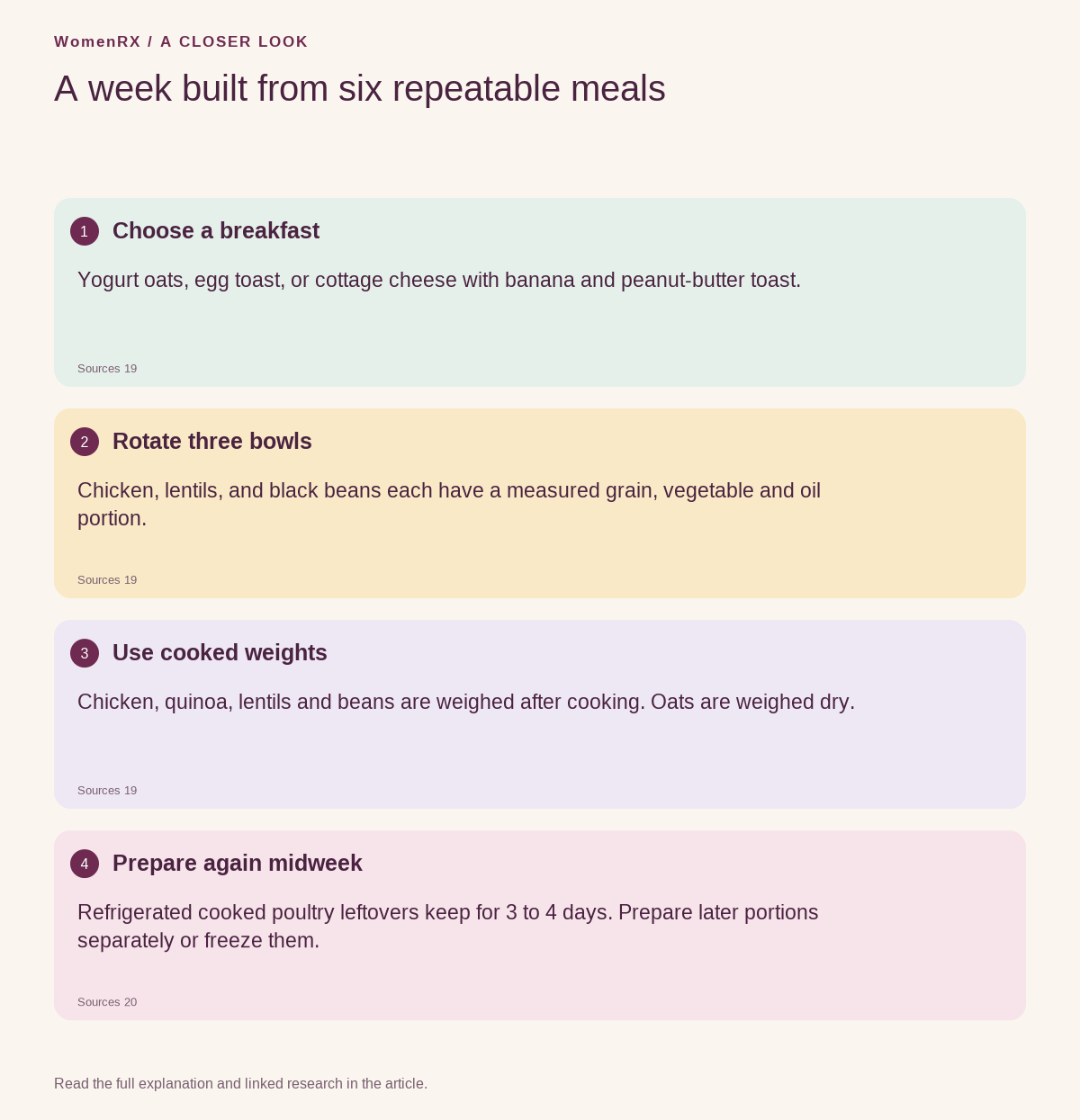
A week built from six repeatable meals
Choose a breakfast: Yogurt oats, egg toast, or cottage cheese with banana and peanut-butter toast.19
Rotate three bowls: Chicken, lentils, and black beans each have a measured grain, vegetable and oil portion.19
Use cooked weights: Chicken, quinoa, lentils and beans are weighed after cooking. Oats are weighed dry.19
Prepare again midweek: Refrigerated cooked poultry leftovers keep for 3 to 4 days. Prepare later portions separately or freeze them.20
Read the figure as text
Keep the ingredients flexible and the quantities clear.- Choose a breakfast: Yogurt oats, egg toast, or cottage cheese with banana and peanut-butter toast.19
- Rotate three bowls: Chicken, lentils, and black beans each have a measured grain, vegetable and oil portion.19
- Use cooked weights: Chicken, quinoa, lentils and beans are weighed after cooking. Oats are weighed dry.19
- Prepare again midweek: Refrigerated cooked poultry leftovers keep for 3 to 4 days. Prepare later portions separately or freeze them.20
Sources you can check
- MedlinePlus: Protein in diet, including tofu and other plant sourcesAccessed 2026-09-25Return to first citation
- Nutrition for Older Adults: MedlinePlusAccessed 2026-09-25Return to first citation
- Dietary Proteins: MedlinePlusAccessed 2026-09-25Return to first citation
- USDA FoodData Central: SR Legacy food composition data, April 20182018Return to first citation
- FoodSafety.gov: Cold Food Storage ChartAccessed 2026-09-26Return to first citation
- FoodSafety.gov: Safe Minimum Internal TemperaturesAccessed 2026-09-26Return to first citation