When Wegovy May Affect Appetite or Weight
Appetite may change before the scale shows a clear pattern, and dose titration means early weeks aren’t the same as a full treatment trial.
Wegovy can reduce calorie intake through effects likely mediated by appetite. Trial schedules show that dose escalation and longer-term weight outcomes are different phases, but they don’t predict when an individual will notice an appetite change or see a weight trend. Compare a pattern across readings rather than treating one weigh-in as a verdict. 1 2
Appetite and weight don’t share a timetable
Wegovy (semaglutide) reduces calorie intake, with its effects likely mediated by appetite. That describes how the medicine may work; it doesn’t mean everyone notices a change in hunger at the same time, or that feeling less hungry guarantees a particular amount of weight loss. 1
The scale can be even less straightforward. Body weight includes water, muscle, bone, and fat, and everyday factors can affect the number. One reading can’t show whether a treatment is working. 2
Why the first weeks are a different phase
In several of the injectable Wegovy weight-management trials, the dose was increased over 16 weeks, followed by 52 weeks at the maintenance dose. Other trials used a different escalation period. These are study designs, not a promise that your appetite or weight will follow a particular schedule. 1
That distinction matters if your early experience feels uneven. During dose increases, you may be learning how the medicine affects you while not yet being at the maintenance phase used in some trials. If you have concerns about your experience, discuss them with the clinician prescribing it.
Look for a pattern, not a single number
If tracking weight feels useful to you, compare readings taken in similar circumstances and look at the pattern across multiple readings rather than reacting to one. You can also note changes in appetite and how you’re feeling during titration. This gives a more useful picture than expecting the scale to move every week. Weight alone doesn’t tell the whole story. 2
A helpful treatment review can consider the longer pattern, how you’re tolerating the medicine, and what you and your prescriber are aiming for. The trial structure offers context: some injectable studies measured weight outcomes over 68 weeks, including both dose escalation and maintenance. That doesn’t mean you need to wait 68 weeks to raise a concern, nor does it establish a single early cutoff for success. 1
What the trial participant figures tell us about women
Women made up most participants in some of the weight-management trials described in the prescribing information: 81% in one study and 79% in another. Those figures describe who enrolled, not how much women lost, so they can’t be used as a women-specific estimate of response or timing. 1
Pregnancy planning is a separate prescribing conversation, not a weight-progress question. The Wegovy prescribing information reports developmental findings in animal studies during pregnancy. These findings aren’t a human risk estimate, but they make pregnancy planning a distinct topic to discuss with your prescriber. 1
From dose escalation to longer-term outcomes
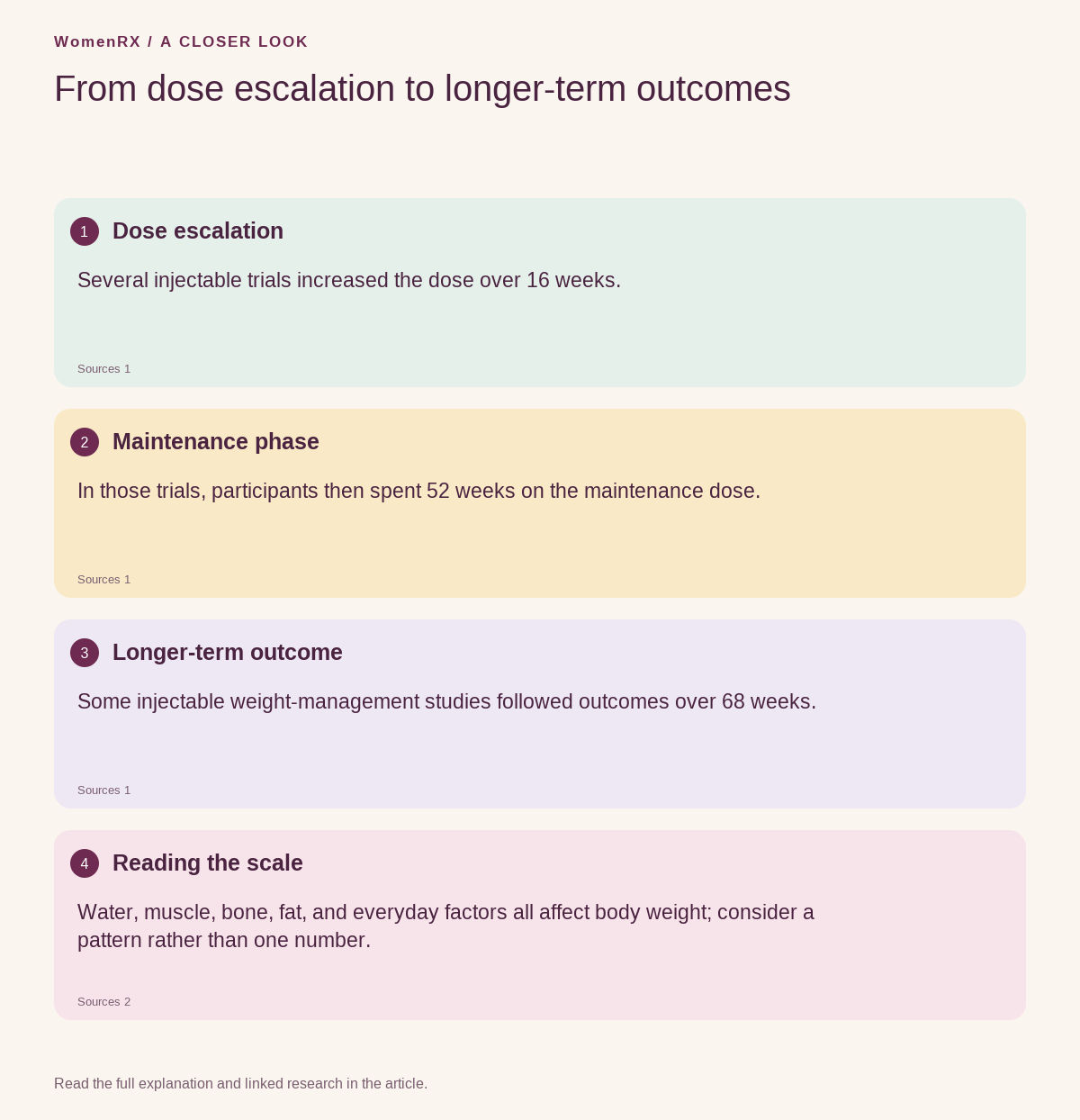
Dose escalation: Several injectable trials increased the dose over 16 weeks.1
Maintenance phase: In those trials, participants then spent 52 weeks on the maintenance dose.1
Longer-term outcome: Some injectable weight-management studies followed outcomes over 68 weeks.1
Reading the scale: Water, muscle, bone, fat, and everyday factors all affect body weight; consider a pattern rather than one number.2
Read the figure as text
These study phases put early observations in context. They describe trial design, not when an individual should feel or see a change.- Dose escalation: Several injectable trials increased the dose over 16 weeks.1
- Maintenance phase: In those trials, participants then spent 52 weeks on the maintenance dose.1
- Longer-term outcome: Some injectable weight-management studies followed outcomes over 68 weeks.1
- Reading the scale: Water, muscle, bone, fat, and everyday factors all affect body weight; consider a pattern rather than one number.2
More questions, answered
Does not feeling less hungry mean Wegovy isn’t working?
Not by itself. The medicine’s appetite-related effects don’t establish a personal timeline for noticing a change. Consider your experience alongside your weight pattern and discuss concerns with the clinician prescribing it. 1 2