What to Eat on Rybelsus When Your Appetite Changes
When Rybelsus makes eating difficult, focus on nourishing foods and fluids you can manage rather than a restrictive menu.
Rybelsus can cause nausea, reduced appetite, constipation, diarrhea, or vomiting. 1 Evidence hasn’t established a best eating plan for managing symptoms during GLP-1 treatment. 6 Smaller meals may be easier during nausea, while avoiding large or high-fat meals may help with nausea or diarrhea. 7 Keep nourishing foods and fluids in view; add fiber gradually if you’re constipated. 2 4 Contact your prescriber promptly about persistent vomiting or diarrhea. 1
Start with what you can comfortably eat
Rybelsus can make you feel less hungry, and stomach symptoms are common. In placebo-controlled trials of people with type 2 diabetes, nausea was reported by 6% of people taking placebo, 11% taking semaglutide tablets at 7 mg, and 20% at 14 mg. Nausea, vomiting, and diarrhea were most common when people first started treatment. These figures describe trial groups, not what any one person will experience. 1
When a regular meal feels like too much, think about what you can comfortably include rather than what to cut out. For example, you could have yogurt with fruit, an egg with toast, or a small bowl of beans and rice. Each offers a different way to make a manageable meal from familiar foods. General nutrition guidance favors variety, including fruits and vegetables, whole grains, and protein sources such as beans, fish, poultry, or dairy. 4
Reduced appetite can make it harder to get enough nourishment. A nutrition review focused on people with diabetes receiving GLP-1 or related medicines highlights hydration, quality carbohydrates, protein, and fiber. That’s a useful set of nutrition priorities, not a tested Rybelsus menu. A systematic review covering several medicines and populations found that evidence for the best dietary approach during treatment remains limited. 5 6
What, if anything, should you limit?
Let symptoms guide temporary changes, rather than cutting out whole food groups. A professional society advisory suggests smaller, more frequent meals for nausea and avoiding large or high-fat meals when nausea or diarrhea makes eating difficult. It also suggests easing back on high-fiber foods during the first few days if they worsen nausea. That isn’t a reason to avoid fiber indefinitely, especially if constipation is the problem. Alcohol may worsen nausea or reflux, so consider limiting it if you notice that connection. These are ways to manage symptoms, not food rules proven to improve Rybelsus results. 7
Match the adjustment to the symptom
Nausea or trouble finishing a meal: Try a small amount of a familiar food you’re willing to eat, such as toast with an egg or a little yogurt. If that doesn’t appeal, soup with beans is another option. You don’t need to force a large meal or rely on one particular food. If nausea keeps you from eating or drinking enough, tell your prescriber.
Low appetite without nausea: Make a smaller meal count toward nourishment. For example, instead of eating only a few bites of plain toast, you might add an egg; instead of having fruit alone, you might pair it with yogurt. These are flexible meal ideas, not foods shown to improve Rybelsus results. 4 6
Constipation: Fruits, vegetables, and whole grains provide fiber, and drinking water and other liquids is part of general constipation prevention advice. Increase fiber gradually: adding a lot quickly can bring gas, bloating, or cramps. If your bowel habits change or the problem persists, ask your prescriber what to do; don’t start a laxative without their advice. 2 3
Diarrhea or vomiting: Prioritize fluids as you’re able. Persistent or extended vomiting or diarrhea can lead to dehydration, and the Rybelsus prescribing information warns that dehydration associated with these symptoms has been linked to acute kidney injury. Contact your prescriber promptly if symptoms persist, rather than trying to manage ongoing fluid loss with food choices alone. 1
Keep food choices separate from medicine instructions
Meal ideas don’t replace the product’s administration instructions. Follow the current Rybelsus directions for taking the tablet, and ask your pharmacist or prescriber if any part is unclear. Don’t change how you take the medicine based on a food suggestion in this article. 1
If you’re planning a pregnancy, talk with your prescriber about your diabetes care and food needs before changing treatment. The Rybelsus prescribing information says to discontinue it at least two months before a planned pregnancy. If you’re pregnant, discuss your treatment and nutrition needs with your care team, especially if nausea or low appetite is making it hard to eat. Breastfeeding isn’t recommended during Rybelsus treatment because its absorption enhancer, SNAC, and/or its metabolites are present in human milk and their potential effects on infants are uncertain. 1
If eating has become difficult, be specific about that, too: ask how to meet your food and fluid needs when you can manage only small meals.
Eating choices when symptoms change
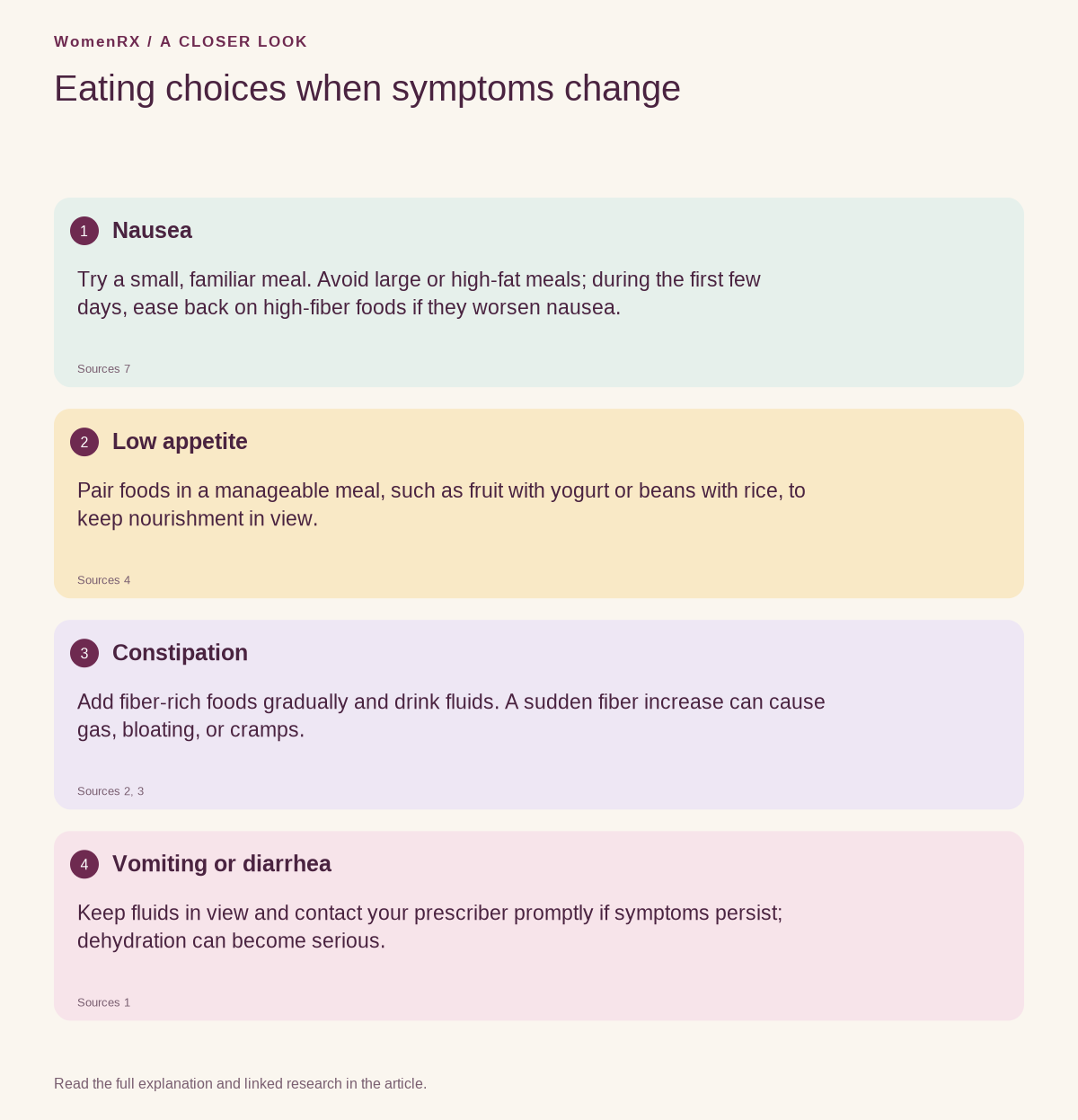
Nausea: Try a small, familiar meal. Avoid large or high-fat meals; during the first few days, ease back on high-fiber foods if they worsen nausea.7
Low appetite: Pair foods in a manageable meal, such as fruit with yogurt or beans with rice, to keep nourishment in view.4
Constipation: Add fiber-rich foods gradually and drink fluids. A sudden fiber increase can cause gas, bloating, or cramps.23
Vomiting or diarrhea: Keep fluids in view and contact your prescriber promptly if symptoms persist; dehydration can become serious.1
Read the figure as text
Match the difficulty you’re having with a practical next step.- Nausea: Try a small, familiar meal. Avoid large or high-fat meals; during the first few days, ease back on high-fiber foods if they worsen nausea.7
- Low appetite: Pair foods in a manageable meal, such as fruit with yogurt or beans with rice, to keep nourishment in view.4
- Constipation: Add fiber-rich foods gradually and drink fluids. A sudden fiber increase can cause gas, bloating, or cramps.23
- Vomiting or diarrhea: Keep fluids in view and contact your prescriber promptly if symptoms persist; dehydration can become serious.1
Sources you can check
- OZEMPIC (ORAL SEMAGLUTIDE) TABLET RYBELSUS (ORAL SEMAGLUTIDE) TABLET [NOVO NORDISK PHARMACEUTICAL INDUSTRIES, LP] | US prescribing information and patient instructionsAccessed 2026-09-25Return to first citation
- Dietary Fiber: MedlinePlusAccessed 2026-09-25Return to first citation
- Constipation | MedlinePlusAccessed 2026-09-25Return to first citation
- Nutrition: MedlinePlusAccessed 2026-09-25Return to first citation
- [Nutritional management of type 2 diabetes with GLP-1 and GLP-1/GIP agonists].Pabion C, Pignolet-Marti A, Zanchi A, Borloz S. · Revue medicale suisse · 2025Return to first citation
- Dietary Strategies and Nutritional Management in Patients Receiving GLP-1 and Dual GIP/GLP-1 Receptor Agonists as Adjuncts to Lifestyle Interventions: A Systematic Review of Randomised Clinical Trials.de Paulo RS, Bonifácio DB, de Carvalho MHL, Bressan J. · Diabetes, obesity & metabolism · 2026Return to first citation
- Nutritional priorities to support GLP-1 therapy for obesity: four-society joint advisory2025Return to first citation