Eating Well on Wegovy Without a Rigid Meal Plan
Smaller portions, enough fluids, and food choices guided by your symptoms can help you eat more comfortably without turning treatment into a restrictive diet.
On injectable Wegovy, appetite may be lower and stomach symptoms can make regular meals harder. Try smaller, more frequent meals when nausea or fullness gets in the way; choose bland foods temporarily if they feel easier; and keep fluids in reach. For constipation, build fiber gradually through foods you tolerate. Aim for nourishing meals, including protein, rather than severe restriction, and contact your prescriber about persistent symptoms or trouble staying hydrated. 1 2 4 5
Let your symptoms guide the next meal
Wegovy can make you feel full sooner and can cause nausea, diarrhea, constipation, vomiting, or other digestive symptoms. In adult trials of injectable Wegovy for weight reduction, gastrointestinal side effects were reported by 73% of participants taking Wegovy and 47% taking placebo. These effects were reported most often during dose escalation. 2
That doesn’t mean you need a special menu, or that a particular food will prevent symptoms. Instead, notice what your stomach is doing and make a small adjustment that helps you eat and drink comfortably. The suggestions below draw on general guidance for nausea, diarrhea, and constipation; they haven’t been established as a single Wegovy-specific diet. 1 3 4
If you feel nauseated or full quickly
A large meal may feel like too much when you’re already getting full early. Try a smaller portion, then eat again later if you’re able. MedlinePlus also recommends smaller, more frequent meals for nausea. If food smells are off-putting, choosing something with a less noticeable smell may help. When nausea is active, bland foods may be easier to manage than spicy or fatty foods. These are options to try, not foods you have to eat. 1
Fluids count, too. If nausea makes drinking difficult, small amounts of clear liquids taken often may be easier than a large drink at once. If you’re vomiting or having diarrhea, pay attention to whether you can replace the fluid you’re losing. 1 3
If constipation is the problem
Fiber-rich foods such as fruits, vegetables, and grains, along with plenty of fluids and regular movement, can help prevent constipation. You don’t need to force a large serving of fiber when your appetite is low or your stomach feels unsettled. Add foods you tolerate as you can, and drink fluids alongside them. You also don’t have to have a bowel movement every day; a change in your usual bowel habits is more useful to notice. 4
If constipation is continuing or changing your usual pattern, ask your prescriber what to do before starting a laxative. MedlinePlus advises using laxatives only if your healthcare provider says to. 4
If you have diarrhea or vomiting
With diarrhea, replacing lost fluid matters. As symptoms improve, soft, bland foods may be easier to eat. If you’re vomiting, small amounts of clear liquid taken often may be more manageable than drinking a lot at once. 1 3
Persistent nausea, vomiting, or diarrhea can lead to dehydration. The Wegovy prescribing information warns that dehydration related to gastrointestinal symptoms has been associated with acute kidney injury, and advises reporting persistent symptoms. Signs of dehydration include a dry mouth, urinating less often, or dark urine. Contact your prescriber promptly if you can’t keep fluids down or notice these signs. 1 2
Keep nourishment in view, not just portion size
When appetite drops, it can be harder to take in enough food overall. A nutrition review on incretin-based treatment describes reduced intake and gastrointestinal symptoms as potential challenges for getting enough protein, micronutrients, and fluids. Its discussion focuses on people with obesity-related heart failure, so it isn’t a Wegovy meal plan for everyone. Still, it supports a practical check: are you managing to eat a variety of nourishing foods, including sources of protein, and drink enough to stay hydrated? 5
You don’t have to hit a perfect target at every meal. Look at your overall pattern: whether you can eat regularly enough for your needs, whether symptoms are narrowing your choices, and whether you’re keeping up with fluids. If low appetite or food intolerance makes that difficult, ask your prescriber about next steps and whether a registered dietitian could help you find options you can tolerate. Don’t respond by pushing yourself into severe restriction.
If you’re planning a pregnancy, pregnant, breastfeeding, or recovering from an eating disorder, a generic weight-loss menu may not fit your situation. Ask your prescribing clinician and, if useful, a registered dietitian to tailor nutrition advice and treatment decisions to your needs.
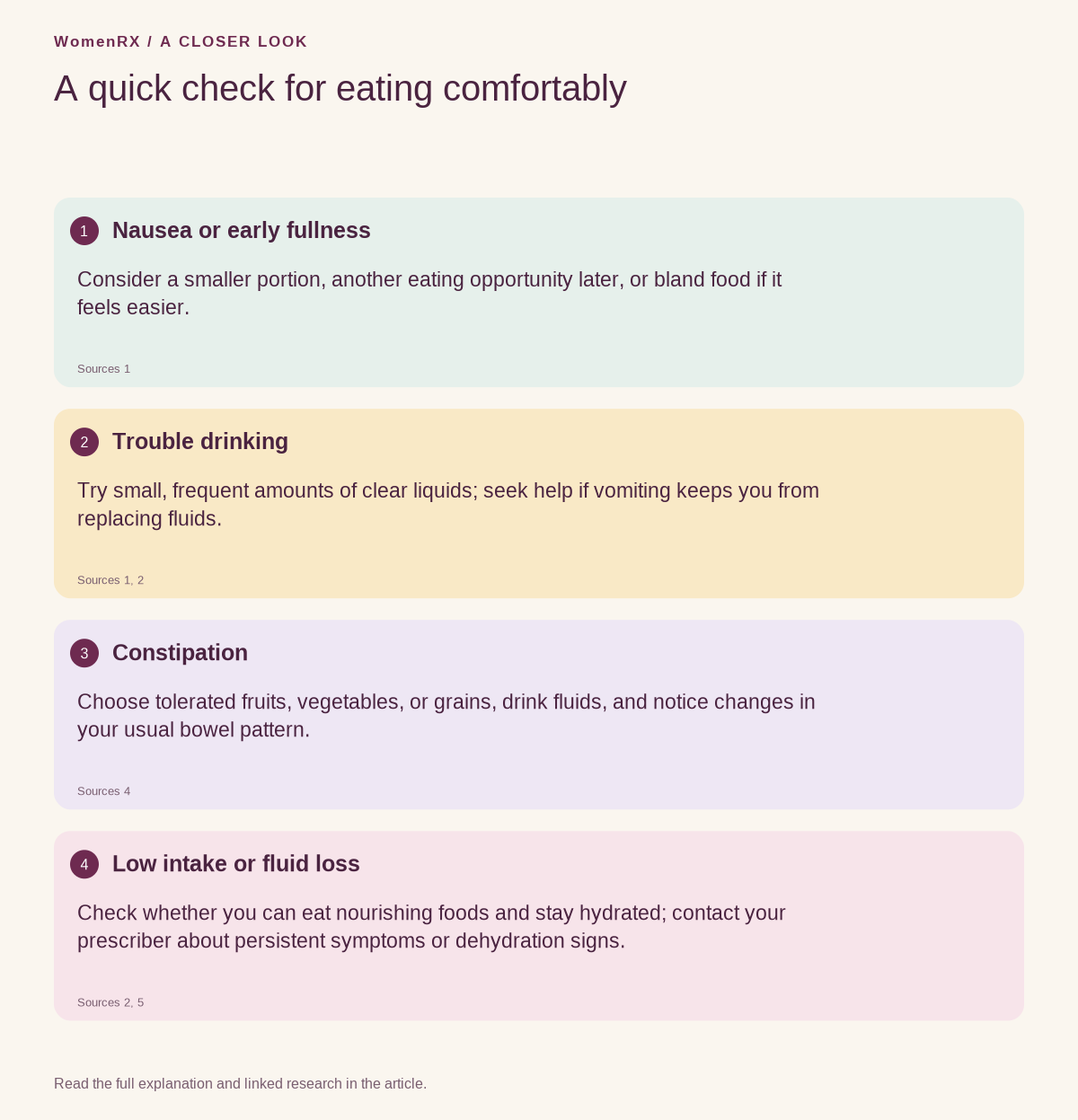
A quick check for eating comfortably
Nausea or early fullness: Consider a smaller portion, another eating opportunity later, or bland food if it feels easier.1
Trouble drinking: Try small, frequent amounts of clear liquids; seek help if vomiting keeps you from replacing fluids.12
Constipation: Choose tolerated fruits, vegetables, or grains, drink fluids, and notice changes in your usual bowel pattern.4
Low intake or fluid loss: Check whether you can eat nourishing foods and stay hydrated; contact your prescriber about persistent symptoms or dehydration signs.25
Read the figure as text
Use this symptom-led check to choose a practical next step and notice when low intake or fluid loss needs more support.- Nausea or early fullness: Consider a smaller portion, another eating opportunity later, or bland food if it feels easier.1
- Trouble drinking: Try small, frequent amounts of clear liquids; seek help if vomiting keeps you from replacing fluids.12
- Constipation: Choose tolerated fruits, vegetables, or grains, drink fluids, and notice changes in your usual bowel pattern.4
- Low intake or fluid loss: Check whether you can eat nourishing foods and stay hydrated; contact your prescriber about persistent symptoms or dehydration signs.25
More questions, answered
Do I need to eat a certain food before or after my Wegovy injection?
This article focuses on food tolerance and nutrition during injectable treatment, not a required meal schedule. If you have a question about your specific injection instructions, check the instructions for your prescription or ask your prescriber.
When should I contact my prescriber about stomach symptoms?
Contact your prescriber about persistent nausea, vomiting, or diarrhea, especially if you’re struggling to keep fluids down. Dry mouth, urinating less often, and dark urine can be signs of dehydration. 1 2
Sources you can check
- Nausea | Vomiting | MedlinePlusAccessed 2026-09-25Return to first citation
- WEGOVY (SEMAGLUTIDE) INJECTION, SOLUTION WEGOVY (SEMAGLUTIDE) TABLET [NOVO NORDISK PHARMACEUTICAL INDUSTRIES, LP] | US prescribing information and patient instructionsAccessed 2026-09-25Return to first citation
- Diarrhea | MedlinePlusAccessed 2026-09-25Return to first citation
- Constipation | MedlinePlusAccessed 2026-09-25Return to first citation
- Medical nutrition therapy in incretin-treated obesity-related heart failure with preserved ejection fraction.Ming Q, Li Z, Cui J. · Frontiers in nutrition · 2026Return to first citation