What Ozempic Treats and How the Weekly Injection Works
Ozempic is prescribed for specific type 2 diabetes-related uses, and its gradual dose increases give you and your prescriber a chance to assess how treatment is going.
Ozempic is a once-weekly semaglutide injection prescribed for adults with type 2 diabetes to improve blood sugar control and, in certain groups, reduce cardiovascular or kidney risks. Weight loss is not an approved Ozempic indication, while another semaglutide product, Wegovy, has been studied for weight reduction. Ozempic starts at a lower dose, with later increases determined by the prescribing plan and your response. 21
The name on the prescription matters
Ozempic contains semaglutide, a medicine in the GLP-1 receptor agonist class. In the US, Ozempic is prescribed alongside diet and exercise to improve blood sugar control in adults with type 2 diabetes. It is also prescribed to reduce the risk of major cardiovascular events in adults who have both type 2 diabetes and established cardiovascular disease, and to reduce certain worsening-kidney-disease outcomes and cardiovascular death in adults who have both type 2 diabetes and chronic kidney disease. Those are different reasons to prescribe the same product, so the goal of treatment affects the follow-up and maintenance dose. 2
Ozempic may come up in conversations about weight, but weight loss is not one of its approved indications. Wegovy also contains semaglutide, and its separate prescribing information describes trials in adults for weight reduction. Sharing an ingredient doesn't make the products or their dosing plans interchangeable. If you're seeking treatment primarily for weight, ask which product is being proposed and what it is prescribed to treat. 21
Why the dose rises gradually
Ozempic is injected under the skin once a week, on the same day each week, with or without meals. Its labeled starting dose is 0.25 mg weekly for four weeks, followed by 0.5 mg weekly. That first step is part of a gradual increase intended to reduce gastrointestinal side effects, not a signal that everyone should eventually reach the highest available dose. For blood sugar control, the prescriber may consider later increases if more control is needed, allowing at least four weeks at each preceding dose. The labeled maintenance plan for someone taking Ozempic for type 2 diabetes with chronic kidney disease is different from the range of maintenance doses used for blood sugar control. 2
Before the first injection, the person prescribing Ozempic should show you how to use your Ozempic presentation. The labeled injection areas are the abdomen, thigh, and upper arm; the site changes between injections. A pen must never be shared, even with a new needle. If you're also using insulin, the two medicines are given as separate injections, not mixed together. These product-specific details matter more than instructions you may have seen for a different semaglutide device. 21
Stomach symptoms are a practical reason to check in during dose increases. In two placebo-controlled Ozempic trials involving people with type 2 diabetes, gastrointestinal reactions occurred in 32.7% of those receiving 0.5 mg and 36.4% receiving 1 mg, versus 15.3% receiving placebo. Most reports of nausea, vomiting, or diarrhea occurred during dose escalation. Constipation and abdominal pain are also among Ozempic's common side effects. Tell your prescriber if symptoms are severe or won't go away rather than assuming the next increase should happen as planned. 2
What to raise before starting
The most useful review is specific to your health and medicines:
- Your other diabetes medicines. Taking Ozempic with insulin or a sulfonylurea can increase the risk of low blood sugar. Ask how you would recognize and manage it, and whether your existing treatment plan needs changing. Don't adjust those medicines on your own. 2
- Your eyes and stomach. Mention a history of diabetic retinopathy or severe delayed stomach emptying. Ozempic's label calls for monitoring people with a history of retinopathy and does not recommend the medicine for people with severe gastroparesis. Report vision changes during treatment. 2
- Relevant personal or family history. Ozempic must not be used by someone with a personal or family history of medullary thyroid carcinoma or with multiple endocrine neoplasia syndrome type 2. A previous serious allergic reaction to semaglutide or an Ozempic ingredient also rules it out. 2
- Pregnancy plans or breastfeeding. The Ozempic label says to stop it at least two months before a planned pregnancy. Planning matters for blood sugar care too, so discuss what would replace or change in your diabetes plan. Human pregnancy data are limited. The label also says there are no data on semaglutide in human milk or its effects on a breastfed infant or milk production; breastfeeding calls for a discussion of your treatment needs and feeding plans, not an assumption that the answer is known. 2
Persistent or severe abdominal pain, sometimes spreading to the back, needs prompt medical attention because it can be a sign of pancreatitis. Ongoing vomiting or diarrhea also warrants a call: fluid loss can lead to kidney problems. If you develop swelling of the face or throat or trouble breathing, seek urgent help for a possible serious allergic reaction. Tell the team before a procedure involving general anesthesia or deep sedation that you take Ozempic. 2
The side-effect percentages above are aggregate rates from trials in adults with type 2 diabetes, not women-specific estimates. Pregnancy planning and breastfeeding bring separate questions that those trial percentages cannot answer. 2
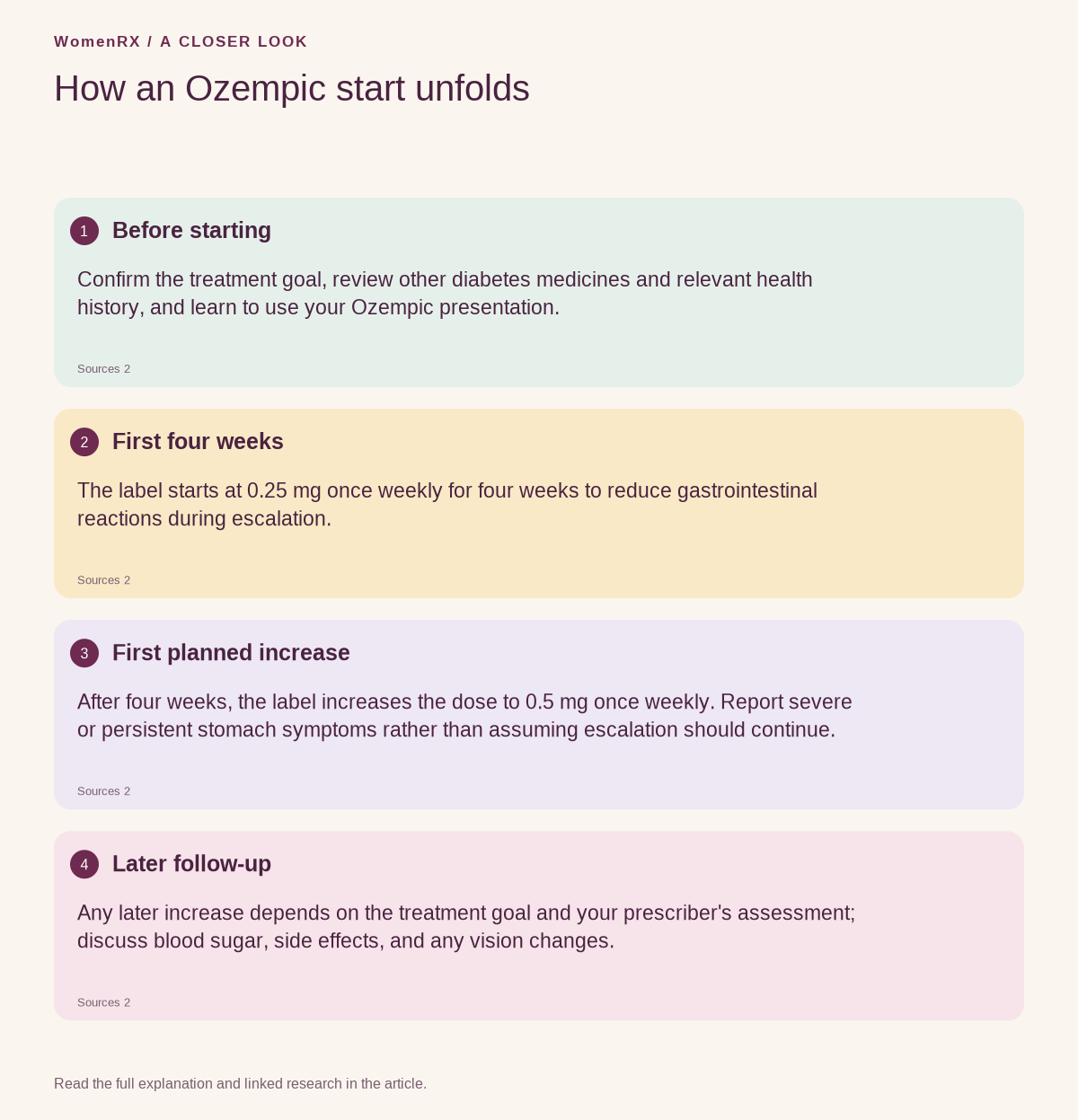
How an Ozempic start unfolds
Before starting: Confirm the treatment goal, review other diabetes medicines and relevant health history, and learn to use your Ozempic presentation.2
First four weeks: The label starts at 0.25 mg once weekly for four weeks to reduce gastrointestinal reactions during escalation.2
First planned increase: After four weeks, the label increases the dose to 0.5 mg once weekly. Report severe or persistent stomach symptoms rather than assuming escalation should continue.2
Later follow-up: Any later increase depends on the treatment goal and your prescriber's assessment; discuss blood sugar, side effects, and any vision changes.2
Read the figure as text
The labeled sequence shows where the prescribing goal, injection training, tolerability, and follow-up fit together. It isn't a personal dosing plan.- Before starting: Confirm the treatment goal, review other diabetes medicines and relevant health history, and learn to use your Ozempic presentation.2
- First four weeks: The label starts at 0.25 mg once weekly for four weeks to reduce gastrointestinal reactions during escalation.2
- First planned increase: After four weeks, the label increases the dose to 0.5 mg once weekly. Report severe or persistent stomach symptoms rather than assuming escalation should continue.2
- Later follow-up: Any later increase depends on the treatment goal and your prescriber's assessment; discuss blood sugar, side effects, and any vision changes.2
More questions, answered
What if I miss my weekly Ozempic injection?
Ozempic's instructions say a missed dose may be taken within five days of the scheduled day. If more than five days have passed, the instructions say to skip it and take the next dose on the usual day. If you've missed multiple doses or aren't sure where you are in an escalation plan, check with your prescriber rather than guessing at a restart dose. 2
Sources you can check
- WEGOVY (SEMAGLUTIDE) INJECTION, SOLUTION WEGOVY (SEMAGLUTIDE) TABLET [NOVO NORDISK PHARMACEUTICAL INDUSTRIES, LP] | US prescribing information and patient instructionsAccessed 2026-09-25Return to first citation
- OZEMPIC (SEMAGLUTIDE) INJECTION, SOLUTION [NOVO NORDISK PHARMACEUTICAL INDUSTRIES, LP] | US prescribing information and patient instructionsAccessed 2026-09-25Return to first citation