Trulicity vs. Ozempic: Diabetes Uses and Weight Effects
Both treat type 2 diabetes, but their weight effects and other approved uses are not the same.
Trulicity (dulaglutide) and Ozempic (semaglutide) are approved to improve blood sugar control in people with type 2 diabetes; neither product is approved specifically for weight management. Both can lead to weight loss during diabetes treatment. In a direct trial, Ozempic produced greater average weight reduction than the Trulicity doses tested, but that result doesn’t make the products interchangeable or predict your own response.421
If you’re weighing these medicines because you have type 2 diabetes and would also like to lose weight, start with two separate questions: What is the medicine approved to treat, and what happened to weight in diabetes trials? The answers overlap, but they aren’t identical.
Their approved uses have meaningful differences
Both Trulicity and Ozempic are once-weekly GLP-1 medicines approved, alongside diet and exercise, to improve blood sugar control in type 2 diabetes. Trulicity’s approval covers adults and children ages 10 and older; Ozempic’s blood sugar indication covers adults.42
Their other approved uses differ. Trulicity is approved to reduce the risk of major cardiovascular events in adults with type 2 diabetes who have established cardiovascular disease or multiple cardiovascular risk factors. Ozempic has a cardiovascular risk-reduction indication for adults with type 2 diabetes and established cardiovascular disease. Ozempic also has an indication to reduce certain kidney and cardiovascular outcomes in adults with type 2 diabetes and chronic kidney disease.42 If one of those conditions applies to you, the comparison is about more than weight.
Neither Trulicity nor Ozempic has a weight-management indication. Semaglutide is also sold under the name Wegovy, which does have a weight-reduction indication. Sharing an ingredient doesn’t make Ozempic and Wegovy the same prescribed product or turn Ozempic’s diabetes approval into a weight-management approval.23
What the weight evidence actually compares
Weight loss occurred in diabetes trials of both medicines, but an average from a Trulicity trial and an average from a separate Ozempic trial aren’t a fair head-to-head comparison. The people enrolled, other diabetes medicines used, doses and follow-up periods can differ.42
There is a more useful direct comparison: the SUSTAIN 7 trial enrolled adults with type 2 diabetes whose blood sugar wasn’t adequately controlled on oral diabetes medicines. It compared once-weekly injectable semaglutide with dulaglutide, and semaglutide produced greater average reductions in both body weight and HbA1c at the doses studied.1 That supports a difference in that trial, not a promise of a particular amount of weight loss for you.
Dose matters here. SUSTAIN 7 tested dulaglutide doses up to 1.5 mg. A separate Trulicity diabetes trial later evaluated higher dulaglutide doses and found greater average weight reduction with 4.5 mg than with 1.5 mg at 36 weeks. That trial did not compare the higher dose with Ozempic, so it cannot tell you which current treatment approach would produce more weight loss in a direct comparison.14 The head-to-head results do not establish a distinct weight effect for women.1
Put your weight goal beside your diabetes goal
A useful way to frame the choice is: Am I choosing a diabetes medicine with weight as one consideration, or do I also need a separate weight-management plan? The first question brings blood sugar control and any relevant heart or kidney condition into the comparison. The second keeps an observed side effect or trial outcome from becoming a substitute for a treatment plan designed around weight.243
For example, if you have type 2 diabetes and established heart disease, both products have relevant cardiovascular indications, while Ozempic also has a specific indication for certain outcomes in people who have type 2 diabetes and chronic kidney disease. If you have multiple cardiovascular risk factors but no established heart disease, Trulicity’s cardiovascular indication is worded differently from Ozempic’s. Those distinctions may matter even when weight is high on your list of priorities.42
If pregnancy is possible or planned, bring that into the decision early. Human pregnancy data are limited for both medicines, and poorly controlled diabetes during pregnancy carries risks of its own. Ozempic’s prescribing information specifies stopping it at least two months before a planned pregnancy because semaglutide stays in the body for a long time. Trulicity’s pregnancy information describes limited human data but does not give the same planning interval; don’t transfer Ozempic’s timing to Trulicity.24 The practical goal is a diabetes plan that still works when pregnancy plans change, not simply stopping blood sugar treatment without a replacement plan.
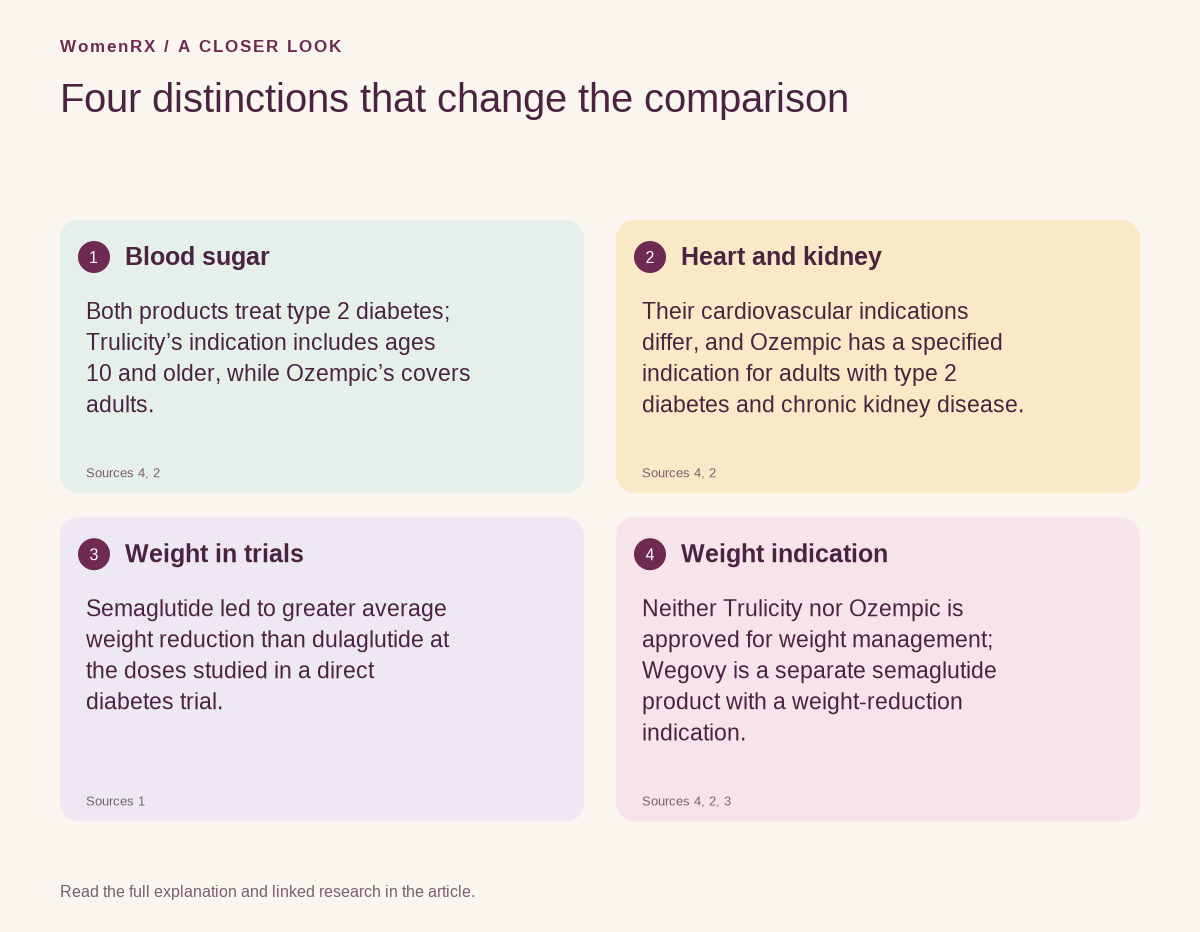
Four distinctions that change the comparison
Blood sugar: Both products treat type 2 diabetes; Trulicity’s indication includes ages 10 and older, while Ozempic’s covers adults.42
Heart and kidney: Their cardiovascular indications differ, and Ozempic has a specified indication for adults with type 2 diabetes and chronic kidney disease.42
Weight in trials: Semaglutide led to greater average weight reduction than dulaglutide at the doses studied in a direct diabetes trial.1
Weight indication: Neither Trulicity nor Ozempic is approved for weight management; Wegovy is a separate semaglutide product with a weight-reduction indication.423
Read the figure as text
Approved uses and measured weight outcomes answer different questions.- Blood sugar: Both products treat type 2 diabetes; Trulicity’s indication includes ages 10 and older, while Ozempic’s covers adults.42
- Heart and kidney: Their cardiovascular indications differ, and Ozempic has a specified indication for adults with type 2 diabetes and chronic kidney disease.42
- Weight in trials: Semaglutide led to greater average weight reduction than dulaglutide at the doses studied in a direct diabetes trial.1
- Weight indication: Neither Trulicity nor Ozempic is approved for weight management; Wegovy is a separate semaglutide product with a weight-reduction indication.423
More questions, answered
Is Wegovy just Ozempic prescribed for weight loss?
No. Wegovy and Ozempic contain semaglutide, but they are distinct products with different approved uses. Wegovy has a weight-reduction indication; Ozempic’s listed indications concern type 2 diabetes and specified cardiovascular and kidney outcomes.32
Sources you can check
- Efficacy and Safety of Once-Weekly Semaglutide Versus Basal Insulin and Other GLP-1 Receptor Agonists in Adults With Type 2 Diabetes Uncontrolled on Oral Antidiabetic Drugs: A Systematic Review and Pairwise Meta-Analysis.Aljulajil FA, Rabbani U. · Cureus · 2026Return to first citation
- OZEMPIC (SEMAGLUTIDE) INJECTION, SOLUTION [NOVO NORDISK PHARMACEUTICAL INDUSTRIES, LP] | US prescribing information and patient instructionsAccessed 2026-09-25Return to first citation
- WEGOVY (SEMAGLUTIDE) INJECTION, SOLUTION WEGOVY (SEMAGLUTIDE) TABLET [NOVO NORDISK PHARMACEUTICAL INDUSTRIES, LP] | US prescribing information and patient instructionsAccessed 2026-09-25Return to first citation
- TRULICITY dulaglutide injection, LillyAccessed 2026-09-25Return to first citation