Telehealth Privacy: Questions to Ask Before Your First Visit
Before you connect, ask what goes into your clinical record, what the service handles, and what may appear in billing.
Ask separately about your clinical record, the tools used for video or messaging, and billing. These are useful buckets for questions, not a promise that the information is stored separately. Telehealth can include phone or video visits, messages in an electronic health record, and reminders by text, phone, or email, so ask which channels your provider uses and how each is handled. 2
Start with three buckets
“Your data” can mean several different things. For a clearer conversation, ask about three areas: the clinical record, the service and communication tools, and billing. They may overlap, so ask how information moves between them rather than assuming each has a separate system.
A clinical record might be paper or electronic, and you may have records at more than one provider’s office. 1 Telehealth can involve video or phone calls, electronic-record messages, and appointment reminders through text, phone, or email. 2 The first step is to find out which of these your care uses.
Ask what becomes part of your record
Try: “What information from this visit will be added to my medical record, and where will that record be kept?” You can also ask whether messages, photos, forms, or information you submit before the visit become part of the record, and whether the clinician sends a summary to another provider.
If you already see other clinicians, ask whether this service shares information with them or whether you need to request that yourself. A telehealth clinician who isn’t your regular provider may not have your full medical history, so it’s useful to ask both what they can see and what they’ll document. 2
Ask about the technology, not just the clinician
A visit may use one tool for video and another for scheduling or messaging. Ask: “Which app, website, or phone number should I use? Is the visit recorded? Where can I send questions afterward?” If you want to understand the service’s data practices, ask directly:
- What information does the service collect when I use it?
- How long is it kept, and can I ask for it to be deleted?
- Does the service share information with other companies or organizations? If so, what information and for what purpose?
- Who can access my account or messages, and how can I review or change that access?
These are questions, not assumptions that recording, sharing, or a particular retention practice is happening. Ask for the service’s written privacy information if the answers aren’t clear.
Bring billing into the conversation
Billing is a separate practical question from what a clinician writes in a note. Ask what name or description may appear on a bill or other payment-related document, who sends it, and where to direct questions about what is disclosed. If you use insurance, ask the provider or plan what information may appear in its billing communications. The answer can help you decide which contact details and communication methods you’re comfortable using.
Make room for sensitive care
For reproductive or sexual health care, you might ask: “How are visit notes, prescriptions, test information, messages, and appointment reminders handled? Could any of those details appear in billing communications? Who can see them?” Be specific about what you’re concerned about, such as a reminder appearing on a shared phone or a visit description being visible to someone else.
Don’t rely on a general promise that a visit is “private” to answer every question. Ask how the policy applies to this service, your account, and the kind of care you’re seeking. If an answer is unclear, ask who can explain the written policy before you share information or book.
If video doesn’t feel right
Ask whether the provider can offer a phone visit or another way to communicate. Phone calls and video chats are both examples of telehealth, though the options available depend on the service. 2 You can also ask whether you may turn off a camera or use a different channel for follow-up messages.
A useful next step is to save the answers that matter to you, especially who can access your information and how you’ll receive reminders. That gives you a concrete basis for deciding whether the service’s setup feels workable.
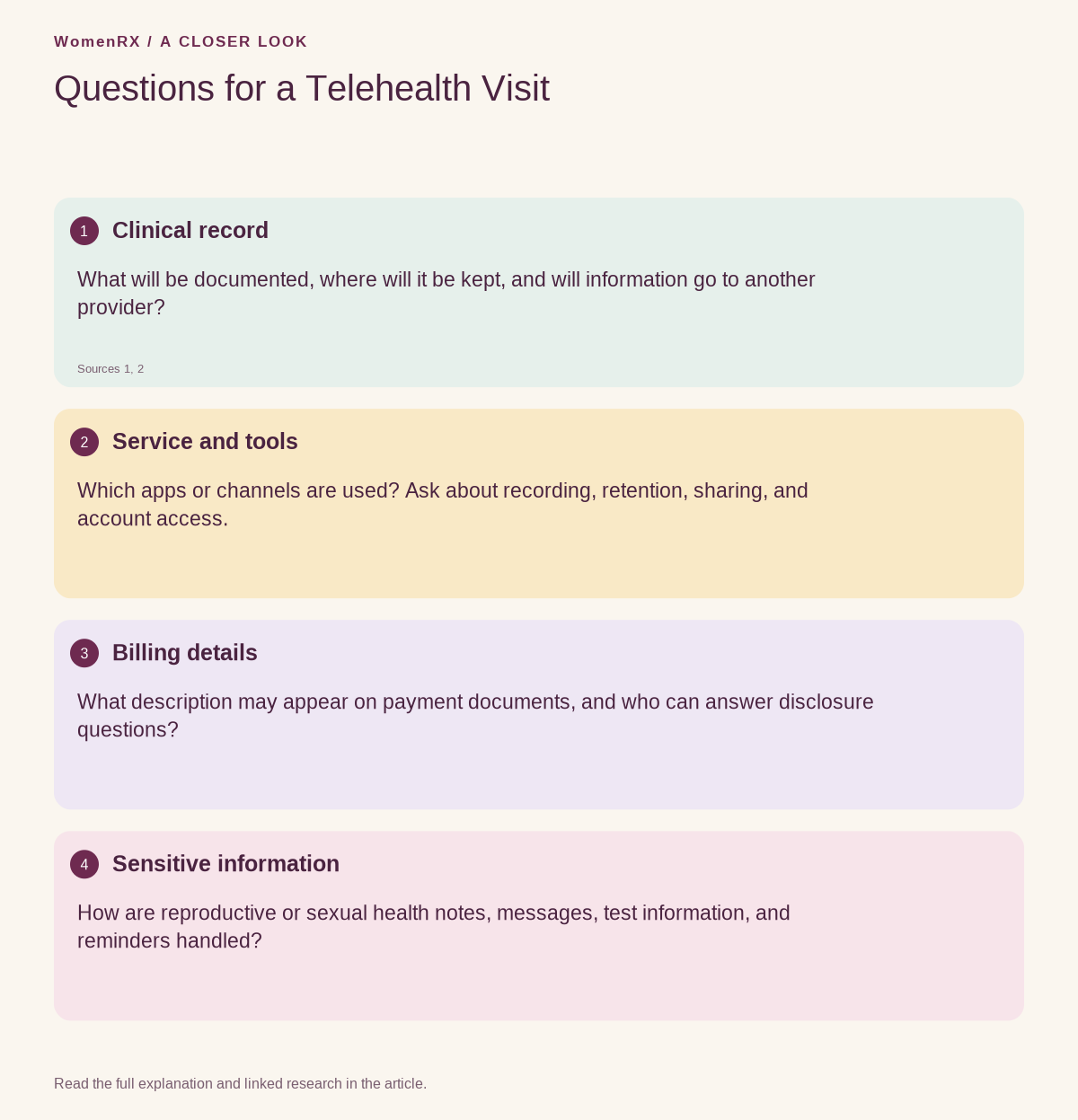
Questions for a Telehealth Visit
Clinical record: What will be documented, where will it be kept, and will information go to another provider?12
Service and tools: Which apps or channels are used? Ask about recording, retention, sharing, and account access.
Billing details: What description may appear on payment documents, and who can answer disclosure questions?
Sensitive information: How are reproductive or sexual health notes, messages, test information, and reminders handled?
Read the figure as text
Use these prompts to ask separately about the visit record, communication tools, and payment-related information. They are questions to ask, not claims about a service’s practices.- Clinical record: What will be documented, where will it be kept, and will information go to another provider?12
- Service and tools: Which apps or channels are used? Ask about recording, retention, sharing, and account access.
- Billing details: What description may appear on payment documents, and who can answer disclosure questions?
- Sensitive information: How are reproductive or sexual health notes, messages, test information, and reminders handled?
More questions, answered
Can I ask for a phone visit instead of video?
Yes, you can ask what options the provider offers. Phone calls and video chats are both examples of telehealth, though a particular service may not offer both. 2
Sources you can check
- Personal Health Records: MedlinePlusAccessed 2026-09-25Return to first citation
- Telehealth: MedlinePlusAccessed 2026-09-25Return to first citation