How Does a Menopause Hormone Therapy Patch Work?
An estrogen patch delivers estradiol through the skin, but your uterus, symptoms, and treatment history help determine what else belongs in the plan.
A menopause hormone therapy patch releases estradiol through the skin into the bloodstream. It can be a practical alternative to taking estrogen by mouth, but the route doesn’t decide the whole treatment plan. If you have a uterus, systemic estrogen generally needs to be paired with a progestogen to protect the uterine lining; treatment choices also depend on your symptoms and health history. 1 4
The patch is a delivery method, not the whole plan
Most menopause estrogen patches deliver estradiol, a form of estrogen, through the skin. Unlike a tablet that you swallow, a patch delivers the hormone without first passing through the digestive system. A review describes transdermal estrogen as bypassing first-pass metabolism in the liver. That difference can matter when comparing routes, but it doesn’t make a patch automatically safer or right for everyone. Menopause hormone therapy’s benefits and risks depend on factors including the type of hormone, route, timing, duration, and whether a progestogen is used. 1 5 4
A patch may suit someone who prefers not to take a pill every day. Replacement schedules depend on the particular product. Other systemic estrogen routes include tablets, gel, and spray. The options can differ in how you use them, but the goal is still to deliver estrogen for menopause symptoms. 1 2
The uterus determines whether estrogen needs a partner
If you still have your uterus, systemic estrogen can thicken the uterine lining. A progestogen, such as progesterone, is generally added to protect that lining. It may be taken separately, or estrogen and progestogen may be provided together in a combined treatment. So, when you’re considering a patch, check whether it contains estrogen alone or is part of a combined plan. 1 2
If you’ve had a hysterectomy that removed your uterus, estrogen can often be used without a progestogen. Your surgical and treatment history still matters, so don’t assume that the same plan fits everyone who has had surgery. 1
Perimenopause can affect the choice of combined treatment: some plans use estrogen with a progestogen in a sequential pattern while periods are still occurring; other plans use continuous combined treatment after periods have stopped. The exact plan needs to account for your bleeding pattern and medical history. 2
What a patch may change, and what it can’t tell you
Compared with an estrogen tablet, a patch avoids first-pass liver metabolism. That is a difference in how the body receives the hormone, not a guarantee about your personal risk. The North American Menopause Society notes that hormone therapy risks vary with route and other treatment factors, and recommends individualizing the decision. 5 4
A patch also doesn’t answer whether systemic therapy is the right treatment for your symptoms. Systemic hormone therapy can help with symptoms such as hot flashes and vaginal dryness. When symptoms are limited to vaginal dryness or irritation, vaginal estrogen is a separate option; it can help those symptoms but doesn’t treat hot flashes. 1 2
Patches can cause side effects, including skin irritation where they’re applied. Headache, breast tenderness, and bleeding can also occur with estrogen therapy; if you take a progestogen too, some side effects may come from that medicine instead. Persistent or concerning bleeding is worth discussing, particularly if it occurs after the initial months of treatment. 3
Useful points to weigh before choosing a route
Think about the practical tradeoff as well as the hormone plan. A patch means applying and replacing a product on a schedule; a tablet is swallowed, while gel and spray are applied to the skin. If skin irritation is a concern, ask whether another route might fit better. If convenience is the main reason you’re considering a patch, ask how often the specific product needs replacing and what to do if it comes loose. 1 3
Before deciding, be ready to discuss what symptoms you want to treat, whether you still have your uterus, whether you’re still having periods, and what hormone therapy or related surgery you’ve had before. Also ask whether the patch is estrogen-only or combined, and how the plan accounts for uterine protection if you have a uterus. These details are more useful than choosing a route based on the word “patch” alone. Treatment should be individualized and periodically reassessed. 1 2 4
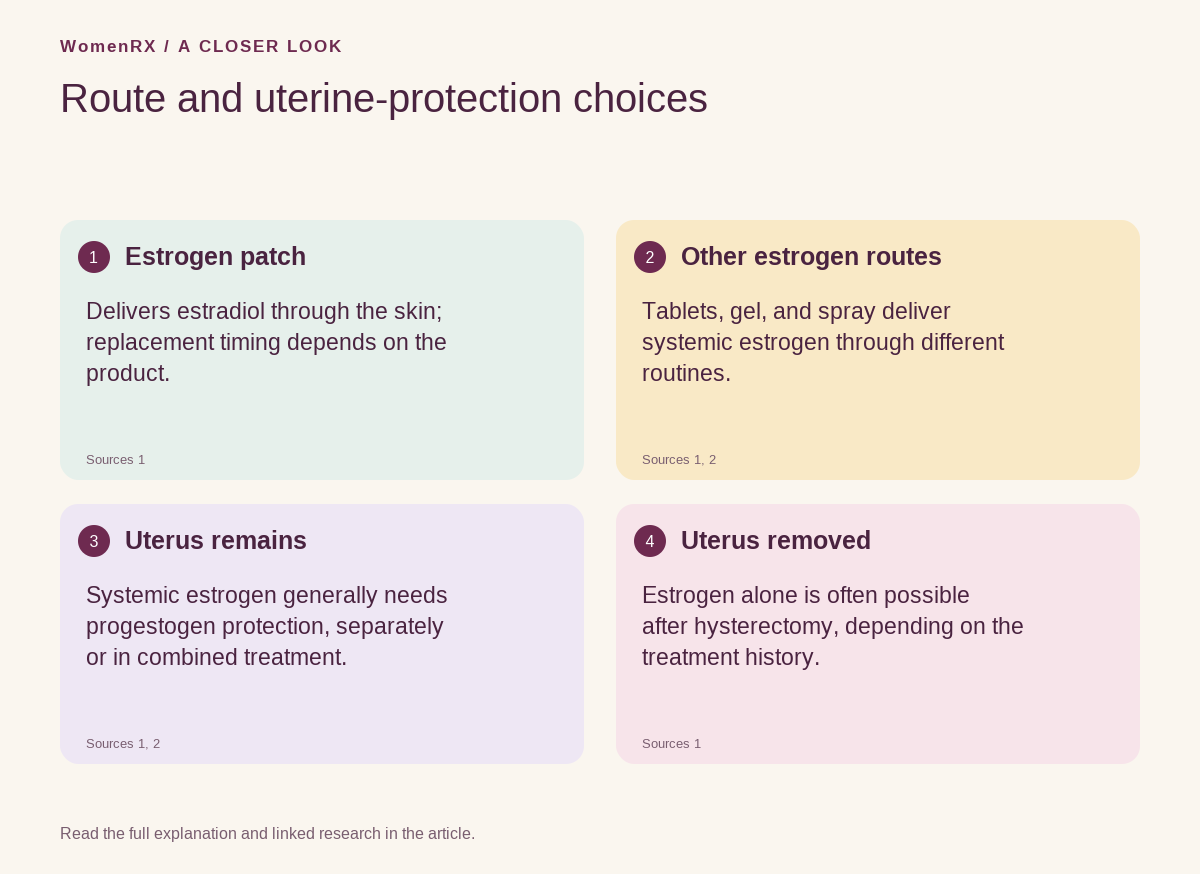
Route and uterine-protection choices
Estrogen patch: Delivers estradiol through the skin; replacement timing depends on the product.1
Other estrogen routes: Tablets, gel, and spray deliver systemic estrogen through different routines.12
Uterus remains: Systemic estrogen generally needs progestogen protection, separately or in combined treatment.12
Uterus removed: Estrogen alone is often possible after hysterectomy, depending on the treatment history.1
Read the figure as text
The patch describes how estrogen enters the body; the rest of the plan depends on the treatment goal and whether a uterus remains.- Estrogen patch: Delivers estradiol through the skin; replacement timing depends on the product.1
- Other estrogen routes: Tablets, gel, and spray deliver systemic estrogen through different routines.12
- Uterus remains: Systemic estrogen generally needs progestogen protection, separately or in combined treatment.12
- Uterus removed: Estrogen alone is often possible after hysterectomy, depending on the treatment history.1
More questions, answered
Does a menopause hormone patch prevent pregnancy?
No. Menopause hormone therapy isn’t contraception, so ask separately about contraception if pregnancy is possible for you. 2
Does every estrogen patch include a progestogen?
No. A patch may provide estrogen alone, while other plans pair estrogen with a separate progestogen or use combined treatment. If you have a uterus, confirm how your plan protects the uterine lining. 1 2
Sources you can check
- About oestrogen tablets, patches, gel and spray - NHSAccessed 2026-09-25Return to first citation
- Common questions about oestrogen tablets, patches, gel and spray - NHSAccessed 2026-09-25Return to first citation
- Side effects of oestrogen tablets, patches, gel and spray - NHSAccessed 2026-09-25Return to first citation
- The 2022 hormone therapy position statement of The North American Menopause Society.“The 2022 Hormone Therapy Position Statement of The North American Menopause Society” Advisory Panel. · Menopause (New York, N.Y.) · 2022Return to first citation
- Subcutaneous Estradiol Pellets as Hormone Therapy in Menopause: Clinical Pharmacology, Patient Selection and Safety Considerations.Jacobsen L, Fernandes DM, Nagel ML, Souza EL, Viana DPDC. · Journal of clinical medicine · 2025Return to first citation