Hot Flush or Fever? What to Check Next
A hot flush can feel feverish, but a thermometer reading and the rest of how you feel help put that sensation in context.
A sudden wave of warmth with flushing or sweating may be a menopause-related hot flush, and some women describe it as feeling feverish. Fever means a temperature higher than normal, not just feeling hot. Check your temperature if you’re unsure. If it’s elevated, don’t assume menopause explains it. If you’re concerned about the reading or how you feel, contact a health care provider for advice. 1 2
First, separate the feeling from the reading
Hot flushes can arrive as sudden warmth, often with flushing or sweating. During the menopause transition, hormonal changes affect temperature regulation: the body triggers heat-loss responses, including sweating and increased blood flow near the skin. Some women describe a hot flush as feeling feverish. That sensation is real, but it isn’t the same thing as measuring a fever. 2 3
That heat-loss response helps explain why your skin can feel intensely warm during a flush. It also explains why the sensation alone can be misleading: feeling hot tells you what you’re experiencing, not whether your body temperature is higher than normal. Night sweats are another menopause-related vasomotor symptom, but waking up sweaty doesn’t settle the fever question either. 1 2 3
Fever means a body temperature higher than normal. Because normal temperature varies between people, a thermometer gives you a more useful clue than the feeling of heat alone. It still won’t tell you why you feel unwell. 1
When the reading or symptoms change the picture
A sudden wave of warmth with flushing or sweating may fit a hot flush, particularly if you’ve had similar episodes during the menopause transition. If a thermometer shows a temperature higher than normal, that’s a different clue. Infections cause most fevers, though medicines and heat illness are among other possible causes. A hot flush and an illness can also happen at the same time, so don’t use menopause to explain away an elevated reading. 1 2 3
For example, a brief wave of heat that feels like your familiar flushes, followed by a reading that isn’t elevated and no other sense of illness, points in a different direction from feeling hot while your thermometer shows an elevated temperature. The first pattern may fit a hot flush; the second needs attention as a possible fever. The pattern helps you decide what question to ask next, but it doesn’t diagnose the cause. 1 2 3
If a reading or symptoms such as chills leave you concerned or unsure what to do, contact a health care provider for advice. Fever care depends on its cause. A temperature reading alone can’t tell you what that cause is. 1
If your reading isn’t elevated and the episode resembles familiar hot flushes, that combination is more consistent with a hot flush than a measured fever. It doesn’t explain other symptoms or rule out another cause if you feel unwell. 1 2 3
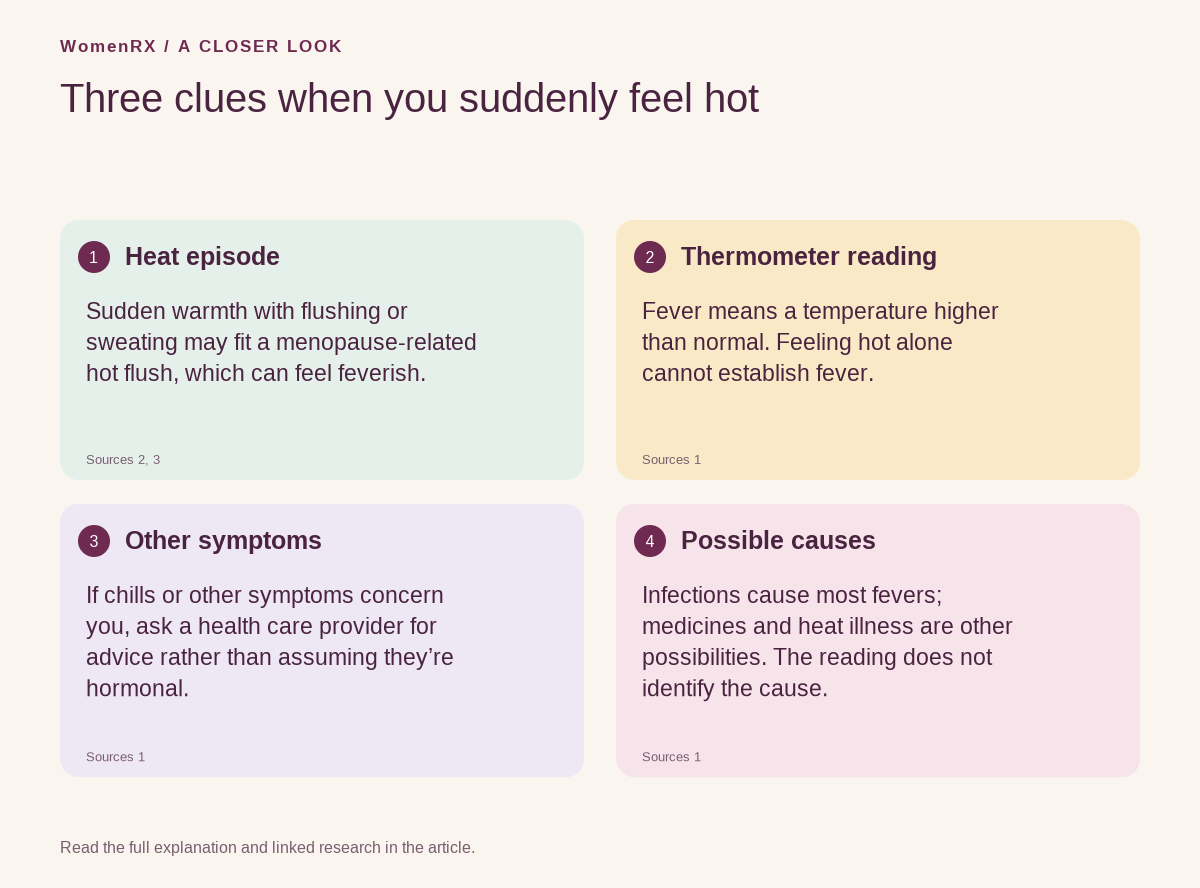
Three clues when you suddenly feel hot
Heat episode: Sudden warmth with flushing or sweating may fit a menopause-related hot flush, which can feel feverish.23
Thermometer reading: Fever means a temperature higher than normal. Feeling hot alone cannot establish fever.1
Other symptoms: If chills or other symptoms concern you, ask a health care provider for advice rather than assuming they’re hormonal.1
Possible causes: Infections cause most fevers; medicines and heat illness are other possibilities. The reading does not identify the cause.1
Read the figure as text
Separate the heat sensation from the thermometer reading, then consider whether other symptoms leave you concerned or unsure what to do.- Heat episode: Sudden warmth with flushing or sweating may fit a menopause-related hot flush, which can feel feverish.23
- Thermometer reading: Fever means a temperature higher than normal. Feeling hot alone cannot establish fever.1
- Other symptoms: If chills or other symptoms concern you, ask a health care provider for advice rather than assuming they’re hormonal.1
- Possible causes: Infections cause most fevers; medicines and heat illness are other possibilities. The reading does not identify the cause.1
Sources you can check
- Fever: MedlinePlusAccessed 2026-09-25Return to first citation
- Targeted literature review of concepts related to women's experiences and perceptions of vasomotor symptoms associated with menopause.Bin Ng D, Burgess SM, Tsai CC, Henze M, Chladek M, Hadi FA. · Menopause (New York, N.Y.) · 2026Return to first citation
- Effects of menopause on temperature regulation.Gombert-Labedens M, Vesterdorf K, Fuller A, Maloney SK, Baker FC. · Temperature (Austin, Tex.) · 2025Return to first citation