Feeling Tired on Semaglutide? Look at What Changed
Fatigue has been reported during semaglutide treatment, but appetite, stomach symptoms, sleep, and other health factors can change the picture.
Fatigue has been reported in a trial that included semaglutide, but feeling tired doesn’t tell you whether the medicine is the cause. 3 Compare when it began with treatment changes, food and fluid intake, and sleep; for oral semaglutide products, note appetite and stomach symptoms too. 1 If fatigue lasts for weeks without improving, seek an evaluation rather than assuming it’s a side effect. 2
A connection is possible, but timing isn't proof
Fatigue was among the adverse events associated with semaglutide in a randomized trial of adults with obesity that included women and men. 3
Start with the simplest comparison: Did the tiredness begin after you started semaglutide, or after something else changed at about the same time? A close match in timing is worth mentioning, especially if your appetite or stomach symptoms changed too. It still can’t establish that semaglutide caused the fatigue.
Check what happened to eating and drinking
For oral semaglutide products, the prescribing information lists decreased appetite, nausea, vomiting, diarrhea, and constipation among common side effects. It says nausea, vomiting, and diarrhea are most common when treatment first begins. 1
Those details give you something more useful to compare than the date fatigue started. For example, if you’re tired on days when nausea makes it hard to eat, say how your meals changed. If vomiting or diarrhea has affected what you can drink, include that too. This doesn’t mean you can diagnose dehydration or a nutrient deficiency from fatigue. It helps separate feeling tired alongside stomach symptoms from feeling tired when eating and drinking are much as usual.
The oral-product information describes those products, not an identical side-effect pattern for every form of semaglutide. Tell your care team which product you take and what changed, rather than relying on the brand name alone. 1
Look beyond the medicine, too
Poor sleep can cause fatigue. So can conditions including anemia, infections, thyroid disease, diabetes, and sleep disorders. Pregnancy is another possible context. None can be identified from tiredness alone. 2
Notice whether fatigue follows a poor night’s sleep or continues even when you’ve slept as usual. If you use other medicines, include them in the picture, particularly medicines used for blood sugar. A medicine list helps your care team assess your treatment as a whole; fatigue by itself doesn’t identify a blood sugar problem or a medicine interaction.
Your circumstances matter as well. If relevant, mention possible pregnancy, postpartum recovery, heavy periods, or menopause when describing when the fatigue began and what else is happening. Don’t assume any one of these explains it. The useful question is whether the tiredness follows a clear change or persists apart from it.
What to do with the pattern
A few brief notes can make fatigue easier to explain: when it’s strongest, when treatment changed, whether appetite or stomach symptoms changed your eating or drinking, how you’ve been sleeping, and which medicines you take. A fatigue diary can help reveal patterns across the day, but it isn’t a diagnostic test. 2
If you’ve felt tired for several weeks and it isn’t improving, contact a health care provider for an evaluation. MedlinePlus notes that an assessment may include questions about sleep, appetite, activities, and exercise, along with an examination or tests to investigate the cause. 2
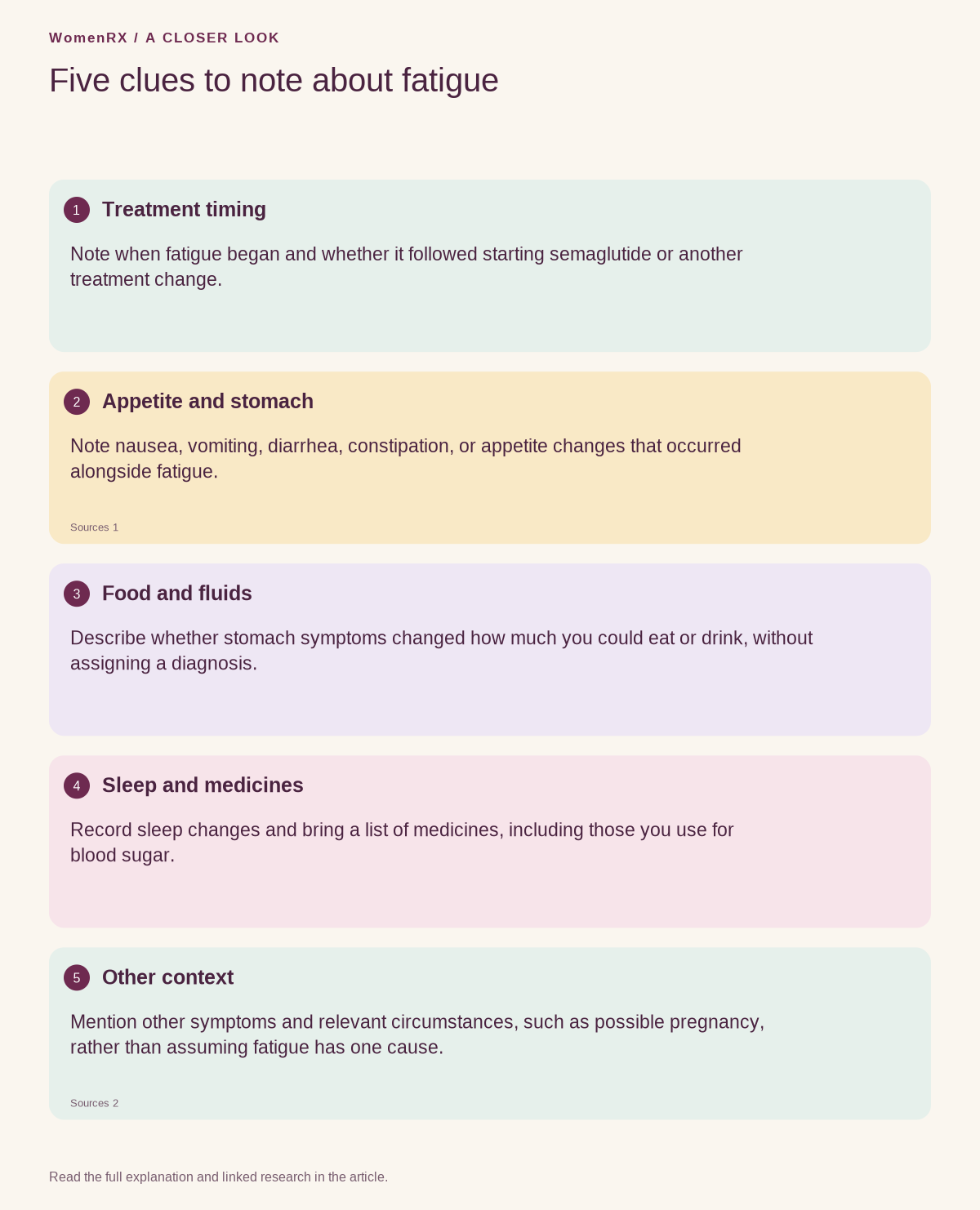
Five clues to note about fatigue
Treatment timing: Note when fatigue began and whether it followed starting semaglutide or another treatment change.
Appetite and stomach: Note nausea, vomiting, diarrhea, constipation, or appetite changes that occurred alongside fatigue.1
Food and fluids: Describe whether stomach symptoms changed how much you could eat or drink, without assigning a diagnosis.
Sleep and medicines: Record sleep changes and bring a list of medicines, including those you use for blood sugar.
Other context: Mention other symptoms and relevant circumstances, such as possible pregnancy, rather than assuming fatigue has one cause.2
Read the figure as text
These prompts organize changes worth describing. They do not identify the cause of fatigue.- Treatment timing: Note when fatigue began and whether it followed starting semaglutide or another treatment change.
- Appetite and stomach: Note nausea, vomiting, diarrhea, constipation, or appetite changes that occurred alongside fatigue.1
- Food and fluids: Describe whether stomach symptoms changed how much you could eat or drink, without assigning a diagnosis.
- Sleep and medicines: Record sleep changes and bring a list of medicines, including those you use for blood sugar.
- Other context: Mention other symptoms and relevant circumstances, such as possible pregnancy, rather than assuming fatigue has one cause.2
Sources you can check
- OZEMPIC (ORAL SEMAGLUTIDE) TABLET RYBELSUS (ORAL SEMAGLUTIDE) TABLET [NOVO NORDISK PHARMACEUTICAL INDUSTRIES, LP] | US prescribing information and patient instructionsAccessed 2026-09-25Return to first citation
- Fatigue: MedlinePlusAccessed 2026-09-25Return to first citation
- Bimagrumab plus semaglutide alone or in combination for the treatment of obesity: a randomized phase 2 trial.Heymsfield SB, Aronne LJ, Montgomery P, Klickstein LB, Coleman LA, Dole K, Mindeholm L, Spruill S, Li X, Attie KM, BELIEVE trial investigators. · Nature medicine · 2026Return to first citation