Choosing Mirena: bleeding, insertion timing, and follow-up
Mirena is an intrauterine contraceptive, and its insertion timing and possible bleeding changes deserve separate conversations.
Mirena is an intrauterine contraceptive that can change bleeding patterns, including decreased bleeding. Spotting or irregular bleeding is common in the first months; lighter bleeding and no periods are also possible, but no particular pattern is guaranteed. Before insertion, discuss your health history, pregnancy possibility, bleeding concerns, and timing, especially if you’re switching methods or recently gave birth. 1
Start with your reason for considering it
Mirena is an intrauterine contraceptive that can change bleeding patterns, including decreased bleeding. If heavy periods are the main reason you’re considering it, ask whether Mirena is an appropriate option; NHS guidance lists some types of intrauterine system among treatments for heavy periods. 2 Do not assume periods will stop. Persistent or unusual bleeding should be evaluated before insertion because it can have causes that need attention first. 1
For example, bleeding through clothes or bedding or missing daily activities because of your period can help you explain how much bleeding is affecting your life. 2
It may help to name your priorities plainly: reliable contraception, less bleeding, or both. Also consider how you’d feel about unpredictable spotting at first, lighter periods, or having no bleeding. These are useful tradeoffs to discuss, not outcomes you can select in advance.
What the assessment and insertion timing involve
Before placement, the product guidance calls for a medical and social history. A physical exam and testing for sexually transmitted infections may be appropriate depending on your situation. Known or suspected pelvic inflammatory disease, or a history of it without a subsequent intrauterine pregnancy, is listed as a reason not to use Mirena. 1
Mirena is placed in the uterus when there is reasonable certainty you’re not pregnant. If you’re starting Mirena without currently using hormonal or intrauterine contraception, placement during the first seven days of your menstrual cycle does not call for backup contraception. If it’s placed later in the cycle, the product instructions call for a barrier method or avoiding vaginal intercourse for seven days. Switching from another contraceptive method has separate timing instructions. So do placement after childbirth and after an abortion or miscarriage; the seven-day rule for someone starting without another method should not be applied to every situation. 1
If you’ve recently given birth, that doesn’t automatically rule Mirena in or out. The product guidance describes insertion immediately after the placenta is removed, or an interval insertion after at least six weeks or once the uterus is fully involuted. Ask about the timing that fits your own circumstances and reproductive plans. 1
Mirena is an intrauterine device that a clinician places in the uterus. 1 Ask the person placing it to explain the procedure and discuss comfort options beforehand.
Bleeding and other reported effects
Spotting or irregular bleeding is common during the first months. The product information lists several possible bleeding changes, including unscheduled bleeding, decreased bleeding, and amenorrhea, meaning no periods. That range is why it’s better to prepare for change than to expect a specific result. 1
The Mirena clinical-trial table, covering 5,091 users, lists abdominal or pelvic pain in 22.6%, headache or migraine in 16.3%, breast pain in 8.5%, and acne in 6.8% as reported adverse reactions. These are trial reports, not a prediction of what you’ll experience individually. 1
Make a follow-up plan that fits you
The product information identifies pelvic pain among reported adverse reactions and says upper genital infections occurred more frequently within the first year of use. 1 Before you leave, ask what follow-up the placing clinician recommends and how to contact the clinic if you have a concern. During the first months, keep track of spotting and whether it changes.
A few questions can make the conversation more specific:
- Is Mirena being considered for contraception, heavy bleeding, or both?
- Does my bleeding pattern need evaluation before insertion?
- Given my cycle, other contraception, recent birth, or pregnancy loss, which insertion instructions apply to me, and would I need backup contraception?
- What will placement involve, and what comfort options do you offer?
- What follow-up do you recommend, and how should I reach you about persistent bleeding or pelvic pain?
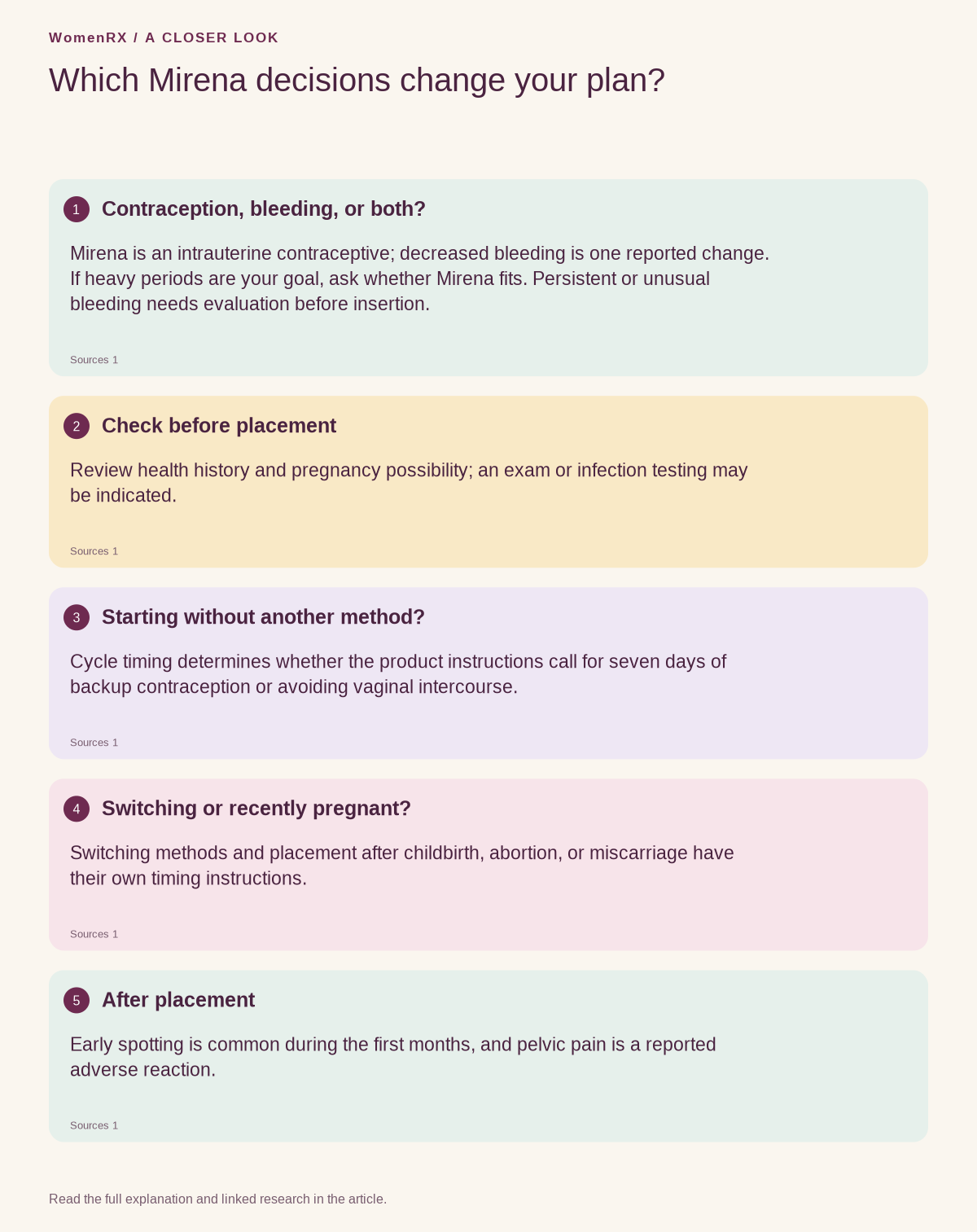
Which Mirena decisions change your plan?
Contraception, bleeding, or both?: Mirena is an intrauterine contraceptive; decreased bleeding is one reported change. If heavy periods are your goal, ask whether Mirena fits. Persistent or unusual bleeding needs evaluation before insertion.1
Check before placement: Review health history and pregnancy possibility; an exam or infection testing may be indicated.1
Starting without another method?: Cycle timing determines whether the product instructions call for seven days of backup contraception or avoiding vaginal intercourse.1
Switching or recently pregnant?: Switching methods and placement after childbirth, abortion, or miscarriage have their own timing instructions.1
After placement: Early spotting is common during the first months, and pelvic pain is a reported adverse reaction.1
Read the figure as text
Follow the branches that apply to your reason for use and insertion circumstances, then make a plan for changes after placement.- Contraception, bleeding, or both?: Mirena is an intrauterine contraceptive; decreased bleeding is one reported change. If heavy periods are your goal, ask whether Mirena fits. Persistent or unusual bleeding needs evaluation before insertion.1
- Check before placement: Review health history and pregnancy possibility; an exam or infection testing may be indicated.1
- Starting without another method?: Cycle timing determines whether the product instructions call for seven days of backup contraception or avoiding vaginal intercourse.1
- Switching or recently pregnant?: Switching methods and placement after childbirth, abortion, or miscarriage have their own timing instructions.1
- After placement: Early spotting is common during the first months, and pelvic pain is a reported adverse reaction.1
More questions, answered
Does Mirena always stop periods?
No. The product information lists amenorrhea among reported bleeding changes, but also lists unscheduled and decreased bleeding. It does not promise that periods will stop or predict an individual user’s pattern. 1
Can Mirena be inserted soon after childbirth?
The product guidance describes insertion immediately after the placenta is removed, or later after at least six weeks or when the uterus is fully involuted. Which timing fits you depends on your circumstances. 1