Bupropion and Weight: What to Expect
Bupropion is associated with weight loss on average, but your appetite, mood, and weight may change in different ways during depression treatment.
Studies comparing antidepressants associate bupropion with some weight loss, but that average doesn’t predict whether you’ll lose, gain, or maintain weight. Depression itself can change appetite and eating, so a weight change during treatment isn’t automatically a drug effect. If weight matters to your choice, consider how you’re eating and feeling alongside any change on the scale. 52
What the weight research can tell you
A review and meta-analysis of 116 studies found that bupropion was associated with some weight loss, while several other antidepressants were associated with weight gain. The authors also found that weight effects varied considerably between people and could become more apparent over longer treatment periods. That makes weight a reasonable part of an antidepressant discussion, but not a promised outcome. 5
The comparison needs context. The meta-analysis brought together studies with different designs and treatment durations; for some drugs, relatively few studies were available for particular analyses. It doesn’t provide a reliable personal forecast for a woman starting bupropion for depression. A separate clinical review likewise describes bupropion as associated with weight loss, but some of the weight-loss research it discusses involved people being studied for overweight or obesity rather than depression treatment. 54
The combination pill is a different question
You may see weight-loss figures for naltrexone/bupropion, a combination that contains bupropion. Those figures aren’t estimates for bupropion taken on its own as an antidepressant. For example, a small, open-label study followed 25 women with depression and overweight or obesity who received the combination alongside dietary and behavioral counseling. Without a comparison group, and with both another drug and counseling involved, that study cannot isolate what bupropion alone did to weight. 3
Keeping those treatments separate helps if you’re comparing options for your mood. Evidence that a combination treatment changes weight in a particular group doesn’t mean bupropion prescribed for depression will produce the same result.
Look at appetite and mood alongside weight
Depression can make eating and other daily activities difficult, and appetite or weight can change as part of the illness. 24 That creates more than one possible explanation for a change during treatment. For example, if you ate very little while feeling depressed and your appetite returns as you feel better, a rise in weight wouldn’t necessarily mean the medication is causing weight gain. If your appetite falls and eating becomes difficult, a lower number on the scale wouldn’t necessarily be a welcome effect, either.
Weight also includes water, muscle, bone, and fat, so the number alone cannot tell you what changed or why. 1 If you choose to keep an eye on weight, pair it with a few observations that matter to your day: Are you eating regularly? Has your appetite changed? Are your mood and daily functioning improving? This isn’t a test for a medication side effect. It’s a way to make a more useful distinction than “the scale moved.”
An unintentional gain or loss, especially a sudden or unexpected one, deserves a conversation with your care team rather than an assumption that bupropion is responsible. Unexpected weight change can also be a sign of another health problem. 1 Tell them what changed in your eating and mood as well as your weight. That context can help you weigh the treatment’s benefits against a change that concerns you.
If you’re pregnant or postpartum
Pregnancy and the postpartum period can each affect mental health. 2 If either applies to you, bring it into the medication discussion rather than using general weight findings to make the decision. The antidepressant weight research described here doesn’t establish what weight change to expect, or which treatment to choose, in those circumstances. 5
The useful question isn’t simply whether bupropion causes weight loss. It’s whether its possible weight effect, your response to treatment, and any changes you’re noticing make it a good fit for you.
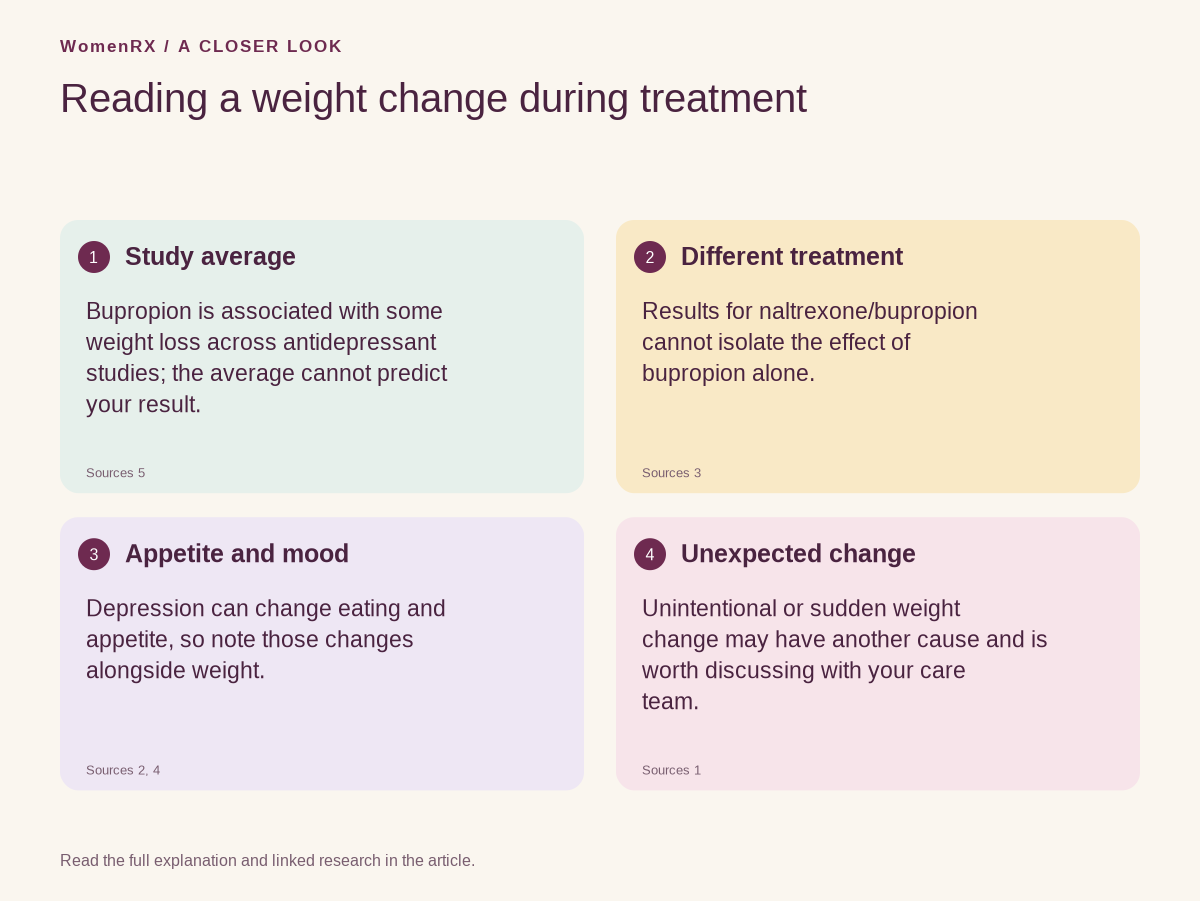
Reading a weight change during treatment
Study average: Bupropion is associated with some weight loss across antidepressant studies; the average cannot predict your result.5
Different treatment: Results for naltrexone/bupropion cannot isolate the effect of bupropion alone.3
Appetite and mood: Depression can change eating and appetite, so note those changes alongside weight.24
Unexpected change: Unintentional or sudden weight change may have another cause and is worth discussing with your care team.1
Read the figure as text
A weight change is one observation. These distinctions help put it in context.- Study average: Bupropion is associated with some weight loss across antidepressant studies; the average cannot predict your result.5
- Different treatment: Results for naltrexone/bupropion cannot isolate the effect of bupropion alone.3
- Appetite and mood: Depression can change eating and appetite, so note those changes alongside weight.24
- Unexpected change: Unintentional or sudden weight change may have another cause and is worth discussing with your care team.1
More questions, answered
Does a lower weight mean bupropion is working?
No. Weight and mood are different things to assess. Depression itself can affect appetite and weight, so a change on the scale doesn’t show whether your depression is improving. 24
Can I use weight-loss results for naltrexone/bupropion to predict my result?
No. Those results involve a two-drug treatment, sometimes alongside dietary and behavioral counseling. They can’t tell you what bupropion alone will do to your weight during depression treatment. 3
Sources you can check
- Body Weight: MedlinePlusAccessed 2026-09-25Return to first citation
- Depression: MedlinePlusAccessed 2026-09-25Return to first citation
- Naltrexone/Bupropion combination therapy in overweight or obese patients with major depressive disorder: results of a pilot study.McElroy SL, Guerdjikova AI, Kim DD, Burns C, Harris-Collazo R, Landbloom R, Dunayevich E. · The primary care companion for CNS disorders · 2013Return to first citation
- Weight-centric treatment of depression and chronic pain.Ghusn W, Bouchard C, Frye MA, Acosta A. · Obesity pillars · 2022Return to first citation
- Antidepressants and body weight: a comprehensive review and meta-analysis.Serretti A, Mandelli L. · The Journal of clinical psychiatry · 2010Return to first citation