5-HTP, Appetite, and Weight: What’s Actually Measured?
Human findings include a small brain-imaging study and a separate, loosely described weight-loss claim, not proof that 5-HTP reliably reduces eating or weight.
5-HTP has not been shown by the human findings described here to reliably reduce appetite or body weight. A small study measured brain responses to food during one scanning session, not how much people ate. A 2005 review reported weight loss in people with obesity, but gave no amount, timeframe, comparison, or sex-specific result. 1 2

A brain response isn’t a change in eating
Serotonin is involved in appetite regulation, which helps explain why 5-HTP has been studied in this area. But a brain response to food, a change in appetite, eating less, and losing weight are different outcomes. Evidence for one doesn’t automatically establish the others. 2
A 2017 study included 14 healthy men and women, with half receiving 5-HTP and half vitamin C. Participants took the supplement shortly before a single brain-scanning session, where they viewed food and nonfood images. The researchers reported differences in brain activity in response to food. They did not measure how much participants ate or whether their weight changed. This is preliminary evidence about brain responses, not proof of appetite suppression or weight loss. 1
The weight-loss report lacks the details that shape expectations
A 2005 review says 5-HTP had produced weight loss in people with obesity. However, it gives no amount of weight lost, timeframe, comparison group, or sex-specific result for that finding. Without those details, you can’t judge how large or dependable the effect was, or whether it applies to women. 2
The review also describes appetite and weight findings for other serotonin-related treatments. Those results shouldn’t be treated as evidence that 5-HTP has the same effects: the substance and the outcomes studied matter. 2
What the evidence can tell you
The clearest takeaway is about measurement. The small imaging study tells us that researchers observed brain activity after 5-HTP; it doesn’t show that participants felt less hungry, ate less, or lost weight. The review’s weight-loss statement is relevant, but too briefly described to tell you what kind of change to expect. 1 2
Women were included in the imaging study, but the reported results don’t establish a women-specific effect. The review’s weight-loss finding also doesn’t provide a sex breakdown. So, female participation in the imaging study is not evidence that 5-HTP changes appetite or weight specifically in women. 1 2
If you’re considering 5-HTP for weight management, don’t treat a brain-imaging result or an unquantified weight-loss report as a reliable prediction of what will happen on the scale. The human findings described here don’t establish it as a weight-loss treatment.
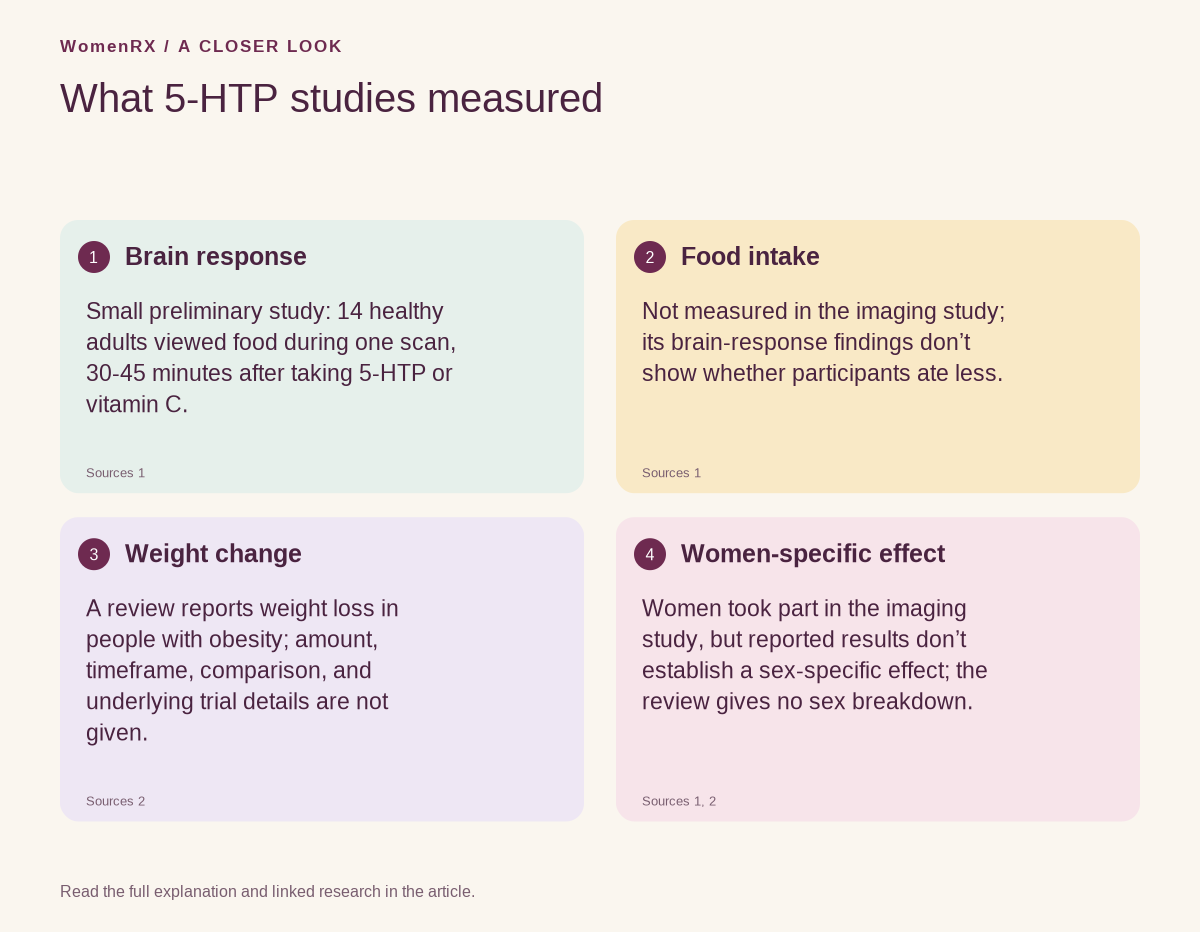
What 5-HTP studies measured
Brain response: Small preliminary study: 14 healthy adults viewed food during one scan, 30-45 minutes after taking 5-HTP or vitamin C.1
Food intake: Not measured in the imaging study; its brain-response findings don’t show whether participants ate less.1
Weight change: A review reports weight loss in people with obesity; amount, timeframe, comparison, and underlying trial details are not given.2
Women-specific effect: Women took part in the imaging study, but reported results don’t establish a sex-specific effect; the review gives no sex breakdown.12
Read the figure as text
These human findings differ in outcome, duration, and how much they can tell you about appetite or weight.- Brain response: Small preliminary study: 14 healthy adults viewed food during one scan, 30-45 minutes after taking 5-HTP or vitamin C.1
- Food intake: Not measured in the imaging study; its brain-response findings don’t show whether participants ate less.1
- Weight change: A review reports weight loss in people with obesity; amount, timeframe, comparison, and underlying trial details are not given.2
- Women-specific effect: Women took part in the imaging study, but reported results don’t establish a sex-specific effect; the review gives no sex breakdown.12
More questions, answered
Does the research show a different effect in women?
Women participated in the small imaging study, but the reported results don’t give sex-specific outcomes. The review’s weight-loss statement also provides no participant sex breakdown, so a women-specific effect can’t be determined from these findings. 1 2
Sources you can check
- Preliminary fMRI findings concerning the influence of 5-HTP on food selection.Ioannou S, Williams AL. · Brain and behavior · 2017Return to first citation
- Serotonin (5-HT) drugs: effects on appetite expression and use for the treatment of obesity.Halford JC, Harrold JA, Lawton CL, Blundell JE. · Current drug targets · 2005Return to first citation