Prescription Vaginal Creams: Which Kind Do You Have?
The active ingredient tells you whether a vaginal treatment is meant for menopause-related dryness, a yeast infection, or bacterial vaginosis.
Start with the active ingredient, not the word “vaginal.” Estradiol cream treats menopause-related vaginal symptoms; clotrimazole treats fungal infection; and an antibiotic may be prescribed for bacterial vaginosis, though metronidazole can be supplied as a vaginal gel rather than a cream. Confirm whether your medicine goes inside the vagina or on the outer skin, then check its directions and follow-up plan. 2356
First, find the medicine name
“Vaginal cream” describes a form of medicine, not what it does. If you’ve been offered one, look for the active ingredient on the prescription or package. That name gives you a better starting point than the texture, applicator, or symptoms you’re trying to relieve.
A prescription for estradiol vaginal cream is a local estrogen treatment for vulvar and vaginal changes associated with menopause. Estriol is another estrogen used in vaginal products, though the product and its directions may differ. These treatments can help with menopause-related dryness and irritation; they aren’t treatments for a new yeast infection or bacterial vaginosis, and local vaginal estrogen won’t treat hot flashes or sleep problems. 234
Clotrimazole is an antifungal medicine. It comes in products intended for different sites, including internal vaginal treatment and external cream for the skin around the genitals. Bacterial vaginosis (BV) calls for a different approach: antibiotic treatments include intravaginal metronidazole and clindamycin. Metronidazole may be supplied as a vaginal gel, not a cream. These medicines aren’t interchangeable just because they’re applied in the same general area. 156
The diagnosis matters as much as the ingredient
Dryness or irritation during and after the menopause may fit the reason vaginal estrogen was offered. But itching, discomfort, or changed discharge can have other causes. BV often causes thin, greyish-white discharge with a fishy smell and usually doesn’t cause itching or soreness. Those patterns can be useful clues, but they don’t confirm the cause on their own. A clinician may examine you or test discharge to distinguish BV from other infections. 13
That distinction is especially useful if symptoms appear after you’ve started treatment. Estradiol vaginal cream can itself cause burning, irritation, or itching. A new symptom doesn’t automatically mean the original diagnosis was wrong, but it also shouldn’t automatically be treated with a leftover antifungal or antibiotic. If you’re pregnant and think you may have BV, seek an assessment rather than relying on an old prescription; BV may need treatment during pregnancy. 12
Check the route before the first use
Inside the vagina and on the outer genital skin are different instructions. For example, clotrimazole external cream isn’t the same product direction as clotrimazole internal cream or a vaginal pessary. Vaginal estrogen also comes in several forms, including creams, tablets, gels, and rings. Check the name and directions on your product rather than borrowing a schedule from a different formulation. 36
Before using a newly prescribed treatment, make sure four details are clear:
- Purpose: What condition is this medicine treating? If it’s an antibiotic, was BV the diagnosis? If it’s estrogen, which symptoms is it meant to relieve?
- Site: Does this particular product go inside the vagina, on the vulva or surrounding skin, or both?
- Schedule: How often and for how long does your prescription say to use it? Ask if the directions on the package and the instructions you were given don’t match.
- Follow-up: What change should you expect, and when should you get back in touch if it isn’t helping? Vaginal estrogen can take up to three months to work fully, while the plan for an infection treatment depends on the diagnosis and prescribed course. 1246
Know the cautions for the product you actually have
The meaningful risks differ by medicine. Estrace (estradiol vaginal cream) can cause vaginal burning, irritation, and itching, and some of the estrogen can be absorbed into the body. Its US prescribing information says to report unusual vaginal bleeding promptly, particularly bleeding after menopause, so the cause can be checked. That is product-specific information, not a side-effect list for every vaginal estrogen formulation. 2
With clotrimazole, pain or irritation can occur, particularly if more is used than directed. Clotrimazole cream used on or around the genitals can also damage latex condoms and diaphragms, making them less reliable. Some vaginal estrogen creams and gels may affect barrier products too. If you rely on one, ask a pharmacist to check the instructions for your exact medicine rather than assuming all creams have the same effect. 46
Metronidazole vaginal gel has its own safety information; it shouldn’t be treated as though it has the same instructions as metronidazole tablets, suppositories, or a skin cream. For example, the advice against alcohol in the cited patient guidance specifically names tablets, liquid, and suppositories, not vaginal gel. The same guidance lists rare but serious symptoms associated with vaginal gel and other forms, including blurred or double vision and severe abdominal pain. If a new symptom is severe or concerning, get medical advice promptly and say which formulation you’re using. 7
The useful final check is simple: can you name what’s in the product, why it was prescribed, and exactly where it goes? If any one of those is unclear, clarify it before using the cream or gel. A familiar-looking applicator can’t answer those questions for you.
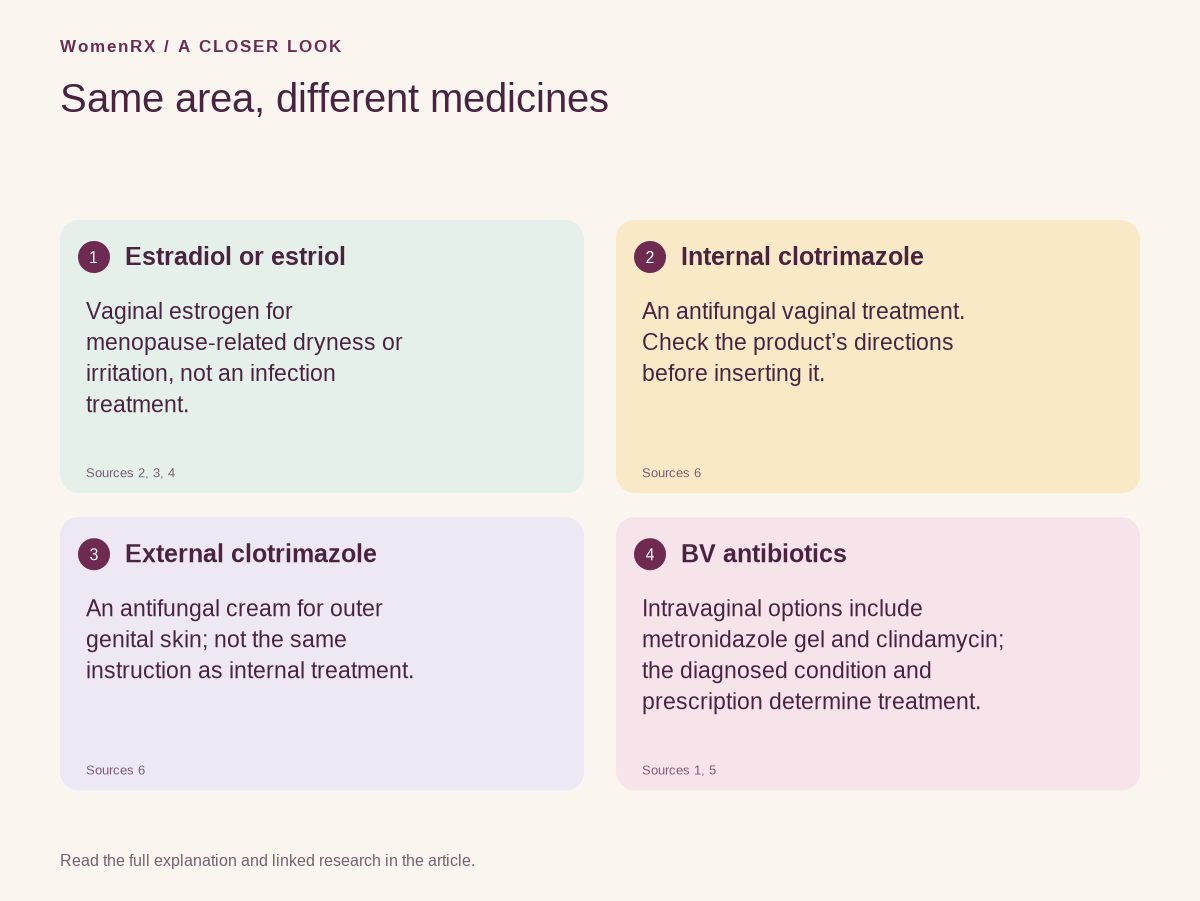
Same area, different medicines
Estradiol or estriol: Vaginal estrogen for menopause-related dryness or irritation, not an infection treatment.234
Internal clotrimazole: An antifungal vaginal treatment. Check the product’s directions before inserting it.6
External clotrimazole: An antifungal cream for outer genital skin; not the same instruction as internal treatment.6
BV antibiotics: Intravaginal options include metronidazole gel and clindamycin; the diagnosed condition and prescription determine treatment.15
Read the figure as text
The ingredient and intended site help identify what each product is for; the prescription directions determine how yours is used.- Estradiol or estriol: Vaginal estrogen for menopause-related dryness or irritation, not an infection treatment.234
- Internal clotrimazole: An antifungal vaginal treatment. Check the product’s directions before inserting it.6
- External clotrimazole: An antifungal cream for outer genital skin; not the same instruction as internal treatment.6
- BV antibiotics: Intravaginal options include metronidazole gel and clindamycin; the diagnosed condition and prescription determine treatment.15
More questions, answered
Can vaginal estrogen treat a yeast infection?
No. Vaginal estrogen is used for menopause-related vaginal symptoms such as dryness and irritation. Clotrimazole is an antifungal medicine used for fungal infections. If symptoms are new or different, the cause matters before choosing a treatment. 36
Why was I given a gel when I asked about vaginal cream?
The form depends on the medicine and diagnosis. Intravaginal metronidazole is one antibiotic option for BV and is supplied as a vaginal gel; clindamycin is another intravaginal antibiotic option. Check the active ingredient and your prescription directions rather than treating “gel” and “cream” as different names for the same medicine. 15
Sources you can check
- Bacterial vaginosis - NHSAccessed 2026-09-25Return to first citation
- ESTRACE (ESTRADIOL) CREAM [ALLERGAN, INC.] | US prescribing information and patient instructionsAccessed 2026-09-25Return to first citation
- About vaginal oestrogen - NHSAccessed 2026-09-25Return to first citation
- Common questions about vaginal oestrogen - NHSAccessed 2026-09-25Return to first citation
- Characterization and Treatment of Recurrent Bacterial Vaginosis.Faught BM, Reyes S. · Journal of women's health (2002) · 2019Return to first citation
- Clotrimazole: antifungal for fungal infections - NHSAccessed 2026-09-25Return to first citation
- Side effects of metronidazole - NHSAccessed 2026-09-25Return to first citation